
DOWNLOAD THE APP


Customer Services
Copyright © 2025 Desertcart Holdings Limited
DOWNLOAD THE APP
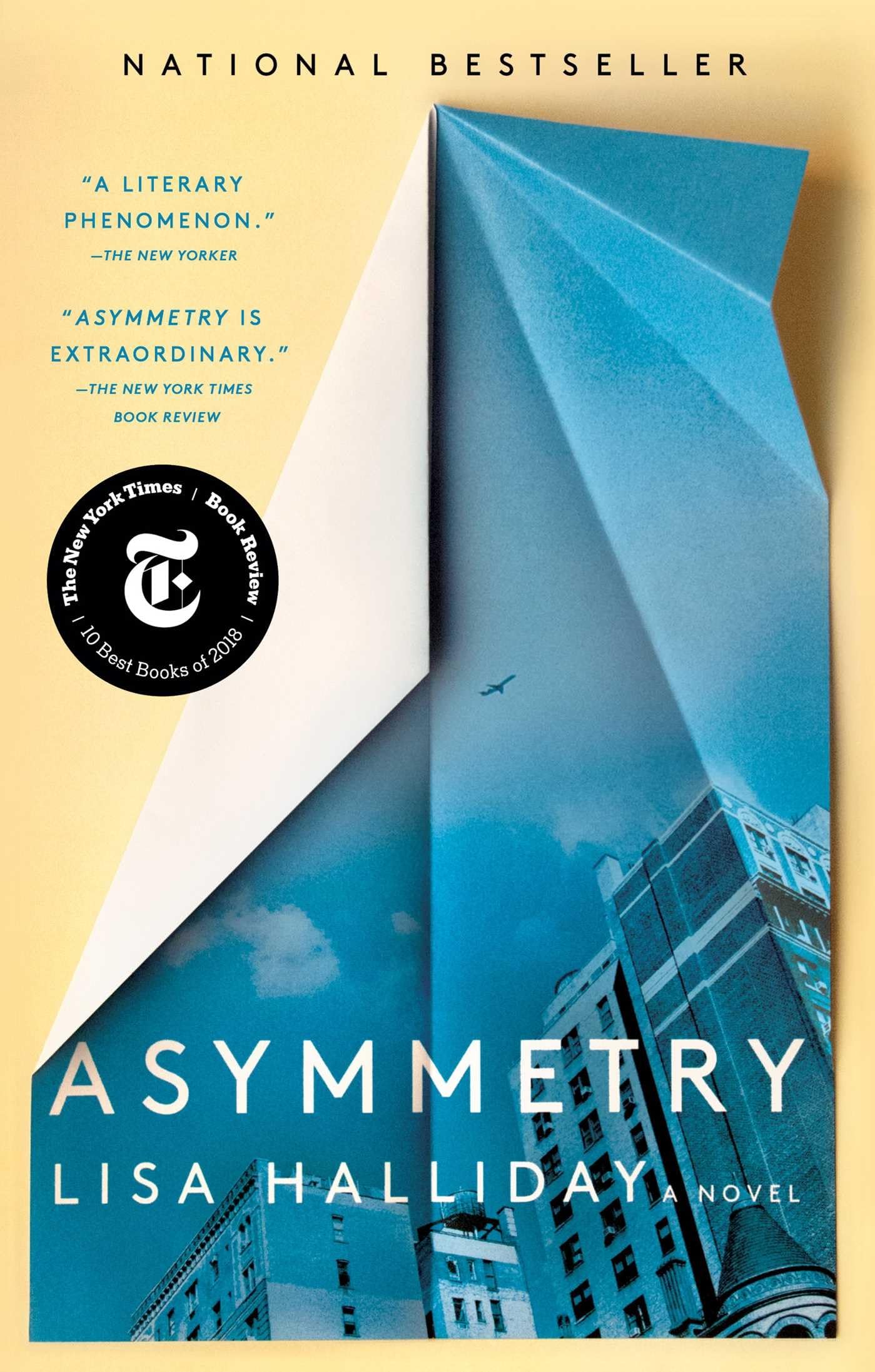
Asymmetry: A Novel
G**R
As readers, we are blessed that the author ignored Quiller-Couch's advice
I read a lot of books but I rarely choose one based to any large extent on its reviews. This book was an exception. After all, how often do you stand the chance to read a debut novel for which professional reviewers are literally at a loss to praise superlatively enough?Asymmetry is a popular word these days. I don’t believe the world is any more asymmetrical than it has ever been. Technology, however, in both making the world smaller, and the personal asymmetry of in your face news and social media, have given it new celebrity and relevance. And, of course, asymmetry is a problem specific to all of the algorithms (just now coming to light) that drive our digital lives.In this case the asymmetry exists at many levels, from the May-December romance of Alice and Ezra to the political, social, and humanistic asymmetry of the Iraq tragedy, and the very fact, as revealed in the closing interview with Ezra, that he, as a character, found passion and compulsion in the asymmetry of life itself. (I wouldn’t pretend to speak for the author’s ultimate intent, but I came away with a sense that it is the asymmetry of modern politics and it’s asymmetrical suppression of humanism that is the ultimate source of the title.)To be perfectly honest, I was immensely disappointed after the first twenty pages or so. The opening plot of the Alice/Ezra story was either fantastically unrealistic or all too predictable. I’m still not sure which. It didn’t take long, however, for Halliday to find her cadence and capture my attention.The writing is beyond superb. Yes, there are plenty of clichés, but they are used sparingly and always, perhaps with the exception of the Red Sox/Yankees rivalry, kept on a short leash.The prose, in fact, brought Sir Arthur Thomas Quiller-Couch (1863-1944), the Cornish poet, novelist, and literary critic, to mind. He is perhaps best known for identifying the seven universal plots of all storytelling. He is also known, however, for warning authors, “Murder your darlings.” It was a piece of figurative advice, of course, built on the observation that writers often fall in love with a turn of phrase that otherwise adds nothing to the narrative.As a reader, however, I love the darlings and this book is filled with them. A cliché is a cliché but not everyone can do them equally well. Halliday is a master, or a maestro, as Ezra would be inclined to say. It’s a very entertaining story and the asymmetry it reveals is becoming more topical by the day.I can’t wait for her next work. Thank you, Lisa Halliday. (And all of those enthusiastic professional critics.)
M**O
Layers of complexity and brilliant, observational writing
Even if you didn't know that this book was (semi)-autobiographical (about the author's relationship with Philip Roth), as I didn't when I read it the first time, it is a fascinating read. Brilliantly observed. The characters are multi-dimensional. The dialogue is sweet, easy, funny, and just lovely. And then there are the layers of complexity - the clues about how the sections are related - that make this just a terrific read.
M**E
A Star Problem
This is a 5-star book with a 1-star problem. The 5 stars? It comes from the fact that the author, Lisa Halliday, can sure write well (see the middle section of the book), an achievement that is sadly missing from 95% of what passes for literature these days. The 1-star problem is that instead of focusing on writing well she focuses on showing how she can write well.If you're reading this, there's a good chance you (like me) wanted to explore what all the fuss was about. You heard (as I did) that there were two wildly different stories whose connection is revealed in a third section. This connection was described in glowing terms by admiring reviewers--words like surprising, startling, wonderful, and brilliant tempted me to buy the book and enjoy this experience. Had I not heard about the promised reward, however, I never would have finished, for the first section of the book left my eyes dry with boredom. I kept wondering why I was being asked to care for these characters. And then when I did get to the big reveal in section three, I actually missed it--not because of its subtlety but because it was so anti-climactic I didn't realize this was the big news. I knew it was a connection (and there are several others too); I just thought the "brilliant" connection would be something original.Much of the critical fuss, it turns out, isn't about the story itself but about the people who write and publish such things, including Halliday herself. (There's an interesting autobiographical twist to the whole tale too.) It's a story about writers celebrating their writerhood. To that extent, and perhaps unfairly, I'm responding as much to the reviews and reviewers of the book as to the book itself. To enjoy the story, you would need to be at least one and hopefully more of the following: a) a feminist; b) a writer who thinks writing is the most important thing in the world; c) someone from New York who thinks the New York literary scene is the most important thing in the world; or d) Lisa Halliday and/or her friends. Being one of these, however, is no guarantee of enjoying it, as evidenced by my own disappointment. The first section in particular is especially difficult to work through, as it's effectively a set-up for the rest of the novel. What substance there is includes mostly inside jokes about literature and the literary scene, but unless you enjoy being "inside" these things, you're left on the outside wondering what it is you're supposed to be enjoying.In the end I'd recommend you read the book if a) you want to see just how talented the author can be by reading the second section; and b) you want to test the big reveal for yourself. Hopefully Lisa Halliday will keep writing--she's too talented to waste such skill--and her reviewers will do her the favor of admiring a book for what it is to all readers not just to their own circle of literati. Perhaps my years of being an avid reader have left me spoiled, so the big connection was for me only another familiar literary maneuver. If it's fresh to you, then there are some fine thoughts--even inspiring thoughts--to be found. But for me finding them simply wasn't worth the effort; the reward of reading was simply finding out what the big connection was, and simply satisfying one's curiosity isn't the same thing as enjoying a satisfying read.
R**I
A MASTERPIECE OF CONTEMPORARY LITERATURE
Unique type of narrative flowMysteriously engagingMusical use of structure, rhythm, form, discourse flow and soundAccurate in every detailIntriguingly personableThis book touches all the hot issues of our society, yet never sides with predictable ideological / cultural stereotypes.Lisa Halliday is a giant!
C**E
this book will set a tone with a mellifluous voice.
Why should I buy a book? Specially, what makes me to buy this book? Why have I involved much time with this book? I have been pondering over all these questions which baffles me and tends to believe with a quote “Life is all accidents even what doesn’t appear to be an accident is an accident. Certainly this is anything but precise and pure. While engaging this book it has loaded with information of folly, madness and imbalances of modern life which is wildly commendable as well as enjoyable. Asymmetry reassures its subjects and perhaps above all that its objects are sound and pure. This book divides into three parts which encapsulates with surprise, delight at its confidence, its exquisite calibration and searing wit. It is a very special fiction, not a subtle and ultimately triumphant tribute to our lives. Lisa Halliday displays Ezra Blazer, an author who witnesses his life by imbuing it with a sense of resolution and serenity simultaneously, he experiences with intransigence, difficulty and contradiction. Certainly his piece of work encompasses such a marvelous, buoyant and triumphant masterpiece which evokes a person to read it with an indelible impression.
K**D
Muy interesante
Wow, un libro extraño, que no parece tener un objetivo ni saber para donde va, pero que plantea varias ideas y puntos de la autora de una manera sutil, pero potente. La manera que Halliday aborda las disparidad entres sexos, religiones, clases y razas es magnifica y como juega con la estructura de la novela es una genialidad.Un retrato de nuestra modernidad, escrito sin juicio pero con valor.
M**E
stunning
Beautifully complex and compulsively readable, Asymmetry is one of the best novels I've read this year.It is altogether stunning and clever. Told in three sections by three characters, each with a unique and authentic voice, Asymmetry dives into who we are, how we relate to each other, the authenticity of memory, power imbalances, and more.I can't stop thinking about it.
M**T
An Astonishingly Assured Debut Novel
This is a remarkable debut novel. Both sad and funny, brimming with life and love and bittersweet regret, profound and yet subtle, wise and written with a unique style that seems to have emerged fully-formed.The first section, "Folly", is the story of Alice, a twenty-five year-old editorial assistant who embarks upon an affair with a famous novelist, Ezra Blazer, who is four decades her senior. The asymmetry is obvious: he's world-renowned while she's completely unknown; he's lavishly wealthy while she's just about getting by. He tells her what to wear, where to buy it, and gives her the money to do so. He tells her what to read. She sees him when he wants her, and he sings "The Party's Over..........." when he wants her to go home. However, what could, especially in the welcome and long-overdue era of #MeToo, have come across as a dirty old man exploiting a naive and vulnerable girl is, in fact, nothing of the kind. A genuine and mutual tenderness develops between them: as Ezra's multiple ailments, neuroticisms and age take their toll, he becomes increasingly dependent upon Alice and the asymmetry begins to right itself to the point of reversal. In a hospital ward, where he had been rushed by ambulance, Alice has a vision of herself as Ezra's future full-time carer, and knows this isn't what she wants.The second story, "Madness", is the tale of Amar Jaafari, an Iraqi-American detained at Heathrow Airport on a stopover between Los Angeles and Istanbul. It is 2008, British and American troops are in Iraq, and Amar arouses suspicion. Though he's not accused of anything and treated with courtesy and sympathy, the nervousness of the authorities is as understandable as Amar's frustrations. While detained, he reflects upon his life, his family, his nationality (being Iraqi and American, he's simultaneously both and neither, if that makes sense) and the war and its consequences. As Amar reflects upon the American occupation, many new perspectives which were, I must admit, new to me reveal themselves and make it clear that Halliday has done her research diligently: putting herself inside the thoughts and feelings of Iraqi Muslims is a daring undertaking for a white American, and Halliday has obviously given it a great deal of thought. Whether she's pulled it off....... well, I'm not qualified to judge, but I will say that, to me, it rings true.But what does any of this have to do with Ezra Blazer and his young lover, Alice Dodge? Nothing whatsoever. Or does it?The third and final section is a transcript of Ezra Blazer's appearance on "Desert Island Discs" from 2011. Though the "interviewer" is not named, listeners will know that Kirsty Young presented the programme then, as now, and Halliday captures her voice and its inflections perfectly. I can't - it would be far too much of a spoiler, and horribly crass and irresponsible - reveal too much about what is said, beyond relating that the link between the first and second stories is made clear. Oh, and the brilliance of how it's done is quite jaw-dropping.I'd guessed, and guessed correctly, but was by no means sure I was right until it was confirmed. This is what I really like about Lisa Halliday: she doesn't spoonfeed her readers, a certain amount of knowledge, of reading, of thought and empathy, is required to fully benefit from all this novel has to offer. As is, I can say with something approaching certainty, a re-reading: to find the clues, the threads, the allusions I know I've missed, and to relish again the quality of the writing.I'll finish with a little background information. When I learned that Ezra Blazer was based on Philip Roth, and that Halliday had had a relationship with him in her twenties (from SueKich's review, which was the first one posted and convinced me to buy the book), it became important to me to find out - as Roth has been a favourite writer for my entire adult life - what Roth himself thought of it. I can report that not only have Roth and Halliday remained friends, but also that he has read the novel and wholeheartedly approves, and this pleases me immensely.At 41, Halliday is a relative latecomer to writing novels, but she arrives as if to the manner born. My brief research also revealed she's already working on her second, and I can't wait to read it. She's the real deal.
Trustpilot
1 week ago
3 days ago