
Buy anything from 5,000+ international stores. One checkout price. No surprise fees. Join 2M+ shoppers on Desertcart.
Desertcart purchases this item on your behalf and handles shipping, customs, and support to Morocco.
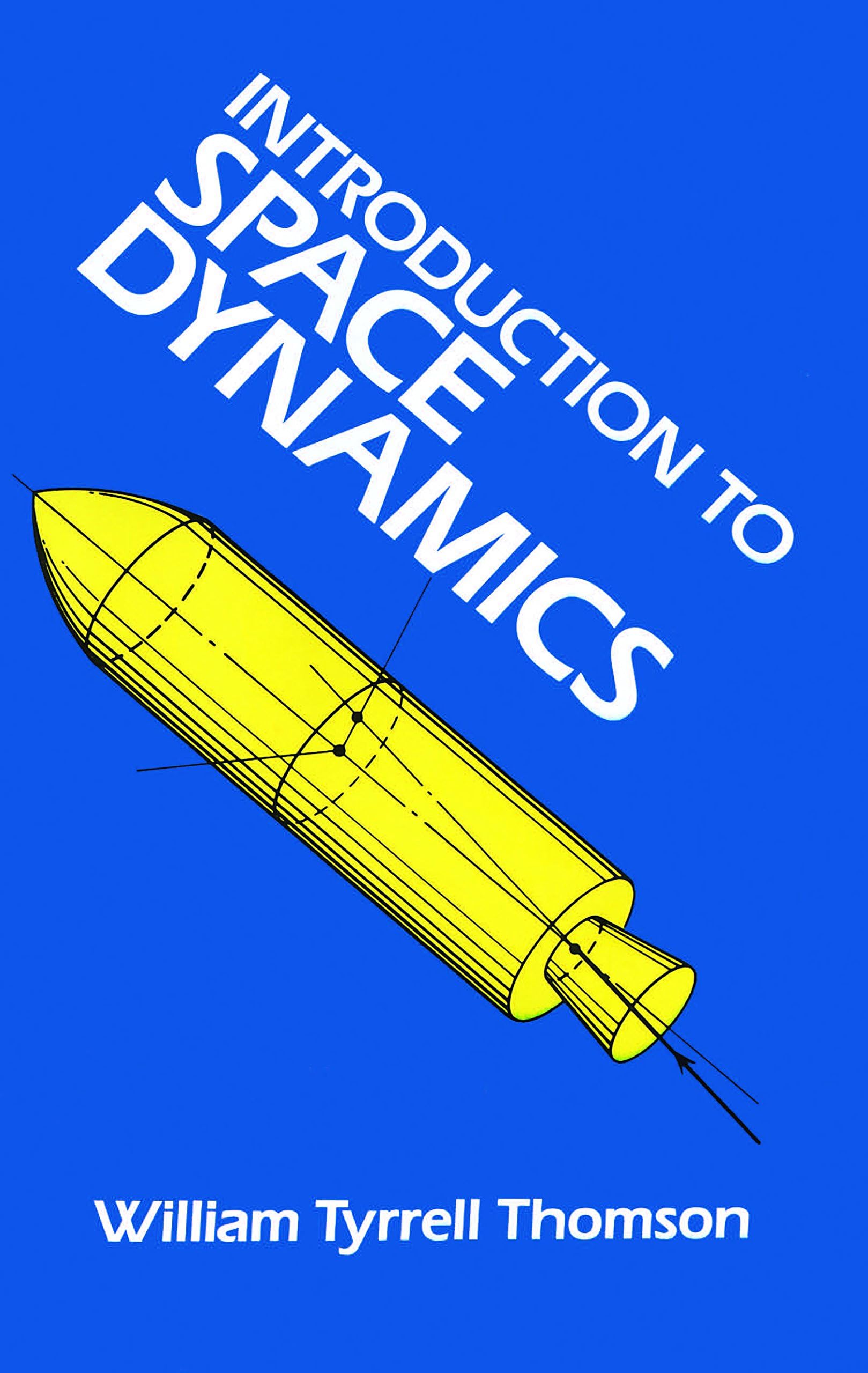
Introduction to Space Dynamics (Dover Books on Aeronautical Engineering) [William Tyrrell Thomson] on desertcart.com. *FREE* shipping on qualifying offers. Introduction to Space Dynamics (Dover Books on Aeronautical Engineering) Review: Very Good Introduction to Space Dynamics - "Introduction to Space Dynamics" by William Tyrrell Thomson Overall, this is a classic and essential book for those serious about astrodynamics and understanding space systems. The text is a great introduction to a broad set of categories in space dynamics including both rocket and satellite systems. In my opinion, it is appropriate for a undergraduate text in aerospace engineering or perhaps a graduate text for other engineering or science disciplines that are interested in space. Requirements for following the book are a good understanding of calculus and linear algebra and some exposure at least to concepts and notation in kinematics/mechanics/etc. Chapters 1-3 are introductory chapters on prerequisite material for the remaining chapters. These cover basic vector mathematics, kinematics, and reference coordinate frames and the transformation between frames. Chapter 4 covers particle mechanics in space (basic astrodynamics). This includes basic satellite orbits unpowered and powered. This section is a really good introduction to perturbation of orbital parameters, ballistic trajectories, effects of Earth's oblateness, and rendezvous problems. Chapters 5 and 6 is a serious treatment of gyrodynamics and gyro instruments that the author devotes 92 pages to cover. Chapter 7 covers non-particle spacecraft dynamics. This includes spacecraft attitude problems, and an introduction to the basics of guidance, navigation, and control. Chapter 8 covers rocket performance and optimization techniques including staging and trajectory optimization. The final chapter, Chapter 9, introduces the reader to the generalized theories of mechanics (Hamiltonian and Lagrangian mechanics). This is also known as advanced dynamics. "Introduction to Space Dynamics" makes a great reference for space industry professionals and anyone interested in knowing more about space systems. The text can be used (and often is used) to develop computational tools for solving more sophisticated problems in space dynamics. This text also complements some of the other great texts in these areas such as Fundamentals of Astrodynamics (Dover Books on Aeronautical Engineering) by Bate, Mueller, and White (for orbital mechanics), Spacecraft Attitude Dynamics (Dover Books on Aeronautical Engineering) by Hughes (for attitude dynamics), Space Vehicle Dynamics and Control (AIAA Education) by Wie (for controls), and Space Propulsion Analysis and Design by Humble (for rocket and spacecraft propulsion). Review: it's alright! Very good service. - it's alright! Very good service.
| Best Sellers Rank | #599,159 in Books ( See Top 100 in Books ) #215 in Astronautics & Space Flight #474 in Aeronautics & Astronautics (Books) #4,705 in Mathematics (Books) |
| Customer Reviews | 4.4 4.4 out of 5 stars (170) |
| Dimensions | 5.5 x 0.75 x 8.75 inches |
| Edition | Revised ed. |
| ISBN-10 | 0486651134 |
| ISBN-13 | 978-0486651132 |
| Item Weight | 10.4 ounces |
| Language | English |
| Part of series | Dover Books on Aeronautical Engineering |
| Print length | 352 pages |
| Publication date | June 1, 1986 |
| Publisher | Dover Publications |
J**N
Very Good Introduction to Space Dynamics
"Introduction to Space Dynamics" by William Tyrrell Thomson Overall, this is a classic and essential book for those serious about astrodynamics and understanding space systems. The text is a great introduction to a broad set of categories in space dynamics including both rocket and satellite systems. In my opinion, it is appropriate for a undergraduate text in aerospace engineering or perhaps a graduate text for other engineering or science disciplines that are interested in space. Requirements for following the book are a good understanding of calculus and linear algebra and some exposure at least to concepts and notation in kinematics/mechanics/etc. Chapters 1-3 are introductory chapters on prerequisite material for the remaining chapters. These cover basic vector mathematics, kinematics, and reference coordinate frames and the transformation between frames. Chapter 4 covers particle mechanics in space (basic astrodynamics). This includes basic satellite orbits unpowered and powered. This section is a really good introduction to perturbation of orbital parameters, ballistic trajectories, effects of Earth's oblateness, and rendezvous problems. Chapters 5 and 6 is a serious treatment of gyrodynamics and gyro instruments that the author devotes 92 pages to cover. Chapter 7 covers non-particle spacecraft dynamics. This includes spacecraft attitude problems, and an introduction to the basics of guidance, navigation, and control. Chapter 8 covers rocket performance and optimization techniques including staging and trajectory optimization. The final chapter, Chapter 9, introduces the reader to the generalized theories of mechanics (Hamiltonian and Lagrangian mechanics). This is also known as advanced dynamics. "Introduction to Space Dynamics" makes a great reference for space industry professionals and anyone interested in knowing more about space systems. The text can be used (and often is used) to develop computational tools for solving more sophisticated problems in space dynamics. This text also complements some of the other great texts in these areas such as Fundamentals of Astrodynamics (Dover Books on Aeronautical Engineering) by Bate, Mueller, and White (for orbital mechanics), Spacecraft Attitude Dynamics (Dover Books on Aeronautical Engineering) by Hughes (for attitude dynamics), Space Vehicle Dynamics and Control (AIAA Education) by Wie (for controls), and Space Propulsion Analysis and Design by Humble (for rocket and spacecraft propulsion).
A**O
it's alright! Very good service.
G**B
As described
Book was as described.
M**K
I just love this book
I just love this book. I've even bought it for friends. Lots of math so be prepared. I read this because I was curious about space navigation and orbits. I had no idea how much I would learn from it. Thanks! It was well worth the effort to work through this meaty book.
S**D
Good for what it is
Good for what it is, inexpensive though at places it is too brief. If you know dynamics, it is a good introduction to a specialized area. BTW the authors writes that the two body problem reduces to center of mass and a reduced mass moving at certain distance to it. This is not correct strictly speaking. The reduced mass approach just decouples the problem to two problems which can be solved independently. I am being pedantic for those of you who care about such details. :)
K**N
This is a great book on dynamics
This is a great book on dynamics. It is my go-to reference when I need to look something up or refresh my memory. It's very well written and a great bargain.
M**E
Introduction to Space Dynamics
This a fantastic book. An absolute must have. The author does a great job of presenting the information in a clear and enjoyable format.
S**I
good
Really good. Gives important details that other text books don't have. It is clearly a good tool to have along.
S**Z
J'ai acheté ce livre un peu au hasard car le livre me semblait en accord avec mon besoin : une introduction à la mécanique spatiale, et le prix peu élevé. Le livre est austère et trop ancien, pour une introduction c'est un peu difficile d'accès. Je me suis par la suite procuré deux ouvrages de bien meilleure qualité et d'accès plus facile : - Orbital mechanic for engineering students, - fundamental of astrodynamics Livre à éviter, pour la même gamme de prix, fundamental of astrodynamics qui date de 1970 est mieux. Pour un peu plus l'autre est encore mieux.
V**A
The book is awesome and hardcore, if you are a newbie don't go for this until you have some better preliminary knowledge about the kinematics of particles and motion of rockets and satellites.
P**O
Un clasico de DOVER imprescindible para ingenieros que se enfrenten con la dinámica espacial. Además, su lectura es imprescindible para cualquier ingeniero de mecánica de vuelo. El nombre 'Introduction' es engañoso, me he encontrado con otros denominados 'Advanced' menos profundos. El análisis de los efectos giroscópicos es de lo mejor que he visto, tiene otras fortalezas. La definición de los ángulos de Euler son los tradicionales de la mecánica clásica, diferente de la definición dada en mecánica de vuelo. Pero mejor, leedlo, tiene muchas otras bondades.
M**O
Un testo di riepilogo di tutto quello che serve
D**R
A useful book, if rather limited.
Trustpilot
4 days ago
2 weeks ago