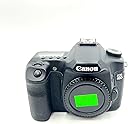
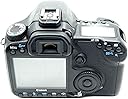
📷 Elevate your photography game—where pro features meet unstoppable creativity!
The Canon EOS 40D is a mid-range digital SLR designed for advanced amateurs and entry-level pros, featuring a 10.1MP CMOS sensor, a blazing 6.5 FPS burst rate, and a large 3.0-inch LCD with enhanced color and brightness. Its rugged magnesium alloy body offers dust and weather resistance, while the improved 9-point cross-type autofocus system delivers fast, precise focusing. With flexible RAW and sRAW shooting modes, integrated sensor cleaning, and Live View functionality, the EOS 40D combines professional-grade image quality and durability with user-friendly controls and customization options.
| ASIN | B000V5P90K |
| Age Range Description | Adult |
| Aperture modes | F2.8-F5.6 |
| Are Batteries Included | Yes |
| Aspect Ratio | 3:2, 4:3 |
| Auto Focus Technology | Continuous, Multi-area, Phase Detection, Selective single-point, Single |
| Autofocus | Yes |
| Autofocus Points | 9 |
| Best Sellers Rank | #90,037 in Electronics ( See Top 100 in Electronics ) #113 in DSLR Cameras |
| Brand | Canon |
| Camera Flash | Hotshoe |
| Color | Black |
| Compatible Devices | Television |
| Compatible Mountings | Canon EF, Canon EF-S |
| Connectivity Technology | USB |
| Continuous Shooting | 6.5 FPS |
| Customer Reviews | 4.5 out of 5 stars 287 Reviews |
| Digital-Still | Yes |
| Display Fixture Type | Fixed |
| Display Resolution Maximum | 230,000 |
| Display Type | LCD |
| Effective Still Resolution | 10.1 MP |
| Expanded ISO Maximum | 3200 |
| Expanded ISO Minimum | 100 |
| Exposure Control | Automatic, Manual, aperture-priority, shutter-speed-priority |
| External-Memory Size | 4 GB |
| File Format | JPEG, RAW |
| Flash Memory Bus Interface Type | PATA |
| Flash Memory Type | Compact Flash |
| Flash Sync Speed | 1/250_sec |
| Focus Features | Multi-BASIS TTL, 9 focus points (diamond shape, cross-type) |
| Focus Type | Automatic with Manual |
| Form Factor | Mid-size SLR |
| Global Trade Identification Number | 00013803086553 |
| Hardware Interface | AV Port |
| Has Color Screen | Yes |
| Image Capture Type | Stills |
| Image Stabilization | Digital, Optical |
| Image stabilization | Digital, Optical |
| Item Weight | 2.2 Pounds |
| JPEG Quality Level | Basic, Fine, Normal |
| Lens Type | interchangeable |
| Manufacturer | Canon Cameras US |
| Manufacturer Part Number | 1901B004 |
| Maximum Aperture | 3.5 Millimeters |
| Maximum Focal Length | 35 Millimeters |
| Maximum Shutter Speed | 1/8000 Seconds |
| Memory Slots Available | 1 |
| Metering Methods | Spot |
| Minimum Shutter Speed | 30 seconds |
| Model Name | 1901B004 |
| Model Number | 1901B004 |
| Movie Mode | No |
| Optical Zoom | 1 x |
| Photo Sensor Resolution | 10.1 MP |
| Photo Sensor Size | APS-C |
| Photo Sensor Technology | CMOS |
| Real Angle Of View | 140 Degrees |
| Remote Included | No |
| Screen Size | 3 Inches |
| Self Timer | 10 Seconds |
| Sensor Type | CMOS |
| Shooting Modes | Faithful, Landscape, Monochrome, Neutral, Portrait, Standard |
| Skill Level | Amateur, Professional |
| Special Feature | Live View |
| Specific Uses For Product | Photography |
| Supported File Format | JPEG, RAW |
| Total USB 2.0 Ports | 1 |
| Total USB Ports | 1 |
| UPC | 013803086553 689076803281 |
| Video Resolution | 1080p |
| Viewfinder | Optical |
| Viewfinder Magnification | 0.95x |
| White Balance Settings | Auto, Custom |
| Wireless Technology | Yes |
| Zoom | Optical Zoom |
S**.
Canon 40D review by new SLR user
Excellent Camera. It takes beautiful shots and is both easy and challenging to use (automatic vs. manual modes). With little over a month of use I recommend it to anyone looking to step up from point and shoot cameras into the dSLR realm. I have used both the basic and creative picture taking functions (Automatic and Manual). They allow for an amazing capability in capturing photographs in various conditions. I strive to use the manual "creative" zones more and more but when I need to take a quick shot it is easy to quickly switch to the auto mode (either full or Program AE) to ensure I do not miss anything. The instruction manual is easy to use, thorough and small. It makes a good "take-along" reference guide if you are using a dSLR for the first time. The screen is big and bright providing accurate color representation and preview of your shot. (zooming function helps to determine the sharpness of the shot) The camera is a bit larger than comparable dSLR's, but it has a solid ergonomic feel with a thoughtful button and user interface design. Also, while the live view function is a "nice-to have" in the dSLR realm, I have found it invaluable in taking family/group pictures while staging the camera for the shot. (Using grid lines to ensure everything is aligned). The image stabilization found in many canon lenses is amazing and I wish had known earlier (even when purchasing a point and shoot) how helpful it is in taking better hand held, no flash, low light photos. Many brands of point and shoot and dSLR cameras now have this capability. As an avid point and shoot (35mm, APS, and digital) amateur for the past 12 years I have always thought about moving into the SLR world. It was a big step and am glad I purchased the 40D. It has been a great experience and has fortified my hoby of taking pictures. I look forward to using it at any free moment I get (unfortunately, like many of us, I wish I had more free time). I still take my handy pocket size point and shoot when it isn't easy or appropriate to carry around the larger SLR. I have also found the following books helpful as I learn more about photography. (especially when experimenting with the manual modes) -"Understanding Exposure" by Bryan Peterson -"The Camera" by Ansel Adams Hope this helps.
D**K
great pick!
Great step up from the xti, here are a few things I noticed right off the bat: more iso options (125, 240, 640, etc) - imo, way better high iso performance (i coudln't shoot above 800 on my xti without seeing mass noise, Now that same noise iso value is equal to 3200 or "h" iso...then again im using high iso noise reduction setting on, another bonus!) -much faster shutter speed (does come in handy...and call me a nerd but the shutter sound is more appealing =) ) -LIVE VIEW -bigger camera, feels more sturdy in your hands -jump features (can choose, 1, 10, 100, kinda cool...) -big wheel on back of camera makes it easier to adjust aperture -sRaw is kinda cool, for shots that you plan on putting on the internet, but not printing...and still wanna use the raw file adjustment in photoshop -3" LCD screen, i didn't care about size at the time, but after using it, now it's hard to go back to the smaller xti screen. -water 'protective' battery and cf cartridges...i don't plan on shooting in the rain but nice to know they took the time to implement that just in case. I think you will enjoy the 40d more than the xti (400) but that money could always go to better lenses, it's up to you what should come first. For me, the 40d made taking pictures more enjoyable. After selling my xti, i didn't have much out of pocket cost, and that money wouldn't have bought me an L lens like I want, so I figured it was a great upgrade for the money.
A**N
The best camera ever
Until now i would say it is the best Canon ever produced for a low price. First of all the body design is more unique than in other cameras and especially the 30D. The part over the Flash has more accented and sharper edges which makes this camera look unique. In the back part the LCD is also a revolution. i am able to see more of the details but this is connected directly to the battery life. The more you use the LCD the less battery you have. But if you have a short preview time, the camera works just fine. The Live View Mode i think is not for me. In order to capture a photo i have to really prove that the object is in focus by playing with the focusin ring of the lens. The camera is not able to focus on a specific part of the scene by itself. For some users this might turn out to be a helpful way of shooting. In the end i am proud that canon released the 6.5 Frames per Second on this camera. It works perfectly! also the sound of the mirror when a picture is taken sounds amazing, it makes you wanna take more pictures with this camera. If you already decided to buy this camera, I suggest you buy only the body of Canon 40D with the Sigma 17-70mm f2.8-4.5 lens. I am surprised with this lens after reading mostly negative comments. Personaly i have to say that is a very good lens. It focuses fast, no noise when focusing and it is a great range. Also don't forget the f2.8 apperture! This combination is great for which i am proud that i invested. cheers
B**N
A great camera - with room for improvement
I'll start off by saying that yes, this really *is* a great camera. I bought it as body only, then added a Canon EF 100 f2.8 Macro USM lens. If you're not familiar with that lens, it is fairly heavy, and so the camera has felt heavy to me since day one. But it is the lens creating that impression. The 40D starts up, shoots, and shuts down quickly; With the right lenses, it creates clear and consistent photographs; it is hugely flexible, pretty much to any degree you want to flex. Some of the things that have made themselves known to me by how well they work are, in no particular order, the great battery life... I use the LCD a lot, shoot a lot, and generally fuss continuously with the camera, and it just "keeps on going" which is enormously pleasing (this is with the stock battery and a BP-511A spare pack to swap in.) The feel of the camera - just a nice handful of goodness, it really suits my hands, which are large. The clarity of the viewfinder. I wear glasses, and after a little playing with the adjustment, it was *perfect*, first time ever with any camera. This thing is *fast*; it really can do 6 or so frames a second (depends on the shutter speed, of course) and the AF is also fast which makes for more images, and more good images. I love all the preset modes, and I've already had some fun in manual and a *lot* of fun in aperture priority, which pretty much suits the way I think. I particularly like the AF display and the way you can control it; I prefer a single central AF point so I can control focus at the half-press point, and the camera was perfectly agreeable to that. More points did some interesting things with depth of field, and I look forward to experimenting with that, too. I would buy this camera body again in a heartbeat if something horrible happened to mine, like I dropped it down a well or larval (and soon to be deceased) human beings got hold of it and used it as a kickball. It also offers some optional features like wifi that sound like great fun, though I confess I can't speak to them as I've not tried them. There are some things I think could have been done better, though, and since you're probably looking at the camera wondering what the downsides are, rather than looking for what made everyone happy, that's what I'm going to focus on. o The worst problem, by far: The images that the camera uses to let you review your shots are FAR softer than the actual photos, to the point where you can't really tell if you got the focus nailed, or not. This is not a nitpick - this causes me to take extra shots because I literally can't tell if I've hit the mark, or not. I am hoping this can be fixed with a firmware update to the camera. o That fabulous LCD, huge and bright and crisp, looks awful every time I look at it after shooting through the TTL viewfinder. This is because it has a huge NOSEPRINT on it. Has anyone at Canon ever taken a look at a human face? Placement of the monitor should be offsides and inset so that it isn't a grease magnet. Or do they expect me to wash my nose every time I snap a picture out in the field? o While I'm harping on the camera's ergonomics, the power switch isn't very easy to manage. I have very short nails (I'm a guitarist and a martial artist, neither of which encourage nail growth) and getting that switch to swing on and off sometimes takes more than one try; that may, someday, lose me a photo I really wanted, especially considering how fast the camera starts up otherwise. I really wish it had a deeper pit for my finger and a more positive tractive surface to drag it on. It's too short and too smooth. o When in Live View mode, meaning, you're presumably shooting using the LCD instead of the viewfinder (after cleaning your latest noseprints off of it, of course), autofocus doesn't work. But wait, it does. *If* you press a different button. Apparently the power budget of the camera is pushed a little too close to the edge if you use live view *and* autofocus because the mirror is locked in the up position. So they... moved AF to another button? Look, either let me do it, or don't let me do it, but quit changing what the controls do underneath my fingers. That's just poor interface design. Maybe you should have turned it off by default, then let us blatant power-spenders turn it back on, kind of like how ISO 3200 works on this camera (it's a menu option, not initially enabled. Requires RTFM or at least someone telling you what to do.) Anyway, I don't like how this works. At all. But it's a nitpick. o When you're not in live view mode, the camera will display your shot in the LCD for 2 seconds, then blank (this time is adjustable, somewhat, in the menus. But 2 seconds is the shortest time for it to work at all.) You have to wait for the preview to go away (2 seconds) to enter play mode so you can really take a look at it. I think it should directly enter play when it is in that 2-second "grace" period after the shot; the fact that it doesn't costs me time, at least in some situations. And time, in photography, can mean lost shots. o Print button - come on. I can think of a hundred things that would be more important to put on a button than "print." That's just... silly. o I would have liked to have infrared remote firing of the camera. This is MUCH more flexible than the 2s or 10s delayed firing option it has now. You can go out and sit with a group and putter around indefinitely with infrared; even 10 seconds isn't a lot of time to get out there, regulate your breathing, meld into the group photo, and stop staring down your 3rd cousin Hotisha's bodice. Uh, not that I would do such a thing. No. Not me. Cough. o It isn't easy (meaning, you have to use a deep menu) to clean out all the images on the CF card. Should have been, really. it *is* easy to delete images one at a time. o The weather flap on the USB connection (and external fire, strobe, and video connectors) are a little difficult to grasp (I have essentially no nails, remember), and they really are just rubber flaps - I fully expect them to wear out, as they don't have proper hinges or otherwise use reasonable bearing surfaces. I *really* don't like having to struggle with the flap every time I want to grab pictures from the camera, which is several times a day on days when I'm *not* seriously shooting. I might *have* to buy that wifi accessory... These are, in the end, mostly problems I would characterize as "nitpicks", and with the exception of the soft review images, certainly nothing to get in a frenzy over (well, maybe the placement of the LCD screen too... but that certainly isn't a problem only found in Canon products.) This is a fabulous camera; I can't imagine anyone actually regretting buying one unless they've been working with far, far more expensive gear than this. I gave it five stars, and that's just how I feel about it. About me: I've been into photography since about 1965, my last camera was an Olympus E20, a 5 MP camera with an *excellent* all-occasion lens, macro to telephoto, and an insatiable appetite for batteries. Moving up to a 40D was a great experience for me. I'm not a pro, maybe semi-pro is fair, my experience with cameras includes both BW and color developing, all manner of large format boxes, several 35 mm cameras, and ten or eleven digital cameras from the 320x240 dawn of digital cameras to today. I am also an engineer (EE) and the author of a very extensive image processing software suite and several RAW processing plugins; consequently I am intimately familiar with how digital cameras actually work.
M**D
Upgraded from a 400D / Digital Rebel XTi
This review will be based on the differences and noticeable features when upgrading from a 400D / Digital Rebel XTi. The 40D is an amazing camera, well built, fits nicely into my hand when equipped with the hand grip. It's heavier than the 400D so that makes it really balanced for heavier lenses. Shutter speed is a main feature on this camera, with the 400D I had to work with 3fps (frames per-second) to capture any movement or action. Now I have 6.5fps to work with, which is double the speed, and gives you some pretty cool action sequences. LCD is bigger, which I guess says it all in the features section. Focusing is lightning fast when compared to the 400D, but again it is to be expected with this mid-range D-SLR. The image quality is just awesome, the 40D has plenty of features and I'm still learning about it as I go. You get the ISO in the viewfinder, in the 400D you didn't. It's a great way to remind you if you still have your ISO at 800 when shooting in bright sunlight. If you're a 300D/350D/400D owner and you're thinking about an upgrade, this is it.
J**I
A phenomenal picture taking machine!
The 40D is a phenomenal camera with excellent high ISO performance (though not appreciably better than my 20D in my own tests), more megapixels (10MP), rudimentary weather sealing, improved fps rate, automatic dust removal, spot metering, a 3 inch LCD, auto ISO and improved autofocus. Finally, it also has the ISO displayed in the viewfinder which prior iterations of this camera lacked. It is an excellent camera - make no mistake about that, however I'm disappointed that the autofocus wasn't further improved. The pictures have a smooth buttery depth similar to my 20D - to my eye, possibly slightly better. They are simply beautiful (taken mostly with my 70-200 L). In my own tests, the noise performance is roughly equivalent to the 20D. Canon has managed to add the extra megapixels without additional noise - quite a feat though I suspect that the APS sized sensor has reached the maximum number of pixels that can be packed in without degrading the high ISO performance and dynamic range both every bit as important, if not more so, than the number of pixels. The menu system is much improved over my 20D and there are three user defined modes that one can easily accessed. The camera feels essentially the same in my hands as my old 20D. While the additional 2 megapixels don't add much in terms of picture quality they do provide some head room for cropping. The door to the CF card has a more secure feel to it than my 20D. The 3 inch viewing screen is a vast improvement over my 20D, bright and clear. And it focuses far more quickly and accurately than my 20D. Canon has enjoyed a dominant position in the digital SLR market ever since the D30. It's lead, in this segment of the market, mostly evaporated with the introduction of Nikon's D200, the D40X and the D80. With these cameras Nikon pulled even, or close enough to establish themselves as legitimate contenders. Still Canon has had the edge in high ISO performance. The problem is that Canon has rested on its laurels and insisted on improving its cameras incrementally, protecting the market of their more expensive cameras. Certain feature sets (such as professional grade auto-focus and weather sealing) have been withheld in an attempt to maintain the clear distinctions between Canon's various camera lines while Nikon has been much more generous in incorporating advanced features lower down their product food chain. Canon's strategy worked just fine when Canon enjoyed a dominant lead over the competition, but as I mentioned its lead has been severely cut into by Nikon and now even Sony is introducing a respectable DSLR. None of the foregoing detracts from the fundamental fact that this is a fantastic camera. For the money, the 40D is a great buy. It is the best camera for the money Canon has introduced so far and, though not particularly daring, still represents a very good buy at this price point, but Nikon's D40x and D80 currently offer better values and the Nikon D300, though priced higher, is much more feature rich. The 40D's picture quality is simply fantastic and its high ISO performance is, at this point in time, STILL the gold standard for this class of camera and in this size sensor. But it could have been so much more had Canon simply listened to their customers and understood that the digital SLR market is no longer being defined by Canon alone. I'm giving this camera only 4 stars because Canon should have given us more. If you own a 10D or a 20D (as I did) the upgrade to a 40D does make some sense. However, if you own a 30D the upgrade is a bit more difficult to rationalize. IMO, in the area the counts most, image quality, there is not a significant improvement over the 20D or 30D to justify the upgrade at this time PARTICULARLY in light of the fact that Nikon has raised the bar substantially. Canon will have to come to the table quickly with a much improved version of the 40D including pro grade auto-focus and real weather sealing that most have been asking for. For first time buyers, the build quality and features are excellent justifying the purchase price, but unless you are married to the Canon system, as I am, take a close look at the various offerings from Nikon including the upcoming D300, the D40x and the D80. I just wish Canon had been more aggressive and daring with this camera giving its customers more of the features they have been clamoring for. The very good news is that Nikon is back in the saddle again. This can only be good for all DSLR consumers in general and Canon owners in particular as more features and capabilities will be packed into all future offerings. I love my camera but am a bit disappointed it did not represent a greater improvement over the 20D.
E**N
Powerhorse that last forever
I have been using Canon 40D for two years. It is my second camera (my first camera is Pentax k100). It is big, solid and tough. I thought Pentax K100d is quite big, but it is nothing compare to this 40D. The grip is very ergonomic. I feel confidence handling it. Body and control The built quality of Canon 40D is excellent. It is made from magnesium alloy body. It is weather seal as well. It is made to withstand plenty of abuse. I dropped the camera once to the ground, and it still performs like new. I think entry level camera such as Rebel XSi would not able to withstand it. Canon 40D has many buttons and two main dials. The first dial is thumb dial, located near shutter button. The second one is the big round dial located at the back of the camera. I especially like the round dial. I usually change aperture, view photo, choose menu using this dial. To access live view mode, I simply push the button in the center of the dial. ISO and Auto ISO The ISO range starts from 100 to 3200. The auto ISO range is from 100 to 800. I hope it is 100 to 1600. 40D handles noise very well up to 800. You will see more noise creeping in at 1600. At ISO 3200, the image quality is unacceptable. The Auto ISO is the biggest disappointment for me. It tends to stick at ISO 400 most of the time. LCD Screens Canon 40D has two LCD screens, the main / back screen and top LCD screen. The top LCD screen is clear in the dim light condition such as indoor or evening, but not clear in the bright daylight. To solve this problem, you can use accessory called Hoodman. The top LCD screens is helpful to check out camera settings at any time and any circumstances. It has green light lcd that could be turned on if necessary. Auto Focus System Canon 40D has 11 AF points, distributed in diamond formation. The speed of AF will depends on the lens. Lens that have USM (Ultra Sonic Motor) is generally perform faster than non-USM, but some lenses like Canon 85mm f/1.2 USM AF are quite slow because of the complicated lens elements. Some lenses are also better in tracking subject than other. Favorite features There is a feature called Highlight tone priority. I think it is a great feature because it protects the highlight from over exposure. It is great to use for portraits, wedding, landscape and so on. The shutter has a distinctive noise. It sounds very professional. This camera can also shoot up to 6.5 fps which is great features to capture fast moving object. Competition Because this camera is more than two years old now, it has many cameras that match or surpass this camera in term of its specifications. For example Canon 50D which has high-res LCD screen, higher image resolution and better Auto ISO. Nikon D300 is superior regarding AF system. It has 51 points and better tracking system. There is also Nikon D90 which has hi-res 3 inch lcd screen, cleaner image in high ISO speed but slower continuous speed and worse built quality. Read controversy regarding Nikon D90 vs Canon 40D. Conclusion This is a very good camera suitable for either professional or amateur photographer. The size might be a bit too big for casual shooters, but after a while you might use to it. The image quality with the kit lens is good, but I recommend to get a higher quality lens to get maximum quality. Even it is more than two years old now, this camera is still capable and robust for you if you can live with its limitation (hint: Auto ISO and LCD screen. Please check out more reviews at my blog radiantlite dot com.
J**K
A work horse
What can I say about the Canon 40D that hasn't already been written in dozens of photography magazines and web forums? Probably not a whole lot! LOL!!! If you are seriously considering this camera, chances are you are already familiar with the brand if not the model by now so I will just highlight the things I've found useful and the things I have found annoying about this camera (and YES, there are some things I've found annoying). First let me say that for a "mid level" DSLR, the piece of equipment is, as my review title states, a serious work horse. Having stepped up from a Canon Rebel XT, which was a great DSLR in it's own right, I was quite impressed with the quality, both of the camera itself and the images it creates right out of the box. My first gripe however is that after using my XT for a while, I found the 40D to be rather bulky and cumbersome. If you are just stepping up to a "pro" level camera from something like a regular point & shoot or if you are like me and simply have small hands (or as in my case, both!), this is something to be aware of. The best analogy I can give is to be used to driving a small compact car like an old Chevy Chevette and suddenly finding yourself behind the wheel of a '56 Buick Roadmaster! It's large, it's heavy and it feels rather awkward. Personally I also find having the info LCD on the top of the camera instead of the back of the camera to be...well...stupid. I really don't like having to stop and "tilt" the camera upwards just to read my settings. There is a button on the back to use the rear screen for this, but it's an extra step to have to do it...I thought the lay out of the Rebel XT was much nicer in this regard. Now as I said, the image quality this camera produces makes the annoyance of the camera's size and poorly placed info LCD well worth dealing with. Even with my "cheap" third party lenses, the images that have come off this camera have been superb. I've cropped images at close to 100% that have still been very printable. Also I shoot in mostly Aperture Priority mode and I've found the camera to be pretty much right on the nose most of the time. Speaking of crops, another thing to be aware of is that this camera does have an APS-C sized sensor (NOT full frame) so there is aprox a 1.6x crop factor involved with the lenses. Not a complaint mind you, but something to be aware of. Please note however this IS just a crop and not an actual zoom factor...and there IS a difference. And speaking of "IS"...this leads me to my second gripe. If you are already familiar with Canon, then you should know by now that they have not yet started to incorporate IS or "Image Stabilization" into their DSLR's the way many of the other camera makers have. As such, you usually have to pay a great deal extra for this feature as most Canon IS lenses are rather expensive. In fact with the exception of a couple of recently introduced EF-S models, Canon IS lenses start around $600 and the sky is the virtual limit compared with many other brands with many of their lenses costing several thousands of dollars. All and all, this is a great camera but it's not "perfect" in the way some Canon aficionados would have you believe. Another minor gripe was that moving up from my XT I had to purchase new spare batteries all over again as the "Rebels" and their higher end counter parts use different batteries...even though both are Li-ion. The same is true of many of the accessories as well...I had to get a new remote, the vertical grips aren't compatible, etc., etc.. If you already own a Rebel, this is something to be aware of as you'll have to replace all of these accessories that you've already shelled out cash for! Now after reading this I'm sure you're asking, "With all these issues, is it worth it?" and the answer is yes. I've gotten shots with this camera that simply would not have been possible with anything else I've ever owned (digital or film). The focus is fast and accurate, I've had no compatibility problems with any of my lenses (although I do have one fussy flash unit from ProMaster that still won't work with it) and once you get used to it, this camera has a lot of very useful features, such as Highlight Priority, etc.. If you already own Canon EOS gear (remember, this bugger won't work with FD equipment) then it's a very worth while upgrade considering the price drop. If you don't need the high ISO's of the new 50D or the full frame wonders of the 5D Mark II, then the 40D is a wonderful investment and should serve you well for many years.
M**N
So far so good!
Fast delivery ! Well packed. Received my Canon 40d, very nice condition, attached lens and inserted card, works very nice. So far so good.
G**S
Good product delivered.
Best bargain for a used Camera anywhere. Arrived ahead of schedule and in as new condition.
Trustpilot
1 month ago
2 weeks ago