
DOWNLOAD THE APP


Customer Services
Copyright © 2025 Desertcart Holdings Limited
DOWNLOAD THE APP
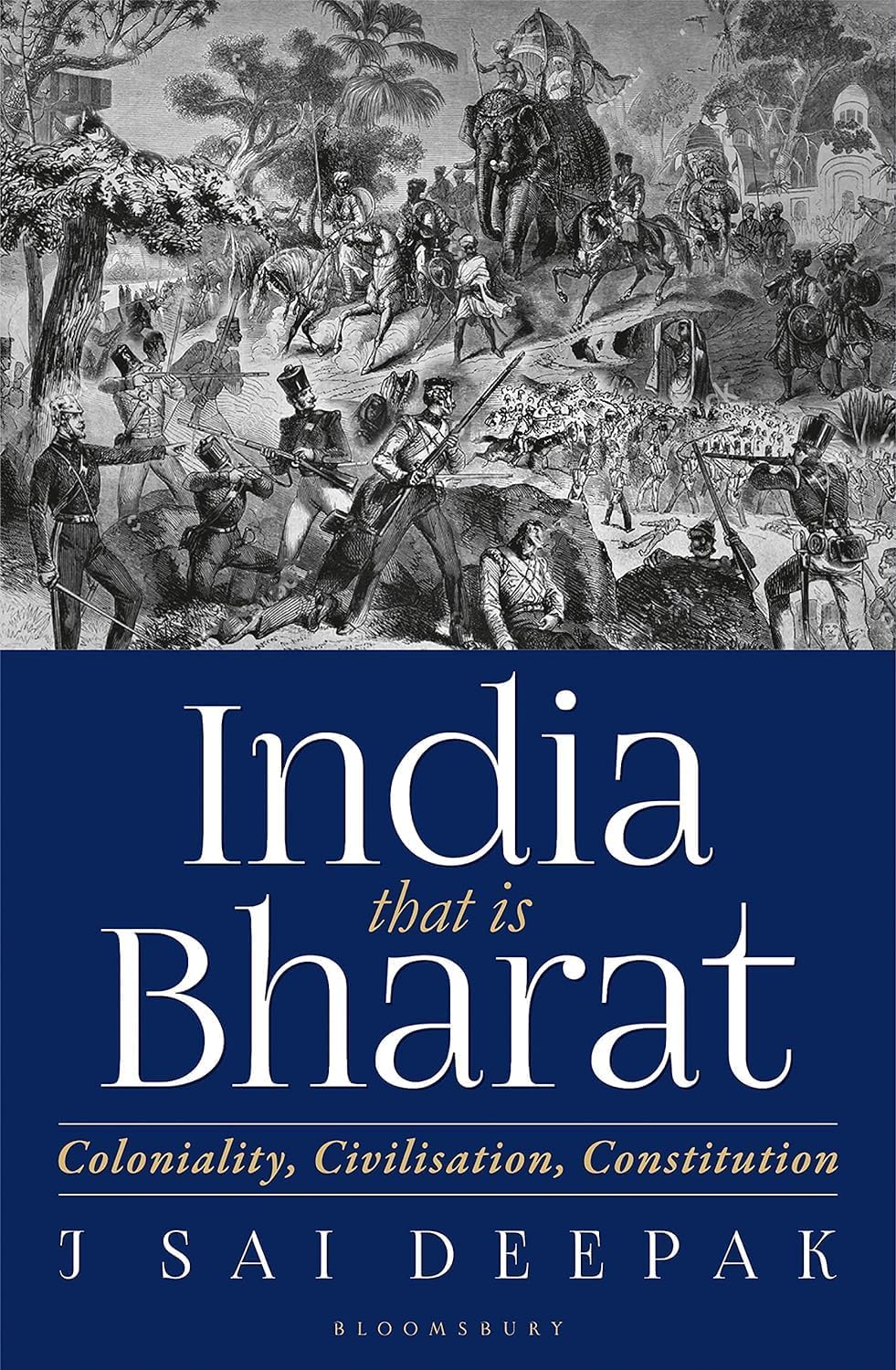
India that is Bharat: Coloniality, Civilisation, Constitution [J Sai Deepak] on desertcart.com. *FREE* shipping on qualifying offers. India that is Bharat: Coloniality, Civilisation, Constitution Review: Fascinating Work - * * * * * * * * * * * * * * * * * * * * * * * * * * * * * * * * * * * * * * * * Update After Completing The Book * * * * * * * * * * * * * * * * * * * * * * * * * * * * * * * * * * * * * * * * I just finished this book and I am already missing the great insight provided by Sai. I will have to read this soon again. I never knew that the House Of Lords appoints 26 Bishops (even till date) for making laws. This book is a great guide for all those who knew the history we were taught in Indian schools was not really right, but don't know how to prove and confront it. We can now refer to the passages in this book to back our oral knowledge. Knowing true history is not for picking up arguments with anybody or to be jingoistic about it. It is just to be at peace (knowing that the truth that we know all the while is indeed the real truth) * * * * * * * * * * * * * * * * * * * * * * * * * * * * * * * * * * * * * * * * Original Review * * * * * * * * * * * * * * * * * * * * * * * * * * * * * * * * * * * * * * * * J Sai Deepak has written a book that I wish was there when I was in college. This book is a must for those who want to understand the real history of Bharat from a Bharateeya point of view. I have completed a few chapters as of writing this review and I have seen no rhetoric at all and this book is full of facts. If I have to write the review in a single sentence I would put it this way: one can disagree with Sai's conclusions, but certainly not with the facts presented in this book. Review: This book is the ultimate red pill - It is pretty rare for a book that can be classified as very erudite to be welcomed with such pomp and praise, primarily when the book in question addresses the esoteric space of decoloniality and its implication in the Bharatiya context. And yet, that is precisely what lawyer J Sai Deepak has achieved in his first of a proposed trilogy of books on Bharat and Bharatiya consciousness. There is so much packed within this book that it is hard for any review to do justice. The book highlights not just the author's diligent research in combing through tons of material on decolonial scholarship, laws, debates, and events that shaped the origins of India's constitution but also his unique sense of narration and coherence to tie it all together. The end result is a comprehensive examination of everything related to our civilization and how we perceive it, most notably in the spheres of religion, nature, history, education, and constitutionalism. Split into 3 parts (as described in the title), the book weaves a thread on how coloniality, civilization, and the constitution of Bharat are intertwined. The book's overarching theme is decoloniality and why the decolonial lens is the ONLY way we need to look at our history and constitution. The following paragraphs illustrate how the author makes this case. We get an in-depth view to understand what decoloniality means and how it differs from other schools of thought like modernism, post-modernism, and post-colonialism. Summarizing this in the author's words - "the decolonial framework seeks to reinscribe the primacy of indigeneity, indigenous consciousness and its subjectivity in formerly colonized societies and civilizations." He also explains the difference between colonization, colonialism, and coloniality and how it excludes native perspectives. We are then exposed to the nature of colonization and how it affected the consciousness of our people to such an extent that the only way the native felt they could redeem their dignity was by "adopting European culture and thought processes". It made them forget and detest their own roots and made them think of their past and history as a colossal failure, thus undermining their self-confidence. The entire colonization process aims at universalizing and standardizing ways of life instead of allowing the diversity of different groups and societies to flourish. This, in turn, leads one to ask how the colonizer's mindset was formed, to begin with, and it is here that we were taken back to the voyages of Christopher Columbus in the 15th century. Its fundamental Christian and proselytizing nature is elaborately delved into. The much-celebrated "Secularism" and its origins are traced to the "Peace of Westphalia" treaty. We learn how the distinction between spiritual and secular was drawn from within the Christian framework and not outside it. Today, the international laws and treaties applied to non-western "nation-states" are all rooted in Protestant Reformation-inspired Westphalian principles. We then discover that these principles led them to a "civilizing" and "reformation" mission of the non-Christian world and thus uprooting the collective lived experiences and traditions of indigenous societies the world over. The Christian approach to nature as a means of exploitation was fundamentally the opposite of that of Indic systems that lived in harmony with nature. We are shown how the colonial approach has played out in different parts of the world, especially in Latin America and how the decolonial system needs to revisit each country's individual experience and their own history. In Bharat's case, we are introduced to Middle Eastern Coloniality as a predecessor of European coloniality and why it should be looked at through the same lens. While Middle Eastern Coloniality was defended against by the natives owing to its "in-your-face" nature, the end goals of European coloniality were much more oblivious. The author emphasizes how every stratum of our society bears a colonial stamp and why it is essential to judge all of our social structures, religion, polity, economics, and law using a decolonial approach and rejecting European-centric ideas. In the final part, the author analyzes the role of Christian secularism and gives a sneak-peek into whether it had an influence during the framing of the Government of India act of 1919, which formed the basis for our constitution later. Debates and discussions in European parliament about the Company's role, later brought under the Queen's rule, are explored. They provide chilling insights into how the British empire wanted to subjugate the people of Bharat in all aspects. The European approach to look at Indic philosophies and traditions from their ethnocentric lens resulted in them superimposing their worldview on Indic traditions. While Sanatana Dharma encompasses all aspects of life, the Christian colonizer reduced it to be a "religion" of "books." We are made aware of how these standardizations and laws percolate to this day, resulting in government control of Hindu temples in a supposedly "secular" state. Education is another aspect where the colonizer went to great lengths to erase any sense of pride associated with their past and history, as amply illustrated by Macaulay's famous "Minute on Education." Even during the peak of the European colonization of Bharat, many scholars stood up prominently against it. They challenged the notion of Bharat not being a united entity before their arrival, and the author cites various examples for this. Even as late as the early 20th century, we had leaders keenly aware of this cultural continuity. He also illustrates how the framers of the constitution were aware of this civilizational consciousness which is why Article 1 of the constitution states, "India that is Bharat." Still, post Independence, this consciousness has steadily been withering away. If there is one thing I believe the author wants the reader to take from this book, it is to be aware of our biases and internal coloniality and how we came to our present situation. Reading this book brought out my underlying disgust for British and European colonization and reaffirmed my belief in Bharatiya culture and values. The author makes a pop-culture reference to the movie Matrix in this book. I can confidently say that this book is the ultimate red pill for any Bharatiya and will completely change our perspective on how we look at Bharat forever.
| Best Sellers Rank | #336,819 in Books ( See Top 100 in Books ) |
| Customer Reviews | 4.8 4.8 out of 5 stars (7,756) |
| Dimensions | 7.87 x 1.97 x 9.84 inches |
| ISBN-10 | 9354352499 |
| ISBN-13 | 978-9354352492 |
| Item Weight | 10.6 ounces |
| Language | English |
| Print length | 484 pages |
| Publication date | August 15, 2021 |
| Publisher | Bloomsbury India |
S**R
Fascinating Work
* * * * * * * * * * * * * * * * * * * * * * * * * * * * * * * * * * * * * * * * Update After Completing The Book * * * * * * * * * * * * * * * * * * * * * * * * * * * * * * * * * * * * * * * * I just finished this book and I am already missing the great insight provided by Sai. I will have to read this soon again. I never knew that the House Of Lords appoints 26 Bishops (even till date) for making laws. This book is a great guide for all those who knew the history we were taught in Indian schools was not really right, but don't know how to prove and confront it. We can now refer to the passages in this book to back our oral knowledge. Knowing true history is not for picking up arguments with anybody or to be jingoistic about it. It is just to be at peace (knowing that the truth that we know all the while is indeed the real truth) * * * * * * * * * * * * * * * * * * * * * * * * * * * * * * * * * * * * * * * * Original Review * * * * * * * * * * * * * * * * * * * * * * * * * * * * * * * * * * * * * * * * J Sai Deepak has written a book that I wish was there when I was in college. This book is a must for those who want to understand the real history of Bharat from a Bharateeya point of view. I have completed a few chapters as of writing this review and I have seen no rhetoric at all and this book is full of facts. If I have to write the review in a single sentence I would put it this way: one can disagree with Sai's conclusions, but certainly not with the facts presented in this book.
A**N
This book is the ultimate red pill
It is pretty rare for a book that can be classified as very erudite to be welcomed with such pomp and praise, primarily when the book in question addresses the esoteric space of decoloniality and its implication in the Bharatiya context. And yet, that is precisely what lawyer J Sai Deepak has achieved in his first of a proposed trilogy of books on Bharat and Bharatiya consciousness. There is so much packed within this book that it is hard for any review to do justice. The book highlights not just the author's diligent research in combing through tons of material on decolonial scholarship, laws, debates, and events that shaped the origins of India's constitution but also his unique sense of narration and coherence to tie it all together. The end result is a comprehensive examination of everything related to our civilization and how we perceive it, most notably in the spheres of religion, nature, history, education, and constitutionalism. Split into 3 parts (as described in the title), the book weaves a thread on how coloniality, civilization, and the constitution of Bharat are intertwined. The book's overarching theme is decoloniality and why the decolonial lens is the ONLY way we need to look at our history and constitution. The following paragraphs illustrate how the author makes this case. We get an in-depth view to understand what decoloniality means and how it differs from other schools of thought like modernism, post-modernism, and post-colonialism. Summarizing this in the author's words - "the decolonial framework seeks to reinscribe the primacy of indigeneity, indigenous consciousness and its subjectivity in formerly colonized societies and civilizations." He also explains the difference between colonization, colonialism, and coloniality and how it excludes native perspectives. We are then exposed to the nature of colonization and how it affected the consciousness of our people to such an extent that the only way the native felt they could redeem their dignity was by "adopting European culture and thought processes". It made them forget and detest their own roots and made them think of their past and history as a colossal failure, thus undermining their self-confidence. The entire colonization process aims at universalizing and standardizing ways of life instead of allowing the diversity of different groups and societies to flourish. This, in turn, leads one to ask how the colonizer's mindset was formed, to begin with, and it is here that we were taken back to the voyages of Christopher Columbus in the 15th century. Its fundamental Christian and proselytizing nature is elaborately delved into. The much-celebrated "Secularism" and its origins are traced to the "Peace of Westphalia" treaty. We learn how the distinction between spiritual and secular was drawn from within the Christian framework and not outside it. Today, the international laws and treaties applied to non-western "nation-states" are all rooted in Protestant Reformation-inspired Westphalian principles. We then discover that these principles led them to a "civilizing" and "reformation" mission of the non-Christian world and thus uprooting the collective lived experiences and traditions of indigenous societies the world over. The Christian approach to nature as a means of exploitation was fundamentally the opposite of that of Indic systems that lived in harmony with nature. We are shown how the colonial approach has played out in different parts of the world, especially in Latin America and how the decolonial system needs to revisit each country's individual experience and their own history. In Bharat's case, we are introduced to Middle Eastern Coloniality as a predecessor of European coloniality and why it should be looked at through the same lens. While Middle Eastern Coloniality was defended against by the natives owing to its "in-your-face" nature, the end goals of European coloniality were much more oblivious. The author emphasizes how every stratum of our society bears a colonial stamp and why it is essential to judge all of our social structures, religion, polity, economics, and law using a decolonial approach and rejecting European-centric ideas. In the final part, the author analyzes the role of Christian secularism and gives a sneak-peek into whether it had an influence during the framing of the Government of India act of 1919, which formed the basis for our constitution later. Debates and discussions in European parliament about the Company's role, later brought under the Queen's rule, are explored. They provide chilling insights into how the British empire wanted to subjugate the people of Bharat in all aspects. The European approach to look at Indic philosophies and traditions from their ethnocentric lens resulted in them superimposing their worldview on Indic traditions. While Sanatana Dharma encompasses all aspects of life, the Christian colonizer reduced it to be a "religion" of "books." We are made aware of how these standardizations and laws percolate to this day, resulting in government control of Hindu temples in a supposedly "secular" state. Education is another aspect where the colonizer went to great lengths to erase any sense of pride associated with their past and history, as amply illustrated by Macaulay's famous "Minute on Education." Even during the peak of the European colonization of Bharat, many scholars stood up prominently against it. They challenged the notion of Bharat not being a united entity before their arrival, and the author cites various examples for this. Even as late as the early 20th century, we had leaders keenly aware of this cultural continuity. He also illustrates how the framers of the constitution were aware of this civilizational consciousness which is why Article 1 of the constitution states, "India that is Bharat." Still, post Independence, this consciousness has steadily been withering away. If there is one thing I believe the author wants the reader to take from this book, it is to be aware of our biases and internal coloniality and how we came to our present situation. Reading this book brought out my underlying disgust for British and European colonization and reaffirmed my belief in Bharatiya culture and values. The author makes a pop-culture reference to the movie Matrix in this book. I can confidently say that this book is the ultimate red pill for any Bharatiya and will completely change our perspective on how we look at Bharat forever.
A**R
If you want to decolonize your mind, this is the best book for you!
Seriously, to the Westernized English speaking Indian who takes Western categories of political, social and legal discourse for granted, this book is the antidote. He goes step by step from the very beginning and explains how terms we use to explain nation and civilization came into being in the Western world and what their meaning meant in the Western context. Foundational words of Western civilization such as - modern, civilized, secular, toleration, discovery, etc., are all examined. Their origins understood and their meaning scrutinized. Their lift and shift applicability in a different civilization that did not go through the same historical context is examined. The author explains with a clarity that no critic can ignore. This will have implications not only in India, but also in all the post-colonial societies and the society of their former colonial masters. The crystal clear clarity and linguistic precision along with context setting by extensively quoting primary sources make the material a compelling read. I feel like a fish seeing the water I am swimming in for the very first time!
S**R
What is Decolonialisation?
Sai Deepak clearly explains the origin of our colonial mindset with ample citations and original documents. From that foundation, he goes on to explain the decolonisation and decolonialisation. We have decolonised by throwing out the British, but not yet decolonialised. He points out examples of how it is difficult to get rid of the deeply entrenched colonial mindset. If you are interested in the British misrule of India, this book is a must-read.
A**H
It is a well-researched and insightful book that presents India’s civilizational journey with clarity. It’s a meaningful and engaging read that helps readers appreciate India’s depth and heritage.
A**J
It's rare to read a book at truly changes the way you look at the world. Standing on the shoulders of South American, Caribbean and other critics of colonialism, Sai presents novel insights. Colonisation as the process, colonialism as the policy and coloniality as the philosophy/worldview that undergirds the other two, is a significant new paradigm. Whilst societies are coming to terms with European colonisation the deeper philosophy that drove it remains undetected. The belief system that privileges all things European co-opted or created elites in societies it invaded. These became part of a process that continues on today that eradicates all culture that came before it. The sleight of hand was in introducing ideas under the guise of modernity/rationality, but not as 'European modernity/rationality'. Thus, convincing natives they were the opposite and by extension inferior.
A**H
This work comes at a really important time for Indians when we live in an age where misinformation can spread so rapidly. This work by Sai Deepak provides all Indians a foundational insight into the mind of the coloniser, how they think, how they act, and how organised the whole process is. This is going to be a seminal work for all future scholarship and cultural change that the country sees going forward. Godspeed Sai Deepak!
C**U
Commande arrivée très rapidement. Article conforme à la description du vendeur. Merci.
R**N
Love the book and more than that love Deepak Ji
Trustpilot
3 weeks ago
2 days ago