
Buy anything from 5,000+ international stores. One checkout price. No surprise fees. Join 2M+ shoppers on Desertcart.
Desertcart purchases this item on your behalf and handles shipping, customs, and support to Morocco.
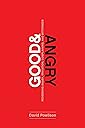
Something that matters to you just isn’t right. First you see the problem, then you feel it. It starts with a rush of adrenaline and often a rush of words, but it ends with an overwhelming sense of irritation that impacts how we talk to those we live and work with, complaining,and maybe even a settled bitterness to a person or a group of person. We know anger affects us negatively, but we don’t know any other way to respond when life goes wrong. Good and Angry, a groundbreaking new book from David Powlison, contends that anger is more than a problem to solve. Anger is our complex human response to things we perceive as wrong in a complex world, thus we must learn how to fruitfully and honestly deal with it. Powlison undertakes an in-depth exploration of the roots of anger, moral judgment, and righteous response by looking in a surprising place: God’s own anger. Powlison reminds us that God gets angry too. He sees things in this world that aren’t right and he wants justice too. But God’s anger doesn’t devolve into manipulation or trying to control others to get his own way. Instead his anger is good and redemptive. It causes him to step into our world to make wrongs right, sending his own Son to die so that we can be reconciled. He is both our model for change and our power to change. Good and Angry sets readers on a path toward a faithful and fruitful expression of anger, in which we return good for evil and redeem wrongs. Powlison offers practical help for people who struggle with irritation, complaining, or bitterness and gives guidance for how to respond constructively when life goes wrong. You, your family, and your friends will all be glad that you read this book. Review: Brilliant and detailed. - I can’t say a single thing I felt missing from this book and can go on and on about what was included that I didn’t expect and found greatly helpful. Review: Profoundly biblical and wise - David Powlison’s Good and Angry is a powerful book. In the book Powlison dives deep into what anger is and then gets very practical about how to biblically deal with your own anger issues (issues, he assures us, we all have). From the outset, Powlison makes it clear that anger, while dangerous, can be handled to produce good. “At its core anger is very simple,” Powlison says, “It expresses ‘I’m against that’” (39). Powlison says that each of us handles anger differently. Some of us freeze over, some of us quietly brood, some of us simmer, some of us explode. Powlison encourages us not to look at the way others mismanage worse than us, but rather, how do we mismanage anger? Each type has their own blind spots. Powlison then dives into anger itself. Anger is about our displeasure toward something, so what are we displeased with? And why? How are we justified? Unjustified in our anger? And what do I want to happen? Anger is physiological. As embodied beings, anger manifests itself in us physiologically. How is it impacting me when I’m angry? Powlison then dives into mercy, what he calls a constructive displeasure, or constructive anger. When the constructive displeasure of mercy is functioning as it ought, it has four characteristics: patience (a wonderful biblical synonym of patience is “forbearance”), forgiveness (which is “mercifully unfair” (80)), charity (a spirit of magnanimity), and constructive conflict (“Mercy is not a free pass. It is an invitation to turn and repent” (94). All of these fundamentally point to the work of God and his righteous response of anger to our rebellion. “The constructive displeasure of mercy means the redemption of the world” (102). Powlison walks through how God’s anger works: through his righteous and holy response to our sin, to him taking his wrath upon his son on the cross. He concludes, “God’s wrath is your hope. God’s wrath is my hope. We don’t often hear that, but it appears everywhere in the Bible. Wrath is our hope because love masters anger” (121). The final portion of the book steps back and helps us move through analyzing our own anger. Powlison uses James 4:1-12 to help us analyze our own anger issues. At the heart of this analysis is James’s own analysis of his hearer, that they are fighting and quarrelling because of their “desires that battle within” them. In other words, if we have an anger problem (which we all do), we have a malformed desire problem. In other words, we have a heart problem. Significant in digging into this question is the ability to analyze my own motives. The issue isn’t what has happened with me, but is my heart and my heart’s motives and desires in the midst of any given situation. Key questions to ask myself when in a moment of anger are: “what do I want?” “what do I fear?” and “what do I most love?” (154-55). Powlison concludes with a strong word of hope. God is in the process of changing us and reshaping our heart. Our problem, Powlison says, is that we tend to talk to the wrong person in the midst of our anger – ourselves. But when we turn and talk to our Good Shepherd, we will experience hope and change. I’m so grateful for Powlison's Good and Angry. It is a profoundly biblical and wise book with both subtle and profound insights. I know I have been impacted by the book personally and will both turn to it in the future for personal use and as a resource for others who struggle with anger.


| Best Sellers Rank | #20,471 in Books ( See Top 100 in Books ) #188 in Christian Personal Growth #288 in Christian Self Help #421 in Christian Spiritual Growth (Books) |
| Customer Reviews | 4.7 out of 5 stars 666 Reviews |
A**O
Brilliant and detailed.
I can’t say a single thing I felt missing from this book and can go on and on about what was included that I didn’t expect and found greatly helpful.
J**N
Profoundly biblical and wise
David Powlison’s Good and Angry is a powerful book. In the book Powlison dives deep into what anger is and then gets very practical about how to biblically deal with your own anger issues (issues, he assures us, we all have). From the outset, Powlison makes it clear that anger, while dangerous, can be handled to produce good. “At its core anger is very simple,” Powlison says, “It expresses ‘I’m against that’” (39). Powlison says that each of us handles anger differently. Some of us freeze over, some of us quietly brood, some of us simmer, some of us explode. Powlison encourages us not to look at the way others mismanage worse than us, but rather, how do we mismanage anger? Each type has their own blind spots. Powlison then dives into anger itself. Anger is about our displeasure toward something, so what are we displeased with? And why? How are we justified? Unjustified in our anger? And what do I want to happen? Anger is physiological. As embodied beings, anger manifests itself in us physiologically. How is it impacting me when I’m angry? Powlison then dives into mercy, what he calls a constructive displeasure, or constructive anger. When the constructive displeasure of mercy is functioning as it ought, it has four characteristics: patience (a wonderful biblical synonym of patience is “forbearance”), forgiveness (which is “mercifully unfair” (80)), charity (a spirit of magnanimity), and constructive conflict (“Mercy is not a free pass. It is an invitation to turn and repent” (94). All of these fundamentally point to the work of God and his righteous response of anger to our rebellion. “The constructive displeasure of mercy means the redemption of the world” (102). Powlison walks through how God’s anger works: through his righteous and holy response to our sin, to him taking his wrath upon his son on the cross. He concludes, “God’s wrath is your hope. God’s wrath is my hope. We don’t often hear that, but it appears everywhere in the Bible. Wrath is our hope because love masters anger” (121). The final portion of the book steps back and helps us move through analyzing our own anger. Powlison uses James 4:1-12 to help us analyze our own anger issues. At the heart of this analysis is James’s own analysis of his hearer, that they are fighting and quarrelling because of their “desires that battle within” them. In other words, if we have an anger problem (which we all do), we have a malformed desire problem. In other words, we have a heart problem. Significant in digging into this question is the ability to analyze my own motives. The issue isn’t what has happened with me, but is my heart and my heart’s motives and desires in the midst of any given situation. Key questions to ask myself when in a moment of anger are: “what do I want?” “what do I fear?” and “what do I most love?” (154-55). Powlison concludes with a strong word of hope. God is in the process of changing us and reshaping our heart. Our problem, Powlison says, is that we tend to talk to the wrong person in the midst of our anger – ourselves. But when we turn and talk to our Good Shepherd, we will experience hope and change. I’m so grateful for Powlison's Good and Angry. It is a profoundly biblical and wise book with both subtle and profound insights. I know I have been impacted by the book personally and will both turn to it in the future for personal use and as a resource for others who struggle with anger.
D**B
Useful for Sunday School class
David Powlison was a true gift to the Church. He has taken a difficult topic and dissected it into understandable parts. I read the entire book and profited from it, but I really grew to deeply appreciate its insights when I taught an adult Sunday School class for 15 weeks using the book's contents. It's excellent for both purposes. Buy this book!
F**L
Good Christian Perspective on Anger
I read this book over the course of three months; it was not hard to get through but other books had to be read first because of library due dates and without intent, it kept getting pushed lower on my priority read list. I finally got back to it earlier this week and finished up the remaining chapters. After reading it, I have a better understanding of anger through a Christian perspective. Author David Powlinson is a counselor so he brings with him expertise in working with people who have suffered bad things. Unlike some counselors who give guidance without the Scripture, Powlinson incorporates God and His love in each chapter since God is the ultimate source of freeing us from the burden of anger and the other emotions that accompany anger. The book is broken down into four sections: Our Experience, What is Anger?, How to Change, and Tackling the Hard Cases. Everyone is plagued by anger of different intensities and gets angry for different reasons and everyone deals with it in different ways, yet we are all the same in that we need to face our anger and seek God’s guidance so we may handle our anger in a constructive and positive way that glorifies Him. That is why I recommend this book to everyone, especially those who may be going through a hardship in life that makes them angry. I did not agree with everything Powlinson said or may not have understood where he was coming from on some things, but I still think he did a great job writing a book on a massive and complicated subject.
K**E
Profound and timely
If I could give this book 6 stars I would. The way the world is right now, I needed to do a deep dive into anger. And I needed to see how God wants me to handle my anger. There were some very challenging and humbling parts to this book that I needed to hear. All the application questions at the end of each chapter helped me solidify what I learned and what I needed to evaluate personally. Which leads me to the statement that this book was deeply personal to me and I am grateful for the changes it’s helped me make to reflect God more and myself less.
A**B
But he is also convinced that your anger does not have to be a problem and this book is intended to help redirect so that we can
David Powlison thinks you have an anger problem, and a serious one at that. It is not because he knows you personally, but because he is one who has long studied the fallen heart. But he is also convinced that your anger does not have to be a problem and this book is intended to help redirect so that we can be both good and angry. Anger, as Powlison who is the executive directory of CCEF, defines it, is a sense of opposition to something that is both important and wrong. That means it is a moral response. As those who are created in the image of God we all have come wired for the capacity to express anger. But, as Powlison carefully shows, we have a problem. Our anger is misdirected and misguided because of sin. Not only in the little daily frustrations and irritations, but also in extremely destructive ways. The goal, according to Powlison, is not to eliminate anger, but to have it remade into the image of God by the grace of the gospel. Far from being a therapeutic self-help book, his concern is that we come to understand how anger can coexist with forgiveness, patience, charity, and constructive displeasure. This book should prove to be an excellent resource. However, if you pick it up with the intention to help someone else—your husband, wife, child, friend, or congregant—be prepared to confront the reality of your own anger first. Powlison has a wonderful way of acutely diagnosing anger as a personal problem for all, even those who do not consider themselves angry. A couple of highlights would be his detailed examination of God's wrath showing readers why it is actually because of God's wrath that we have hope. His chapters dealing with every day anger, long-held bitterness, and anger against God also flow from a counselor's heart as he addresses difficult and awful painful truths.
J**T
Listened to 4 times and still learning things. Bible based approach.
Listened to 4 times and still learning things. Good approach with lots of Biblical references and basis.
R**T
One of the most important books I've read
There's nothing that SHOULD be earth-shattering to a Christian in this book, but it is SOOO worth the read. The author is speaking truth and compiling Scripture with personal anecdotes, history, and literature. What is great about this book is the way he compiles it, gets to the heart of the matter, and brings in hope from God's Word. Expect for this book to help you uncover your own idolatry and be pointed to your own need for redemption and mercy, and to be challenged to offer mercy to others. Also, I've seen some comments here that lead me to add this: Don't give up halfway through. Read the WHOLE book and keep reading to the end. It makes sense and gets better.
N**E
Amazing book!
This book not only spoke to my deepest questions and struggles with anger but led me beyond this to God. It is amazingly practical, insightful, personal and rigorous at the same time. More like five books than one.
N**M
Multi-faceted look at anger
This was a very helpful book - its easy to read but really gets to the core issues. The title 'Good and Angry' sums up the book well as the argument is that anger when done well is a constructive and a merciful response to wrong. Its just that most of anger isn't that - it becomes destructive and multiplies the wrong that its meant to be responding to. The questions he gives to breakdown the motivations behind anger are very effective - its tempting to just skip these and move on but working through these is a real eye opener and well worth it. Another real strength of the book is how multi-faceted it is. It looks at a whole range of different ways that anger manifests itself: along with the classic outbursts and rage there are much more subtle issues like complaining/grumbling, shame, not being angry about wrongs. Looking at anger from these different angles gave me a greater appreciation for the complexity of how I deal with anger in these different ways.
J**D
sehr hilfreich
Du hast ein Problem mit Zorn? Lies das Buch. Sie haben dich ungerecht behandelt? Hüte dich vor Bitterkeit, lies das Buch.
H**.
Libro
Un buen libro de consejeria.
C**S
Book Review: Good and Angry
In "Good and Angry," David Powlison delves into the topic of anger and how this emotion can be used for God’s glory. Powlison spends several chapters early in the book discussing what anger is and how anger quickly descends into sinful behaviour in our daily interactions. The author asserts that the root of anger lies in our self-seeking ambitions and fleshly desires. The author uses the example of trying to rush to a doctor’s appointment amid a traffic jam as a classic example of how our anger stems from elevating our own needs over the needs of others. Powlison suggests an eight-step process for thinking through one’s situation when feelings of irritableness begin to surface. When we develop a habit of carefully considering our motives and thoughts in these tense moments, we grow in awareness of our own sinfulness and begin the process of subjecting our anger to God. Another critical point that Powlison states is that the best example of good anger can be found in God’s anger as displayed in the Bible. We often try to shy away from Scriptural texts that speak of God’s anger as we are uncomfortable in trying to reconcile His love and anger at the same time. However, Powlison points out that only God can perfectly exhibit anger in a holy, loving manner. Christians need not become emotionless robots when faced with matters of injustice and immorality. Rather, we need to use our Bible and the Holy Spirit’s guidance to harness angry thoughts to be subjected to God’s sovereignty much like how many of the psalmists illustrate in Psalms. The last few chapters address specific questions about anger such as how to deal with deep-seated anger and anger at oneself. I emphatically recommend this book to everyone who wants to gain a biblical perspective on anger. Based on his extensive counselling experience, Powlison’s treatment of the topic is well-balanced and intriguing. We may think that the stoic Christian has no anger issues at all but Powlison alerts us that displaying no signs of unease when encountering blatant injustice is equally troubling. The author reminds us that anger is not neutral but veer towards good or evil depending on whether we subject our circumstances to God and allow Him to lead us to greater holiness or choose to do whatever is right in our own eyes. Moreover, we need to develop a healthy biblically-informed conscience that steers us towards taking appropriate actions that both glorifies God and loves those around us. Instead of trying to control our angry feelings with our own methods, let us submit our anger to God and allow Him to transform us so that our anger is no longer self-seeking but reflects His holy character.
Trustpilot
5 days ago
1 month ago