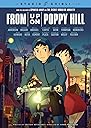
From Up on Poppy Hill
Product ID: 3598969
Desertcart purchases this item on your behalf and handles shipping, customs, and support to Morocco.
From the legendary Studio Ghibli, creators of Spirited Away , Howl's Moving Castle , and The Secret World of Arrietty , comes another animated triumph. Yokohama, 1963. Japan is picking itself up from the devastation of World War II and preparing to host the Olympics. The mood is one of both optimism and conflict as the young generation struggles to throw off the shackles of a troubled past. Against this backdrop of hope and change, a friendship begins to blossom between high school students Umi (Sarah Bolger) and Shun (Anton Yelchin) – but a buried secret from their past emerges to cast a shadow on the future and pull them apart. From a screenplay by Academy Award-winner Hayao Miyazaki and featuring an all-star English voice cast! "Visual magic!" - New York Times "Breathtaking! Beautiful!" - Variety "Stunning!" - The Los Angeles Times "A must see!" - Christian Science Monitor "One of the shimmering highlights of the year!" - Chicago Tribune "It will enchant any viewer!" - Miami Herald Review: A masterpiece of Miyazaki-style animation with an engaging story that transcends culture and time - (Note: this is a review of the movie, not of the DVD. Based on other reviews, I would advise potential buyers to be cautious about the quality of the specific DVD being sold.) From Up on Poppy Hill (Kokuriko-zaka Kara) is nothing less than the best Studio Ghibli film since 2004's Howl's Moving Castle, possibly even since 2001's Spirited Away. Directed by Goro Miyazaki from a screenplay by Hayao Miyazaki and Keiko Niwa, From Up on Poppy Hill is based on a 1980 serialized Japanese graphic novel of the same name, illustrated by Chizuru Takahashi and written by Tetsuro Sayama. The animation is lush and lovingly detailed, and the story an engaging tale of two high school students dealing with first love and with the importance of the past, both on a cultural and institutional level, and, as it turns out, on an intimately personal level as well. The story is set in 1963 in the port town of Yokahama in Japan in 1963 against the backdrop of the country getting ready to host the 1964 Olympic Games. Umi Matsuzaki is a sixteen-year-old high school girl living with her family and a couple of boarders in a house on top of a hill that overlooks the harbor. Her mother Ryoko, a medical professor, is currently away, studying abroad in the United States. In her mother's absence, Umi runs the house and looks after her younger siblings, Sora and Riku, and her grandmother, Hana. The boarders, both women, are an artistic college student named Sachiko Hirokouji and a doctor-in-training named Miki Hokuto. Umi's father, we learn, died many years ago when Umi was quite young, killed when his cargo ship hit a mine during the Korean War. As a kind of ritual to his memory, each morning Umi raises a set of naval signal flags up a flagpole outside the house with the message "Safe Voyage" to the ships out in the harbor. One day, an anonymous poem about the flags appears in the school newspaper. Curious, Umi decides to visit the school newspaper to ask who wrote the poem. The school paper is published out of an office located in a delapidated old building on the school grounds nick-named "the Latin Quarter" which houses all of the school clubs and has done so for as long as anyone can remember. But the Latin Quarter is now endangered by a plan to tear it down and replace it with a brand new building as part of Japan's modernization program to put on its best face for the upcoming Olympics, a move that has the students divided between those who want everything to be new and those who have an emotional attachment to the old and traditional, which they see embodied by their beloved Latin Quarter. On the way to visit the paper's office, Umi, accompanied by Sora, witness another student, Shun Kazama, performing a daredevil stunt to get publicity for the paper's "Save the Latin Quarter" drive. Umi is somewhat less than impressed by Shun's feat, but when she reaches the school paper office, she discovers that Shun, along with his friend Shiro Mizunuma who is the student government president, is the publisher of the school paper (and also, as she learns later, the author of the poem about her flags). Before she knows it, Umi is volunteering to help, first with the paper, preparing stencils, and then soon with their drive to save the Latin Quarter. She suggests that the best way to start would be to give the building a complete facelift, first with a thorough cleaning and then with much needed repairs and a fresh paint job. In this cause, Umi enlists the school's female student population, which in turn gets the male students guickly - and enthusiastically - on board. As they work together, Umi and Shun start feeling a growing attraction to each other. But the path of young love is rarely smooth, and theirs is thrown for a bigger curve than most when Umi shows Shun a photograph of three young naval men, one of whom is her deceased father. But Shun has seen this photograph before, and suddenly a past neither of them were previously aware of begins to assert itself, complicating their budding relationship before it's properly begun. From that point on, the twin plot threads - of Umi and Shun and their pasts and of the students' crusade to save the Latin Quarter - are subtly intertwined. To say more would be to spoil the story. The animation in From Up on Poppy Hill is wonderfully detailed and executed in so many ways it would take a long time to properly describe them. The Latin Quarter clubhouse is a marvel of clutter, completely believable as the sort of old place whose every corner would be filled with incredibly varied bric-a-brac due to the myriad kind of clubs it houses (and going for years without a proper cleaning because that's not typically a high priority with most boys). Another thing I particularly liked were the subtle changes in the backgrounds as evening approached in some scenes; you could feel the sun slowly beginning to set with the ever-so-slight lengthening of shadows and changes in the hue of the sky. Equal detail was given to the way the characters moved and the things they did. In one scene, when Umi is preparing dinner, she pours the rice into a square box, then carefully runs a flat edge over the top to level it so that the amount measured out is exact. It's a minor detail not dwelled upon, but one of many similar ones that give the film a depth of reality rarely found in most animated films. Highly, highly recommended for anyone who loves beautiful animation, engaging characters and truly first-class story-telling that never condescends to its audience. Review: Beautiful Animation and Story - "From Up on Poppy Hill" was definitely under my radar. I am a Miyazaki fan and I eagerly await anything from this illustrious studio. Yet somehow I missed the US theatrical release of this film. I only discovered this Japanese language DVD on desertcart. It is a film by Goro Miyazaki son of Hiyao Miyazaki the world's greatest animator. The elder Miyazaki did contribute to the story but Goro is the director. One thing a viewer should understand, Japanese animation is not necessarily a child's medium. This film touches on things your six year old will not understand. This is a `PG' film not `G'. This is a period piece set in Yokohoma, Japan. The year is 1963. World War II has been over for almost twenty years. The current generation is coming of age. With the Olympics coming to Japan in 1964, there is a huge push to show the world a new Japan. It's time to set old things aside and usher in the new era. Umi Matsuzaki is 16 years old. She lives in an old hospital owned by her family overlooking the harbor. Her medical professor mother is training in the US. She lives with her grandmother, three borders and her younger brother and sister. Despite the presence of the grandmother, Umi is the true head of household, preparing meals, doing laundry, keeping the books, etc. Her one eccentricity is each morning, she raises maritime signal flags in a ritual honoring her late father, a supply ship officer killed during the Korean War. At her school, Konan Academy, she finds out someone has been watching her morning ritual when she reads an anonymous poem in the school paper. It seems she has an anonymous admirer. On the campus of the school is a large old building called the Latin Quarter. It is used by the boys of the school as a club house for their various extracurricular activities including the school paper. The school's board is considering demolishing the building a move objected to by the Student Body President Shiro Muzunuma and his best friend Shun Kazama, son of a tugboat captain. At lunch, the Shun performs a daring stunt seen by most of the students to promote their protest. In the instant he jumps his eyes connect with Umi. While this can't possibly be the first time they see each other, it is the first time they really see each other. A connection is made and it is the beginning of their romance. But Shun is adopted and the story of his origin could derail this relationship before it really gets started..... This is a Japanese film done in traditional hand-drawn animation. It is absolutely beautiful. I really wish I'd seen this on a big screen. Being forced to read the subtitles do not take away from the cinematic experience. There are cultural as well as temporal differences. Remember this is a period piece. The children wear uniforms to school. The amount of detail is incredible. Light and shadow in the animation imitates life. Shun's father stands at the wheel of his tugboat erect (like the former naval petty officer he'd been). His eyes miss nothing and he turns the wheel with confidence and no wasted motion. Shiro is a subtle character. He is a brilliant student academically as well as socially. He runs the student body and misses nothing. Shun is his best friend and partner in all his endeavors. The boys complement each other. Shiro is cool, calm, caring but calculating. Shun is bold, dashing and courageous. This relationship is best illustrated during a spirited student debate over whether or not to demolish the Latin Quarter. It's also the most hilarious scene in the film. Don't worry I won't spoil it for you..... The romance between Umi and Shun is the centerpiece of the film. These are high school students in 1963. There is latent sexual tension but that is not the point of this relationship. This is the love we feel when we are happy just being together. They are afraid to touch each other. But they hate to be apart. Goro Miyazaki has his father's talent for romantic scenes. Randomly meeting Umi on the street, Shun gives her a ride on his bicycle. I know that does not sound like much but when you see it in the movie you will understand the emotional impact of this scene. Anyway I think I have written enough. If you are looking for space aliens, car crashes or alien invaders this is not the movie you want. However, if you want to see quality animation, intelligent characters that you grow to know and love and a great film, this is something you should see.
| Contributor | Alex Wolff, Anton Yelchin, Aubrey Plaza, Chris Noth, Christina Hendricks, Emily Osment, Geoffrey Wexler, Gillian Anderson, Goro Miyazaki, Haruza Shiraishi, Isabelle Fuhrman, Jamie Lee Curtis, Junichi Okada, Keiko Takeshita, Masami Nagasawa, Michael Prupas, Robert Halmi Sr., Sarah Bolger, Toshio Suzuki, Yuriko Ishida Contributor Alex Wolff, Anton Yelchin, Aubrey Plaza, Chris Noth, Christina Hendricks, Emily Osment, Geoffrey Wexler, Gillian Anderson, Goro Miyazaki, Haruza Shiraishi, Isabelle Fuhrman, Jamie Lee Curtis, Junichi Okada, Keiko Takeshita, Masami Nagasawa, Michael Prupas, Robert Halmi Sr., Sarah Bolger, Toshio Suzuki, Yuriko Ishida See more |
| Customer Reviews | 4.7 out of 5 stars 3,418 Reviews |
| Format | Animated, Color, Dolby, Multiple Formats, NTSC, Widescreen |
| Genre | Anime & Manga |
| Language | English, Japanese |
| Runtime | 1 hour and 31 minutes |
W**D
A masterpiece of Miyazaki-style animation with an engaging story that transcends culture and time
(Note: this is a review of the movie, not of the DVD. Based on other reviews, I would advise potential buyers to be cautious about the quality of the specific DVD being sold.) From Up on Poppy Hill (Kokuriko-zaka Kara) is nothing less than the best Studio Ghibli film since 2004's Howl's Moving Castle, possibly even since 2001's Spirited Away. Directed by Goro Miyazaki from a screenplay by Hayao Miyazaki and Keiko Niwa, From Up on Poppy Hill is based on a 1980 serialized Japanese graphic novel of the same name, illustrated by Chizuru Takahashi and written by Tetsuro Sayama. The animation is lush and lovingly detailed, and the story an engaging tale of two high school students dealing with first love and with the importance of the past, both on a cultural and institutional level, and, as it turns out, on an intimately personal level as well. The story is set in 1963 in the port town of Yokahama in Japan in 1963 against the backdrop of the country getting ready to host the 1964 Olympic Games. Umi Matsuzaki is a sixteen-year-old high school girl living with her family and a couple of boarders in a house on top of a hill that overlooks the harbor. Her mother Ryoko, a medical professor, is currently away, studying abroad in the United States. In her mother's absence, Umi runs the house and looks after her younger siblings, Sora and Riku, and her grandmother, Hana. The boarders, both women, are an artistic college student named Sachiko Hirokouji and a doctor-in-training named Miki Hokuto. Umi's father, we learn, died many years ago when Umi was quite young, killed when his cargo ship hit a mine during the Korean War. As a kind of ritual to his memory, each morning Umi raises a set of naval signal flags up a flagpole outside the house with the message "Safe Voyage" to the ships out in the harbor. One day, an anonymous poem about the flags appears in the school newspaper. Curious, Umi decides to visit the school newspaper to ask who wrote the poem. The school paper is published out of an office located in a delapidated old building on the school grounds nick-named "the Latin Quarter" which houses all of the school clubs and has done so for as long as anyone can remember. But the Latin Quarter is now endangered by a plan to tear it down and replace it with a brand new building as part of Japan's modernization program to put on its best face for the upcoming Olympics, a move that has the students divided between those who want everything to be new and those who have an emotional attachment to the old and traditional, which they see embodied by their beloved Latin Quarter. On the way to visit the paper's office, Umi, accompanied by Sora, witness another student, Shun Kazama, performing a daredevil stunt to get publicity for the paper's "Save the Latin Quarter" drive. Umi is somewhat less than impressed by Shun's feat, but when she reaches the school paper office, she discovers that Shun, along with his friend Shiro Mizunuma who is the student government president, is the publisher of the school paper (and also, as she learns later, the author of the poem about her flags). Before she knows it, Umi is volunteering to help, first with the paper, preparing stencils, and then soon with their drive to save the Latin Quarter. She suggests that the best way to start would be to give the building a complete facelift, first with a thorough cleaning and then with much needed repairs and a fresh paint job. In this cause, Umi enlists the school's female student population, which in turn gets the male students guickly - and enthusiastically - on board. As they work together, Umi and Shun start feeling a growing attraction to each other. But the path of young love is rarely smooth, and theirs is thrown for a bigger curve than most when Umi shows Shun a photograph of three young naval men, one of whom is her deceased father. But Shun has seen this photograph before, and suddenly a past neither of them were previously aware of begins to assert itself, complicating their budding relationship before it's properly begun. From that point on, the twin plot threads - of Umi and Shun and their pasts and of the students' crusade to save the Latin Quarter - are subtly intertwined. To say more would be to spoil the story. The animation in From Up on Poppy Hill is wonderfully detailed and executed in so many ways it would take a long time to properly describe them. The Latin Quarter clubhouse is a marvel of clutter, completely believable as the sort of old place whose every corner would be filled with incredibly varied bric-a-brac due to the myriad kind of clubs it houses (and going for years without a proper cleaning because that's not typically a high priority with most boys). Another thing I particularly liked were the subtle changes in the backgrounds as evening approached in some scenes; you could feel the sun slowly beginning to set with the ever-so-slight lengthening of shadows and changes in the hue of the sky. Equal detail was given to the way the characters moved and the things they did. In one scene, when Umi is preparing dinner, she pours the rice into a square box, then carefully runs a flat edge over the top to level it so that the amount measured out is exact. It's a minor detail not dwelled upon, but one of many similar ones that give the film a depth of reality rarely found in most animated films. Highly, highly recommended for anyone who loves beautiful animation, engaging characters and truly first-class story-telling that never condescends to its audience.
M**L
Beautiful Animation and Story
"From Up on Poppy Hill" was definitely under my radar. I am a Miyazaki fan and I eagerly await anything from this illustrious studio. Yet somehow I missed the US theatrical release of this film. I only discovered this Japanese language DVD on Amazon. It is a film by Goro Miyazaki son of Hiyao Miyazaki the world's greatest animator. The elder Miyazaki did contribute to the story but Goro is the director. One thing a viewer should understand, Japanese animation is not necessarily a child's medium. This film touches on things your six year old will not understand. This is a `PG' film not `G'. This is a period piece set in Yokohoma, Japan. The year is 1963. World War II has been over for almost twenty years. The current generation is coming of age. With the Olympics coming to Japan in 1964, there is a huge push to show the world a new Japan. It's time to set old things aside and usher in the new era. Umi Matsuzaki is 16 years old. She lives in an old hospital owned by her family overlooking the harbor. Her medical professor mother is training in the US. She lives with her grandmother, three borders and her younger brother and sister. Despite the presence of the grandmother, Umi is the true head of household, preparing meals, doing laundry, keeping the books, etc. Her one eccentricity is each morning, she raises maritime signal flags in a ritual honoring her late father, a supply ship officer killed during the Korean War. At her school, Konan Academy, she finds out someone has been watching her morning ritual when she reads an anonymous poem in the school paper. It seems she has an anonymous admirer. On the campus of the school is a large old building called the Latin Quarter. It is used by the boys of the school as a club house for their various extracurricular activities including the school paper. The school's board is considering demolishing the building a move objected to by the Student Body President Shiro Muzunuma and his best friend Shun Kazama, son of a tugboat captain. At lunch, the Shun performs a daring stunt seen by most of the students to promote their protest. In the instant he jumps his eyes connect with Umi. While this can't possibly be the first time they see each other, it is the first time they really see each other. A connection is made and it is the beginning of their romance. But Shun is adopted and the story of his origin could derail this relationship before it really gets started..... This is a Japanese film done in traditional hand-drawn animation. It is absolutely beautiful. I really wish I'd seen this on a big screen. Being forced to read the subtitles do not take away from the cinematic experience. There are cultural as well as temporal differences. Remember this is a period piece. The children wear uniforms to school. The amount of detail is incredible. Light and shadow in the animation imitates life. Shun's father stands at the wheel of his tugboat erect (like the former naval petty officer he'd been). His eyes miss nothing and he turns the wheel with confidence and no wasted motion. Shiro is a subtle character. He is a brilliant student academically as well as socially. He runs the student body and misses nothing. Shun is his best friend and partner in all his endeavors. The boys complement each other. Shiro is cool, calm, caring but calculating. Shun is bold, dashing and courageous. This relationship is best illustrated during a spirited student debate over whether or not to demolish the Latin Quarter. It's also the most hilarious scene in the film. Don't worry I won't spoil it for you..... The romance between Umi and Shun is the centerpiece of the film. These are high school students in 1963. There is latent sexual tension but that is not the point of this relationship. This is the love we feel when we are happy just being together. They are afraid to touch each other. But they hate to be apart. Goro Miyazaki has his father's talent for romantic scenes. Randomly meeting Umi on the street, Shun gives her a ride on his bicycle. I know that does not sound like much but when you see it in the movie you will understand the emotional impact of this scene. Anyway I think I have written enough. If you are looking for space aliens, car crashes or alien invaders this is not the movie you want. However, if you want to see quality animation, intelligent characters that you grow to know and love and a great film, this is something you should see.
H**O
Yet Another Amazing Studio Ghibli Work
Leave it to Studio Ghibli to dish out the amazing anime movies. Just by watching the trailer, I knew this was going to be great. Well, I get that feeling about pretty much anything that Studio Ghibli releases, since I've been an avid fan of their works for a long time now. Anyway, this movie is a very well done coming of age, slice of life story that may make you think "oh, that happened to me" more than once throughout the movie. As usual, the animation quality is top notch. No one rivals Studio Ghibli when it comes to hand drawn animation. They are number one, hands down. Also, the music is great and goes well with the setting and theme of the story. The character designs are really good, too. All of these are to be expected from Studio Ghibli. That's why they are so critically acclaimed throughout the world as masters of animation. Anyway, the story is a simple yet heartwarming one about growing up and love. We all experience both of these, so it hits close to home and draws you in even deeper. Sometimes, the simple things in life are the ones that create the fondest memories. I definitely recommend this movie to all anime fans, new or old.
L**S
Great Movie! Not so great English dub
This movie for me is how I wish all teenage romances were...Simple but with substance and absolutely beautiful. Now first off I HIGHLY recommend you watch this in subtitles. The English dub is one of the worst of the Ghibli films I've seen (next to Castle in the Sky). Not necessarily for the voice acting but because of the "Americanization" of it. Umi is A LOT more snarky in the American version, which normally I would prefer but she loses a sweetness to her that added to the spirit of the film. Overall I think the dub was trying to make this movie funnier by adding snarky comments in random places. "Wow these guys really like signs" or "Oh look it's an X chromosome." And while this could have worked for something else the beauty of the film is diminished by this and I couldn't help but wince especially when considering the time period and location. Other than this dub malfunction the film is sweet and a favorite among my Ghibli collection with beautiful landscapes and a slice of life story line that I wouldn't mind seeing more of.
S**N
Interesting film, but with a few flaws (no spoilers)
This is a great film -- it reminds me the most of "Whisper of the Heart" with the pacing and the atmosphere. If you are a Ghibli fan, this is a no brainer: go watch this film. Since it was directed by Hayao's son, Goro, I was a little worried that this would be another flop (see: Tales From Earthsea), but its a very charming film and still has the "Miyazaki" spirit. The English voice acting, as with most other Ghibli films, is spot-on. This time, the cast isn't as distracting as other Ghibli works, which works to its benefit. Sometimes the "Disney"-released movies get a little distracting with their "all star" cast of voice actors, but this one has voices that really blend well with the movie. The only issue I have with the film is that with this casual, meandering tale, it's hard to pinpoint a central meaning to it. It's definitely more of a "slice of life" film than narrative-driven. Additionally, the ending was very abrupt. This didn't detract too much from the film itself, but it was noticeable. If you've seen "Pom Poko" -- it's similar in that way. Some of the extras are refreshing, too. It was interesting to see that, at the screening, Hayao was a little harsh on the team, yet at the same time encouraging. It reminds me a bit of Steve Jobs's management style. Goro was very apologetic to the team (even though the final product was very good). It was very interesting to see the dynamic between all of them. It shows how seriously they take building a film like this, and how they scrutinize and agonize over every detail. They also briefly touch on the earthquake (which interrupted development of the film for a time). It must have been a massive amount of pressure, even without the other issues. It shows a little bit into how Ghibli becomes "Ghibli" and how dedicate they all are. Although it feels a little rough and unfinished in parts, the Ghibli spirit shines through. I feel like this is a good sign for Goro Miyazaki taking the reins of the Ghibli Studio and I look forward to his future endeavors.
D**Z
Beautifully and Sincerely Nostalgic
From Up on Poppy Hill is not the kind of film anyone familiar with the names Studio Ghibli and Miyazaki might come to expect from the Oscar-winning and blockbuster studio and director. But while this film written by Hayao Miyazaki and Keiko Niwa and directed by Hayao’s son Goro Miyazaki may be the opposite of the more fantastical films they are known for, it isn’t any less beautifully animated nor less emotionally affecting. From Up on Poppy Hill tells the story of Umi Matsuzaki, a 16-year old high school student in 1963 Yokohama. While taking care of her family’s boarding house and its residents in the mornings and evenings, she takes an interest in helping fellow student Shun Kazama work to save her school’s dilapidated clubhouse from demolition. Working together soon draws them closer to each other until a surprising past is revealed that momentarily puts a stop to the feelings they have developed for each other. And while that little tidbit sounds very soapy, especially for an animated film from Studio Ghibli, it is only one small part of the greater narrative. And that narrative is one that evokes a dream-like nostalgia very much present in the previous works of Miyazaki, the senior. The signature hand-drawn animation beautifully brings to life a more idyllic, yet at the same time tensely transitional period in Japan’s history. Serving as a window to the country and its people after World War II and the Korean War and before the successful 1964 Tokyo Olympics, From Up on Poppy Hill is a nostalgic and warm slice of life drama. It paints the picture of a bustling, but hometown feeling port city during a much simpler time, making it relatable to people of any culture or ethnicity. Specifically, it touches on the quickly developing country, eager to recover from the painful decades before. Thinking of Studio Ghibli and the master that is Hayao Miyazaki, one immediately thinks of such fantastical films as Spirited Away or My Neighbor Totoro or fiercely thought provoking films like Princess Mononoke and pre-Ghibli Nausicaa of the Valley of the Wind. And while it shares many of the same qualities, From Up on Poppy Hill is a much simpler story. But it is in its simplicity that From Up on Poppy Hill draws its best, unique qualities. It is at times a heartwarming story of friendship and young love and at others, a fun look at childhood and youth. The film subtly, but effectively conveys that poignant nostalgia that can make even a 26-year old youngin like me can get teary eyed at the thought of a much simpler time. The film takes care to point out how important the past is in our present and future. For the characters, it is their holding on to their pasts that help get them through to their futures. That’s a philosophy I personally subscribe to as well, making it that much more meaningful to me. So yes, the film does have plenty of MaGMCMs, including right at the end when everything just sinks in. And that may just be a trademark of a Hayao Miyazki written screenplay. While the younger Miyazaki, Goro, drew a tepid response to his directorial debut, the uneven Tales from Earthsea, he recovers very well here and shows that he does have a promising future following in his father’s very big footsteps. From Up on Poppy Hill may not have the grand, fantastical adventure of other Studio Ghibli films, but it is just as engaging and contains just as much magic thanks to its beautifully breathtaking visuals, likeable characters and sincerely nostalgic story.
S**N
Awesome Studio Ghibli Movie!
This is one of my favorite movies. "From Up On Poppy Hill" is truly one of Japan's great movies. It is great that Studio Ghibli still does 2D animation, which a lot of movie studios are now moving away from. The movie is set in Japan and the story line of this movie is very good. It was a joy to watch this movie. The Blu-Ray quality is great and the artwork is very well done. This isn't a Hayao Miyazaki movie, but it is still an awesome movie. Studio Ghibli makes great movies and this movie definitely lives up to the high quality that is produced by this movie studio. If you are a fan of Studio Ghibli or anime, then you should definitely watch this movie. It is a great movie for all ages and anyone can enjoy the movie.
D**D
The characters are thinner than Ghibli's best, but they serve a nostalgic and meaningful story about a period of rapid change
"From Up on Poppy Hill" is set in the early 1960s, and while the English dub makes this plain in an expository opening monologue, in the original Japanese version our initial cues are far subtler: background newspaper headlines and a nostalgic soundtrack of postwar jazz and pop hits. (This is one of the more egregious examples of how English-language Ghibli adaptations change the tone of the studio's works; use subtitles when possible.) In the original it becomes clear only slowly that the period setting is not merely a romantic conceit, although the story is indeed romantic to the point of occasional melodrama. The early 1960s was a significant time for Japan, and an appreciation of the deeper meanings of "Poppy Hill" requires some understanding of the context. Happily, the movie itself provides this context brilliantly. The Tokyo Olympics of 1964 are on the horizon, and this landmark event in Japan's economic boom and global reorientation looms over all. Much of the urban scenery depicted in the movie is under construction, and an agitated group of students observes that Japan is "building a new society on the ruins of the old." The old society, of course, was a casualty of the war, and the war and its ripple effects were the occasion of great personal loss for the film's main characters, a boy and a girl in a Yokohama high school. Born at the breaking point that separated the old Japan from the new, their only links to the past are the old photographs they each reverently guard. They each have a deep longing to connect with the past: their personal pasts represented by the people they have lost, and also the physical past of their surroundings that is increasingly threatened by runaway development. These themes, and the focus on the war's irreparable human costs, fit perfectly in the Ghibli canon, since many of Miyazaki's films are concerned with nostalgia, cultural identity, and environmental protection. But "Poppy Hill" is distinctive in its presentation, which is far more historically-grounded and intensely personal than most of its predecessors. Japan's tumultuous history shapes the lead characters' arcs in dramatic and unanticipated ways, but in the service of symbolism there is some sacrifice of depth in their personalities. They are perhaps too much the ideal anime boy and ideal anime girl, hard-working and chipper to a fault, unlike the occasionally self-interested star of "Spirited Away" or the deeply uncertain adolescent title character of "Kiki's Delivery Service." Yet fans of Ghibli films are unlikely to object too strongly to this indulgence in tropes of Japanese animation, and even more unlikely to respond to "Poppy Hill" with anything but admiration and affection.
Trustpilot
4 days ago
1 month ago