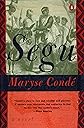
Segu: A Novel
Product ID: 29570068
Desertcart purchases this item on your behalf and handles shipping, customs, and support to Morocco.
“Condé’s story is rich and colorful and glorious. It sprawls over continents and centuries to find its way into the reader’s heart.” —Maya Angelou “A wondrous novel” ( The New York Times ) by the winner of the 2018 New Academy Prize (The Alternative Nobel prize in literature) and author of The Gospel According to the New World The year is 1797, and the kingdom of Segu is flourishing, fed by the wealth of its noblemen and the power of its warriors. The people of Segu, the Bambara, are guided by their griots and priests; their lives are ruled by the elements. But even their soothsayers can only hint at the changes to come, for the battle of the soul of Africa has begun. From the east comes a new religion, Islam, and from the West, the slave trade. Segu follows the life of Dousika Traore, the king’s most trusted advisor, and his four sons, whose fates embody the forces tearing at the fabric of the nation. There is Tiekoro, who renounces his people’s religion and embraces Islam; Siga, who defends tradition, but becomes a merchant; Naba, who is kidnapped by slave traders; and Malobali, who becomes a mercenary and halfhearted Christian. Based on actual events, Segu transports the reader to a fascinating time in history, capturing the earthy spirituality, religious fervor, and violent nature of a people and a growing nation trying to cope with jihads, national rivalries, racism, amid the vagaries of commerce. Review: Amazing history of Segu - Amazing history of Segu. well written by a non-African and marvelously told and experienced by the author. Highly recommended. Review: Segue A New Story - A great story and new look at colonial Africa and slave trade from an African view point that does not include North America.
| Best Sellers Rank | #452,268 in Books ( See Top 100 in Books ) #1,273 in Religious Historical Fiction (Books) #1,688 in Cultural Heritage Fiction #2,354 in Regional & Cultural Literary Criticism |
| Customer Reviews | 4.6 out of 5 stars 228 Reviews |
A**T
Amazing history of Segu
Amazing history of Segu. well written by a non-African and marvelously told and experienced by the author. Highly recommended.
A**R
Segue A New Story
A great story and new look at colonial Africa and slave trade from an African view point that does not include North America.
M**S
A question of identity
Commencing in 1797 in the kingdom of Segu in West Africa, an oblong tract of land south of Timbuktu and surrounding Bamako, now the capital of Mali, Conde's novel unearths the traditions, struggles, conflicts, and triumphs of a family and its culture over the course of a century. It portrays the Bambara people during the spread of Islam from the east, the slave trade from the west, and the introduction of trade and commerce from Europe. Segu (first published in 1984 in French, and published in English in 1987) is based around the patriarch of the Traore family, Dousika, and his four sons: Teikoro and Naba from his first wife, Nya; Siga, the offspring of Slave, his third wife; and Malobali from his fourth of five wives. The novel is structured in five parts: not representative of his five wives, but of his son's migratory journeys and personal growth as the cultures of West Africa fuse and interweave, rise and decline, causing the sons to question their identities. The kingdom of Segu, steeped in customary animist beliefs, and in the traditions of story-telling, oral history, and griots' singing chronicles, is changing. This is initially seen through the eyes of the eldest son, Tiekoro Traore, when he witnesses, with great fascination, a Muslim for the first time, who is penning words with a pointed stick and ink - Teikoro is seeing the "magic" of writing. Siga, the third son, notices that "in the past all a man needed was a bit of willpower to keep wives, children, and younger brothers in order. Life was a straight line drawn from the womb of a woman to the womb of the earth ... But now the menace of new ideas and values lurked everywhere." For Malobali, who had never seen a European before, "he couldn't understand their admirers, for he saw in them a danger worse than that of the Fulani and all the other Muslims combined." So, while some sons see change as exciting, others are confused by it or fear it. Conflicts are presented between family members, between different religious and cultural communities, and internally as the sons decide whether to convert to Islam or defend their traditions in which there is a sense of kinship between man and nature; whether to relinquish their power and join the traders and merchants or to remain within their aristocratic agricultural heritage; and whether to fight or succumb to slave traders. This epic tale is detailed, descriptive, historical, compelling, and transformative. The novel is beautifully written in which the landscape, characters, and cultures reveal the intersection of human reality and the divergence of their dreams. Segu is a distinct, compact kingdom, ritualistic and proud, in which the king is the custodian of knowledge and secrets. Islam undermines the king's position in which the community is now introduced to the individual concept of the "will to truth." When forced to confront individualism due to societal and cultural changes, internal and external, the sons must reflect on their stable sense of self and their new identities within new communities. "I am Bambara from Segu" loses its sense of meaning over time. Tiekoro and Siga are contrasts in religious beliefs, for Tiekoro choses to convert to Islam, thus starting the major conflict within the family, but their fates are similar. As Siga discovers, "Tiekoro's fate and his own were as inseparable as night and day. Or as sun and moon, for they both fill the world with light and life." Siga's idea of starting a tannery was horrific to Tiekoro, who was a true Bambara nobleman in which agriculture was the only occupation of worth and the hierarchical ownership of land the only value of a man. For Malobali, he was paid to fight, "but too often his arms had been turned against the innocent" and contemplated Christianity. Naba has an altogether different fate, dying young, followed by Malobali, confused and conflicted. The personal dilemmas are "infinitely forlorn, infinitely disturbing." Sometimes a son emerges temporarily the victor, sometimes he doesn't. When victorious over one dilemma, such as Islam, they are faced with another, such as western imperialism. All the while there is love and loss. Sometimes the changes are gradual and progressive, but mostly they are violent, impacting the kingdom and individuals in one forceful shock. In all cases, family cohesion is torn as sons are uprooted.
A**H
A Masterpiece
This book simply transports you back into time and provides you with a first hand account of how life was in West Africa in the early 19th Century. Maryse Conde is a brilliant story teller; this is certainly a "must read".
S**N
It s a factionalized version of the history of slavery and Islam.
Well written book. I learned about the history of Segu , the influence of the Muslim culture vs the animist religion of the people and the history of slavery as practiced in that region, even before the English, French , Spanish and Portuguese became involved.
K**J
History Weaved Through Fiction
Segu is fictional in its presentation but is well researched and lends an amazing historical lens into the religious and political configuration of the African continent prior to and post the Transatlantic slave trade. Maryse Conde illustrates the effects such actions had on all in the society, historically. She also illuminates the residual energies of such a time and the effects of that time on the present.
U**8
Great read
Bought this for my sister she loved it. Getting it for myself now!
M**Y
flawed but pioneering work.
Segu is a good look into late 18th and early 19th century West Africa. I question Ms. Conde's motives because her point of view seems to lean heavily towards Eurocentrics. It was hard to get through with the exception of Malobali, the African obsession with everything European. I'm sure in many situations, that was the case. However I don't understand the emphasis. Also calling Moors non black. Overall it is a good tale that's easy to get lost in. She puts the reader directly in the village courts, shows indigenous religions as sophisticated, and doesn't condensed the beauty of the people.
H**H
Great story , original paperback.
The book received was new and in great condition. It’s an excellent story which hooks you from the beginning itself. The style of writing is very different from native English authors.
I**S
Epic novel by a highly gifted writer
This novel begins at the end of the eighteenth century and ends somewhere around the middle of the nineteenth. That was a period of massive social and technological change in Europe – and clearly in Africa as well. It is set in a west African city state called Segu and focuses on the Traore family. However, it also ranges across west and north Africa and to Brazil, the Caribbean and London as members of the family are enslaved, go searching for relatives or are sent off to trade, become Muslims or to train for the Christian priesthood. The underlying theme is one of a family and a culture in crisis, under threat, on the verge of collapse, with vast forces from all directions threatening an end to ancestral beliefs and ways. Several things make this novel a difficult and uncomfortable read. First, it covers a period when Britain and other European countries were groping towards some kind of democracy and equality – with a lot of backsliding and hypocrisy. Yet, here we have polygamy and slavery flourishing in rigidly hierarchical and authoritarian societies. There is collusion with white slave traders even as European abolitionists are arguing against the trade in human misery, which illustrates white hypocrisy but also the casual acceptance of slavery by the people of Segu as necessary and useful. Ancestral bigotry and hostility between peoples from different cultural groups has been worsened by the white pigmentocracy leading to obsessions about people’s worth based on their skin colour. Christian missionaries are beginning to meddle on the coast with their zeal for "saving" the Africans from their traditional religions. However, the biggest threat – and opportunity – presented in the novel comes from Islam. The main attraction of Islam at first is that of reading and writing. These are gifts previously unknown in the region, but at an individual level they enable a man to elevate his status and attract women. Several members of the Traore family either convert voluntarily or are sent off to Koranic schools by their fathers. There is little mention of local women becoming Muslims and the only Muslim women in the novel are outsiders who were born into the faith. Primarily the role of women – apart from bearing children and serving men – is to perpetuate ancient customs. It is mainly the men who travel, make decisions and either embrace or resist change. As the influence of Islam grows in the region, decisions about whether to resist or convert become political as well as personal. Towards the end of the novel we are getting armed conflict, invasions, executions, enslavement. Then it ends suddenly. Coming away from the novel you think about what will happen next: the “scramble for Africa” and a new wave of European colonialism based on divide and rule. This novel cries out for a sequel but I’m not sure there is one. Anyway, it is a great literary achievement by a great novelist and well worth reading and pondering on.
T**S
Epic family drama
Segu tells the history of one aristocratic family of the Bambara people of Mali, over many decades. You get a sense for the place, the people of Mali and other western African nations. The story is cemented in historical facts, and covers the period when Islam came to this nation. I want to read more stories like this!
A**A
Great condition!!
Book came in great condition. No damage at all.
K**R
Dazzling Epic set in 19th century Africa
An awesome feat, Condé's Segu takes readers from Mali to Brazil to Jamaica to London to Benin (to name just a few places) through two generations of the Traore family who have to reckon with the arrival of Islam and Europeans. Breathtaking in scope, and a compelling tale of the bonds of love, war, brotherhood and family distorted by colonialism.
Trustpilot
1 week ago
1 month ago