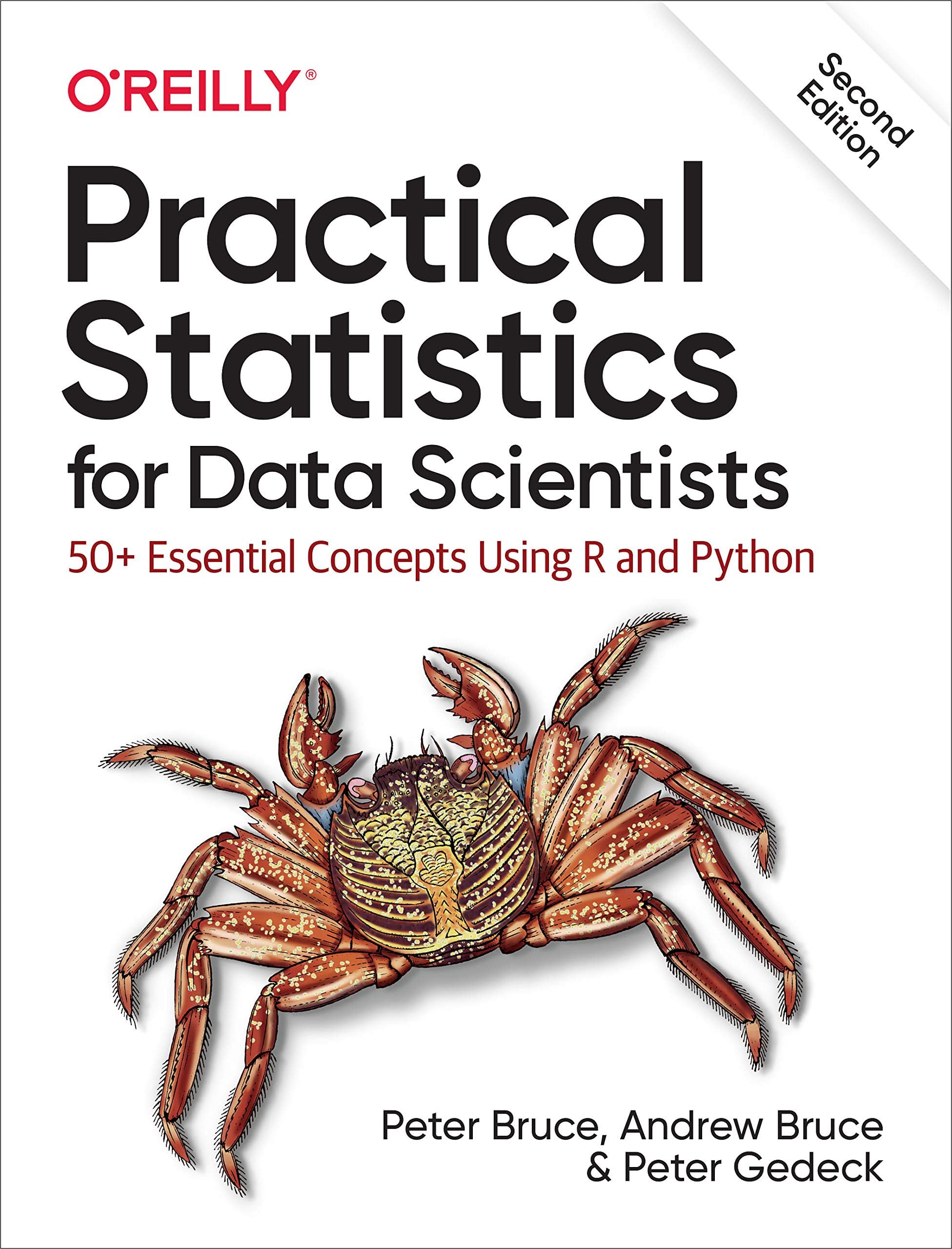
Practical Statistics for Data Scientists: 50+ Essential Concepts Using R and Python
Product ID: 249404736
🐍Python & R code examples included
📊350 pages of deep data insights
📚2nd edition with updated content
Desertcart purchases this item on your behalf and handles shipping, customs, and support to Morocco.
📈 Elevate your data game with stats that actually make sense!
Practical Statistics for Data Scientists (2nd edition) is a 350-page paperback by O'Reilly Media that delivers over 50 essential statistical concepts with practical Python and R examples. Designed for data scientists with some stats background, it bridges the gap between theory and real-world data science applications, covering exploratory data analysis, sampling, experimental design, regression, classification, and machine learning methods. Highly rated for its approachable style and concise code, it’s a must-have quick reference for professionals aiming to sharpen their statistical toolkit.


| Best Sellers Rank | #45,726 in Books ( See Top 100 in Books ) #28 in Mathematical Analysis #41 in Databases & Big Data #60 in Computer Software |
| Customer Reviews | 4.5 out of 5 stars 869 Reviews |
A**R
Easy read, covers the basics in a very approachable way.
A very good book, an easy read and covers a lot of basic statistics concepts you would learn in intro to stats university course but in a way more approachable way. If you already good with your stats, you can skip this book. If you feel like stats need improvement, this is a good start.
J**N
Had issues with physical copy but great response from O'Reilly
I had purchased a new physical copy of the book, and realized there were several pages that were blank and missing. I contacted O'Reilly about the problem and they were extremely quick with a resolution! They were able to give me a different copy so I could read it without the missing pages. The content of the book itself is good, except in all black and white, which doesn't bother me personally but may bother someone else when it comes to the graphs. I think the R and Python content are both great, and it keeps the code concise and quick to the point. Great for R beginners, but for python users I would recommend a little more experience. As for the math parts, its great for those who are new to statistics and gives easy to read explanations, and a great refresher for those who just want to review some of the concepts. I especially like the sections provided for further reading, which have been helpful.
F**A
Underwhelming
I was looking forward to reading this book due to the excellent reviews on Amazon, but it failed to deliver. I struggled to understand the intended target audience, as most of the concepts are normally taught in high school-level courses. In all honesty, the hype surrounding this book speaks volumes about the average knowledge of statistics among Data Scientists.
J**S
Muy buen libro
Buen libro con un excelente contenido temático
E**S
Practical Statistics for Data Scientists
Great practical introduction to data science concepts. The book explains key statistical ideas in a clear and accessible way, with useful examples in both R and Python. Perfect for bridging theory and real-world application. Highly recommended for beginners and practitioners who want a quick, hands-on reference.
Trustpilot
1 month ago
5 days ago