
DOWNLOAD THE APP


Customer Services
Copyright © 2025 Desertcart Holdings Limited
DOWNLOAD THE APP
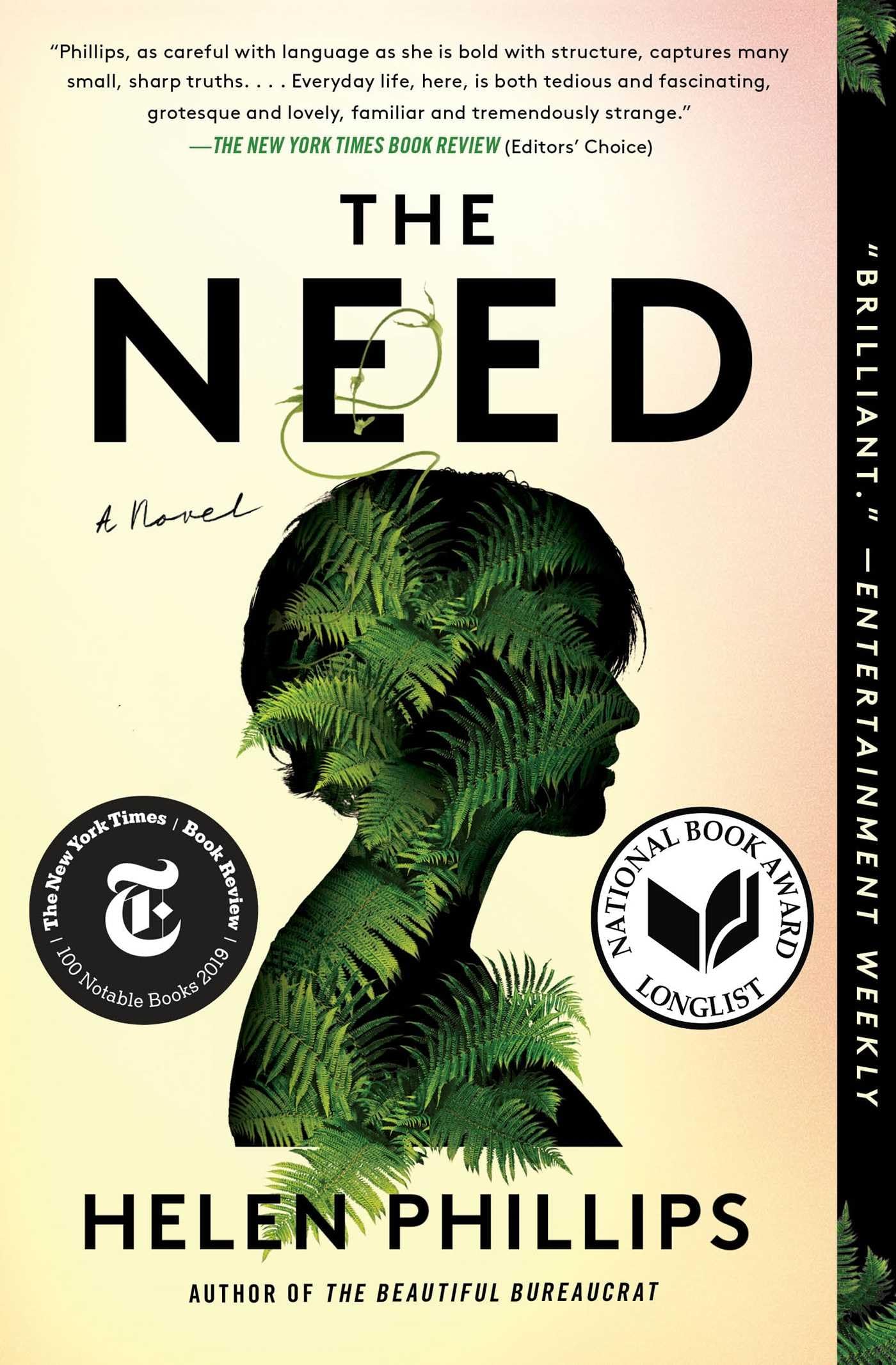
The Need [Phillips, Helen] on desertcart.com. *FREE* shipping on qualifying offers. The Need Review: A book that can't decide what it wants to be - There are supposed to be rules in mass market fiction. Cues the author obeys and other that she issues, to make possible orderly consumption of novels in these busy, busy times by those still undistracted or just plain lazy enough to consume them. I’m using lazy there in an ironic sense; undistracted’s use is only partially ironic, more like sarcasm attempting humor and trying to provoke identification by the reader. Cues like for instance: this is going to be a suspenseful page turner, so I’m going to break up the text with quick scene switches punctuated as brief chapters and each of these is going to have a mini cliffhanger, to get you, the reader, hooked straightaway. Or, this is going to be a timely critique-of-fourth-wave-feminism novel, wherein my protagonist jousts all at once with the beasts of career, children, social demands, and husband, coming at her from all angles and leaving her lost, her life bereft of meaning. Or, for instance, this is going to be a sort of supernatural novel, where there’s some strange stuff going on and you should suspend your disbelief and just go with it and some interesting plot twists will unravel in a not necessarily strictly believable manner, but certainly in an understandable one. There will be a plot where things happen and are clearly resolved according to the rules of this make-believe supernatural world I have created for you. Philips’ Molly is some sort of paleobiologist—she digs for plant fossils in a pit, called ‘The Pit’, near an old gas station—and a mother. This book concerns itself primarily with the literal and figurative schizophrenia of the latter role. It’s not much of a spoiler to tell you that Molly has a doppelganger named Moll that may be a doppelganger or may just be a Tyler Durden-like mischievous split personality version of herself. Like Tyler, Moll takes care of things when Molly doesn’t feel like it or, less commonly, can’t stomach it. Breaking with this analogy, Moll and Molly have a very poorly defined segregation of thoughts and actions (indeed, indistinguishable motives) such that at times it is unclear who to anticipate acting one way or another, unclear who is benevolent and who, if anyone, means ill. The only man in the story is a traveling husband created almost as a MacGuffin: he exists just so time can progress from when he has left until when he will return. The seemingly obvious 2019 #meToo cancel the cis-white-hetero-privleged-male thing to do—blame the husband in absentia or by inference for some struggle the woman goes through—is blessedly not done. That the husband is such a dimensionless character keeps more of the focus on the source of Molly’s turmoil: herself. There were some parts of the story where I was like ok I get it already, she’s overworked and going through a rough patch here. And the scene switching and cliffhangers in the beginning smelled like a response to: you have to do more to get them hooked right away in the first few pages (from some early reader). And the whole business of finding a re-written and maybe somehow supernatural Bible with feminine pronouns in a paleontological cum archeological dig, along with a bunch of other weird unexplained modern stuff, and then not resolving for the reader whether maybe it was just an extended metaphor on motherhood and religion and God as woman giving life meant to deflate a patriarchal view of men holding absolute divine power because of the whole Jesus thing, or if it was an allusion to the possibility of the multiverse and the existence of infinite other versions of ourselves making similar or drastically different decisions with other interlocutors elsewhere in the cosmos, or if it wasn’t a metaphor at all and was totally literal, then what the heck, how did a book end up in a fossil and how could it ever be mistaken for anything other than a hoax and why would these ostensibly educated paleobotanists (including the one acknowledged in Philips’ acknowledgments…did this person not read a proof?) be showing the thing off and pretending it could be real? These fall in the realm of minor to moderate concerns in what I would score as a solid B- book. Philips does have some notably subtle and well written passages. For example, describing an ‘oral encounter’: “How gentle, his hands on her head. They were passing through the doorway and she was glad. He released her head and she released him…” Or when Molly’s toddler daughter is babbling to her mother over breakfast: “I want to be older so I can be a mommy,” [Viv, her daughter, said]. “Yes I had to get old enough,” Molly said, resisting the urge to correct Viv, to say that she should look forward to being older so she could be a scientist or artist or president as well as a mother. “So that I could be yours.” “Yes,” Vivi said, “because I was waiting for you.” “You were waiting for me?” “Yes.” “Where were you waiting for me?” “Everywhere.” This inescapable motherhood, blessing and curse to all women, is fascinating and could be meditation for another story or perhaps was mediation in this one on a level that escaped me. What’s actually happening to Molly in her personal life is utterly banal and thus the supernatural Bible-in-paleontology-dig business is so strange and out of place. Utterly banal does not mean not painful or difficult or mind numbing or intolerable or very very visceral, which is what the reader is shown motherhood is—at times all at once. Review: Incredible beginning...you won't be able to stop reading... - This book has the most compelling opening I can remember reading for years. This author clearly is a master of hooking you with suspense and that "just one more chapter" feel. Then things get a little weird. If you're a mom, then maybe a certain period in your life revolves around what your milk is currently doing, but I found the hyperfocus on nipples and milk a bit tedious after a while (perhaps it's just envy since nipples are a thing that I lack...thanks, cancer). I literally found myself saying, "Yeah, but what about her NIPPLES??" on the few chapters that didn't mention them. Again, probably my own focus, but...yeah. And I should remember that literary fiction doesn't so much conclude as just...end. The final twist was cool but didn't really lead us anywhere. Overall I enjoyed this book, and the first third is among the best page-turners I've ever read. I'll read more by this author, and hope that other body parts get such special treatment.
| Best Sellers Rank | #165,227 in Books ( See Top 100 in Books ) #4,790 in Contemporary Women Fiction #7,127 in Literary Fiction (Books) #8,089 in Suspense Thrillers |
| Customer Reviews | 3.4 3.4 out of 5 stars (1,304) |
| Dimensions | 5.5 x 0.7 x 8.38 inches |
| Edition | Reprint |
| ISBN-10 | 1982113170 |
| ISBN-13 | 978-1982113179 |
| Item Weight | 2.31 pounds |
| Language | English |
| Print length | 272 pages |
| Publication date | July 7, 2020 |
| Publisher | S&S/ Marysue Rucci Books |
M**R
A book that can't decide what it wants to be
There are supposed to be rules in mass market fiction. Cues the author obeys and other that she issues, to make possible orderly consumption of novels in these busy, busy times by those still undistracted or just plain lazy enough to consume them. I’m using lazy there in an ironic sense; undistracted’s use is only partially ironic, more like sarcasm attempting humor and trying to provoke identification by the reader. Cues like for instance: this is going to be a suspenseful page turner, so I’m going to break up the text with quick scene switches punctuated as brief chapters and each of these is going to have a mini cliffhanger, to get you, the reader, hooked straightaway. Or, this is going to be a timely critique-of-fourth-wave-feminism novel, wherein my protagonist jousts all at once with the beasts of career, children, social demands, and husband, coming at her from all angles and leaving her lost, her life bereft of meaning. Or, for instance, this is going to be a sort of supernatural novel, where there’s some strange stuff going on and you should suspend your disbelief and just go with it and some interesting plot twists will unravel in a not necessarily strictly believable manner, but certainly in an understandable one. There will be a plot where things happen and are clearly resolved according to the rules of this make-believe supernatural world I have created for you. Philips’ Molly is some sort of paleobiologist—she digs for plant fossils in a pit, called ‘The Pit’, near an old gas station—and a mother. This book concerns itself primarily with the literal and figurative schizophrenia of the latter role. It’s not much of a spoiler to tell you that Molly has a doppelganger named Moll that may be a doppelganger or may just be a Tyler Durden-like mischievous split personality version of herself. Like Tyler, Moll takes care of things when Molly doesn’t feel like it or, less commonly, can’t stomach it. Breaking with this analogy, Moll and Molly have a very poorly defined segregation of thoughts and actions (indeed, indistinguishable motives) such that at times it is unclear who to anticipate acting one way or another, unclear who is benevolent and who, if anyone, means ill. The only man in the story is a traveling husband created almost as a MacGuffin: he exists just so time can progress from when he has left until when he will return. The seemingly obvious 2019 #meToo cancel the cis-white-hetero-privleged-male thing to do—blame the husband in absentia or by inference for some struggle the woman goes through—is blessedly not done. That the husband is such a dimensionless character keeps more of the focus on the source of Molly’s turmoil: herself. There were some parts of the story where I was like ok I get it already, she’s overworked and going through a rough patch here. And the scene switching and cliffhangers in the beginning smelled like a response to: you have to do more to get them hooked right away in the first few pages (from some early reader). And the whole business of finding a re-written and maybe somehow supernatural Bible with feminine pronouns in a paleontological cum archeological dig, along with a bunch of other weird unexplained modern stuff, and then not resolving for the reader whether maybe it was just an extended metaphor on motherhood and religion and God as woman giving life meant to deflate a patriarchal view of men holding absolute divine power because of the whole Jesus thing, or if it was an allusion to the possibility of the multiverse and the existence of infinite other versions of ourselves making similar or drastically different decisions with other interlocutors elsewhere in the cosmos, or if it wasn’t a metaphor at all and was totally literal, then what the heck, how did a book end up in a fossil and how could it ever be mistaken for anything other than a hoax and why would these ostensibly educated paleobotanists (including the one acknowledged in Philips’ acknowledgments…did this person not read a proof?) be showing the thing off and pretending it could be real? These fall in the realm of minor to moderate concerns in what I would score as a solid B- book. Philips does have some notably subtle and well written passages. For example, describing an ‘oral encounter’: “How gentle, his hands on her head. They were passing through the doorway and she was glad. He released her head and she released him…” Or when Molly’s toddler daughter is babbling to her mother over breakfast: “I want to be older so I can be a mommy,” [Viv, her daughter, said]. “Yes I had to get old enough,” Molly said, resisting the urge to correct Viv, to say that she should look forward to being older so she could be a scientist or artist or president as well as a mother. “So that I could be yours.” “Yes,” Vivi said, “because I was waiting for you.” “You were waiting for me?” “Yes.” “Where were you waiting for me?” “Everywhere.” This inescapable motherhood, blessing and curse to all women, is fascinating and could be meditation for another story or perhaps was mediation in this one on a level that escaped me. What’s actually happening to Molly in her personal life is utterly banal and thus the supernatural Bible-in-paleontology-dig business is so strange and out of place. Utterly banal does not mean not painful or difficult or mind numbing or intolerable or very very visceral, which is what the reader is shown motherhood is—at times all at once.
W**L
Incredible beginning...you won't be able to stop reading...
This book has the most compelling opening I can remember reading for years. This author clearly is a master of hooking you with suspense and that "just one more chapter" feel. Then things get a little weird. If you're a mom, then maybe a certain period in your life revolves around what your milk is currently doing, but I found the hyperfocus on nipples and milk a bit tedious after a while (perhaps it's just envy since nipples are a thing that I lack...thanks, cancer). I literally found myself saying, "Yeah, but what about her NIPPLES??" on the few chapters that didn't mention them. Again, probably my own focus, but...yeah. And I should remember that literary fiction doesn't so much conclude as just...end. The final twist was cool but didn't really lead us anywhere. Overall I enjoyed this book, and the first third is among the best page-turners I've ever read. I'll read more by this author, and hope that other body parts get such special treatment.
M**S
Disquieting
I quickly purchased, “The Need”, by Helen Philips after reading her new book “Hum” which I loved, and I’m so glad I did because it captured me on page one. This strange and disquieting allegory on the ambiguity/duality of motherhood, is fast-paced and fascinating.
S**S
Psychological suspense with major emphasis on raising children
Some psychological suspense, excellent poetic prose, but I was disappointed in the substance. Lots of detail on child-raising, the intensity and challenge to one's separate sense of identity. I do think the back cover summary is misleading. Honestly, I wouldn’t have read it if I had known what it was really about. Although I can see that it is hard to describe the plot at all without giving it all away. I raised a son mostly as a single mother, so I know about the intensity of child-raising. I was interested in the very poignant and well-written details of the moment-by-moment experience for the first ten pages. By page 50, I was pretty surprised the story still dwelled on it in such detail. And continued, all the way to the end. There’s some early suspense, but it takes way too long to see who is the intruder. The back and forth chapters between Molly’s work life and the unveiling of the intruder just strung me along annoyingly, interrupting any meaningful flow of the story. Once the unveiling happens, there’s really no more suspense to hold the reader’s interest. Very hard to talk about this book without giving away important information. I’ll just say I thought the unveiling of the intruder, her motives, and the ultimate meaning behind the whole story were not particularly profound, nor worth so many pages. I do believe Helen Phillips is a fine writer. There’s poetry in much of the prose, and I can easily imagine how much hard work went in to creating beautiful passages. The substance of the book is lacking, however.
B**J
In this work, the author attempts to narrate a story of time travel, while at the same time juxtaposing certain aspects of contemporary life for the modern woman. Unfortunately, she succeeds at neither, interesting the reader in what it would be like to have a doppelgänger present in one’s life (the main part of the narrative here) or the foibles of contemporary society. The result is merely a ho-hum description of feminist takes on modern culture with none of the interesting possibilities for the relationship between the two protagonists. We end up witnessing nothing more than two women trading barbs at each other over the rules of child rearing, with an unsatisfying conclusion to boot.
J**0
If you have more than one child and have at least sometimes had to care for them on your own, you will be able to relate to that part of the story. The author captures this brilliantly and I often felt nauseated thinking back... IT is brilliantly written and it creates immediately the atmosphere of not enough sleep, too many demands and no time at all. SPOILER ALERT However, there is more, not only a - sometimes desparate - mother of two, alone for 8 nights. She is also experiencing a kind of discontinuity in the time - space continuum. The problems start when you start to enter the logic system of the story. Imagine there would be a world like ours, but like a mirror image, the Coca Cola logo leaning to the left, not to the right. God being referred to as she, not he in the bible. Whereas the Coca Cola part would not have a large impact on the shape of this world, the female nature of god would, for sure. So, how likely is it that in this parallel world there will be a mirror image of a certain person, being married to a mirror image of the husband and having mirror children? Shouldn`t such a world have developed very differently? This part of the story does not make sense if you start thinking about it, and from then on all falls apart.
I**K
Be prepared for a twisted tale that draws you in a spits you out. Fantastic suspense.
L**S
Nice book . Well written. Kept me on my toes with a few heart pounding moments for good measure.
M**W
This is lame. It’s like a Stephen King story that’s been drained of all believability and tension. Cliches abound. Sentimental. Didn’t finish it.
Trustpilot
1 month ago
2 weeks ago