We remain fully operational. Our teams are working around the clock to ensure your deliveries continue safely.

قم بتنزيل التطبيق


معلومات عنا
حقوق الطبع والنشر © 2024 Desertcart Holdings Limited
قم بتنزيل التطبيق


Buy anything from 5,000+ international stores. One checkout price. No surprise fees. Join 2M+ shoppers on Desertcart.
Desertcart purchases this item on your behalf and handles shipping, customs, and support to Morocco.
🍳 Cook Like Julia, Impress Like a Pro — Don’t Miss Out on Kitchen Wisdom!
Julia's Kitchen Wisdom is a concise, photo-illustrated cookbook featuring essential French cooking techniques and master recipes from Julia Child’s lifetime of culinary experience. With clear, color-coded instructions and expert sidebars, it’s designed for both new and seasoned cooks eager to elevate their skills and creativity in the kitchen.
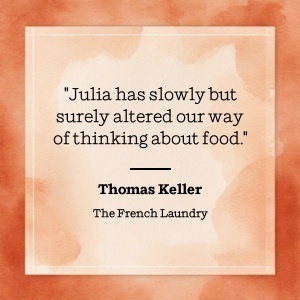
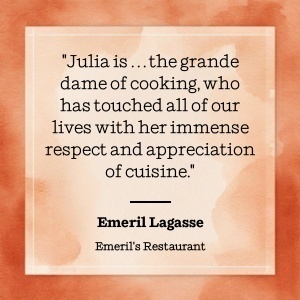
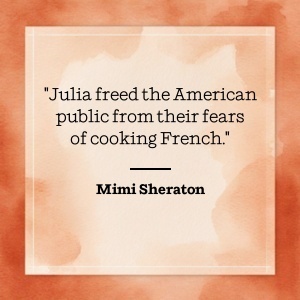
| Best Sellers Rank | #95,384 in Books ( See Top 100 in Books ) #53 in French Cooking, Food & Wine #121 in Cooking, Food & Wine Reference (Books) #460 in Celebrity & TV Show Cookbooks |
| Customer Reviews | 4.7 4.7 out of 5 stars (1,772) |
| Dimensions | 6.8 x 0.51 x 8.32 inches |
| Edition | Illustrated |
| ISBN-10 | 0375711856 |
| ISBN-13 | 978-0375711855 |
| Item Weight | 9.2 ounces |
| Language | English |
| Print length | 160 pages |
| Publication date | June 23, 2009 |
| Publisher | Knopf |
T**W
Lovingly penned recipes, from a lifetime of cooking!
After 40 years of cooking with fellow chefs and friends, Julia Child has developed a refined method for cooking her master recipes. In this cute little cookbook, she has also included variations to many of the recipes to show us all how creative cooking can be, yet how essential it is to follow the basic cooking truths. Julia was born in Pasadena, California. She then moved to Paris with her husband Paul and studied at the Cordon Bleu. After writing her first cookbook "Mastering the Art of French Cooking," in 1961, she appeared on many public television cooking shows. Judith Jones can be credited for discovering Julia Child, she is the best editor Julia Child could have ever found. She is very wise and once wrote me a nice letter to explain why my instructions in my own cookbook were too truncated. She loves the cookbooks she edits to have a personality and an easy flowing writing style. I took her advice very seriously and she has in fact improved my writing by her one small comment. It is with that said, that I can say that her influence on this book has only made Julia's writing even more wonderful. I love the fact that Julia gives her editor so much credit in the Acknowledgments section. Without great editors, most cookbooks would never make it to the publishing stage. David Nussbaum was also very influential in the writing of this particular cookbook as he was with "Julia and Jacques Cooking at Home." He helped to gather information needed for this book from Julia's books and shows. He also spent time with Julia in Judith Jones's Vermont kitchen, working out the details of some recipes. The book I am reviewing is only 127 pages, but there is also a 288 page large print edition which I applaud Julia for considering and publishing. In both books, Julia presents soups, sauces, salads, dressings, vegetables, meats, poultry, fish, eggs, breads, crepes, tarts, cakes and cookies. The index is delightfully easy to use and I love the headings, e.g., Almond(s) is in a different color than the list following it. In that way, you can find the basic categories of Apples, Crab, Soup, Cookies, etc. When you read the text in this cookbook, you will almost feel that Julia Child is reading to you. I can hear her voice and that is what makes this book so wonderful. Each chapter begins with a fun note (or what you might call a headnote) from Julia. The first chapter is "Soups and Two Mother Sauces." There is a recipe for "Leek and Potato Soup." Julia explains the master recipe and then gives variations of "Onion and Potato Soup," "Cream of Leek and Potato," and "Watercress Soup." What you will learn from this book is "techniques." This allows you to create your own recipes. In cooking there are certain proven cooking methods and that is what I believe Julia is trying to show you. You learn to make a white sauce and a hollandaise sauce in the first chapter. The style of the master recipes is similar throughout the book. Each one has a nice heading of a different color, ingredients are listed in the order they will be used and the instructions are easy-to-read, yet do not have numbers. The Variations for the recipes are in a paragraph style, but also have nice headings in a different color. Each page has two columns of text. In the second chapter, you will enjoy learning to make a "Basic Vinaigrette Dressing." The variations sound just delicious and there is also advice in a small block which explains how to keep your vinaigrette fresh for several days. Throughout the book you will find little blocks of text with a pink background. These must be some of Julia's secrets. This is a book you will want to read and absorb. In the third chapter, Julia has charts for blanching and boiling vegetables. She says: "When you serve fine, fresh green vegetables, you want them to show off their color." She gives some sage advice on how to accomplish this. The chapter on "Meats, Poultry and Fish" is an introduction into sautéing, broiling, roasting, stewing, braising, poaching and steaming. Then, onto French Omelets and dreamy soufflés. You will enjoy learning how to make molded dessert custards or as we know them to be, "Caramel Custards". She makes a "Classic Custard Sauce," a "Pastry Cream" and finishes the chapter on eggs with a "Classic Chocolate Mousse." Julia Child knows that you could just use a ready-made pie shell, but thinks it is a shame if you can't make one yourself. With that, I can agree. So, in her Bread Chapter, she not only explains how to make basic bread dough, she shows us how to make an all-purpose pie dough. "Cakes and Cookies" follow this chapter. This will soon become one of your favorite chapters. Now, there is one thing you will want to know when making Julia's recipes. She uses a different method for measuring flour than I do. She sifts the flour into the cups and then sweeps off the excess. That will be key to your success where noted. I personally only use that method when making pie crusts, because I create my recipes by the dip and sweep method, which is the lazy way! You will notice that in her directions, she will say 1/2 cup cake flour (sifted and measured as per the box on page 97.) I was delighted to find a recipe for "Cat's Tongues." While I had heard of these finger-shaped sugar cookies, I had no idea what they tasted like. I recommend this book to new cooks, especially because these are the master recipes I learned when I was learning to cook as a teenager in cooking class. For experienced cooks, you will enjoy the variations. This is a book of Kitchen Wisdom from American's favorite teacher of French home cooking. ~The Rebecca Review
B**D
A Wealth of Sound, Useful Recipes and Advice
Julia Child is my greatest culinary hero. Her first two books, the two volumes of `Mastering the Art of French Cooking' influenced two generations of home cooks, caterers, and restaurateurs. Her PBS television series did not invent the TV cooking show, but they made such an indelible impression on the genre that I am sure their influence will be felt long after Julia is cooking for St. Peter. Her generous support of charities and freedom from commercial influences should be a model for other culinary professionals who wish our respect. After all that, I confess a certain irony in expecting to give this book a cautionary review. It is certainly a joy to read a new work by Ms. Julia, but I anticipated a few things you should consider, based on the fact that this is a very short book. First, there are 105 pages of kitchen wisdom for a list price of $20, not including introductions and index. Short books leave things out. The book very wisely advocates a slow rise to bread dough to get better development of flavor, but it doesn't explain why. Another area where the book is clearly leaving things out is where it mentions the five French mother sauces, but only gives details on making two of the five. Second, it seems to concentrates on the faster rather than the tastiest result, as this requires less space. One example I found is in the recipe for creating a crème fraiche at home. Almost every recipe I have found asks you to let the mixture of cream and sour cream or yogurt to sit in the fridge for at least 24 hours. Some have it sit for up to three days. This book allows for no waiting time. I confess the book does not always take the shortest route, as the recipe for pie dough (pate brisee) recommends a rest period of two hours in the fridge. Most writers suggest at least 30 minutes. I bought this book over a year ago and I do not use it for anything except for its crepe recipe, which I find to be both effective and simple. Rereading selected sections a year after reading it the first time shows me that in spite of it's small size, it simply does not mislead by omission. When an important detail is needed for a technique, the detail is there. I expected the book to skimp on the discussion of the omelet, for example, but it did not. It stated that there are many ways to make an omelet and the method presented was simply Julia Child's preference, not the Gospel. I was especially fond of the fact that on the matter of fresh vegetables, Julia was closer to Nigella Lawson's common sense approach to using goods out of season than to the stoic `only fresh and local' dogma. She does confess that we have not yet corrected the insipidness of tomatoes out of season, but almost all other produce is as good as gold, and healthy to boot. The lesson I take from the change in my impression of this book over the last year is that one may not be able to appreciate this book or be comfortable in using it unless you are already comfortable in the kitchen and know why you do certain things in certain ways. To use an Alton Brown metaphor, this book is excellent at giving you directions, but it leaves out all the details of alternate routes in the event you stray from the straight and narrow. I highly recommend this book, but I urge you to not take it as a shortcut to kitchen wisdom. The best way to use the book is to have studied these techniques in more detailed books and to come back to this book for a reminder. The irony in this advice is that Julia herself says that once you know a technique, you rarely have to refer to a recipe again. To those of you who are reading the book without a wide reading in other good books on cooking, please take my word for the fact that this lady knows what she is talking about. Very highly recommended for all amateur cooks.
P**A
Arrivato nei tempi previsti. Libro interessante per gli appassionati di Julia che non vogliono comprare l'opera omnia.
J**O
It's indeed an essential cookbook with all the basics well explained. A must in cookbook collection for someone interested in trying out world cuisine.
B**T
A mi hermana le encantó! Esta en inglés para quienes piensen ordenarlo.
Z**O
As good as advertised, delivery on time.
P**C
Arrived in the time given, well packaged. A charming book full of ideas and recipes. Book in very good condition being that it is used. Ideal book to add to your collection if you enjoy Julia Child's recipes. Great value for money.
ترست بايلوت
منذ 3 أيام
منذ شهر