
Desertcart purchases this item on your behalf and handles shipping, customs, and support to Morocco.
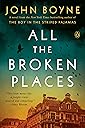
“You can’t prepare yourself for the magnitude and emotional impact of this powerful novel.” —John Irving From the New York Times bestselling author John Boyne, a stunning tour de force about a woman who must confront the sins of her own terrible past, and a present in which it is never too late for bravery Ninety-one-year-old Gretel Fernsby has lived in the same well-to-do mansion block in London for decades. She lives a quiet, comfortable life, despite her deeply disturbing, dark past. She doesn’t talk about her escape from Nazi Germany at age twelve. She doesn’t talk about the grim postwar years in France with her mother. Most of all, she doesn’t talk about her father, who was the commandant of one of the Reich’s most notorious extermination camps. Then, a new family moves into the apartment below her. In spite of herself, Gretel can’t help but begin a friendship with the little boy, Henry, though his presence brings back memories she would rather forget. One night, she witnesses a disturbing, violent argument between Henry’s beautiful mother and his arrogant father, one that threatens Gretel’s hard-won, self-contained existence. Immersive, chilling, unputdownable, All the Broken Places moves back and forth in time between Gretel’s girlhood in Germany and present-day London. Here, Gretel is at a similar crossroads to the one she encountered long ago. Then, she denied her own complicity, but now, faced with a chance to interrogate her guilt, grief, and remorse, she can choose to save a young boy. If she does, she will be forced to reveal the secrets she has spent a lifetime protecting. This time, she can make a different choice than before—whatever the cost to herself. Review: A struggle for Good - The author said of "All the Broken Places" that he always had a fascination with and even a fear of the effects of the Holocaust—the evil result and enduring stain of Hitler’s autocratic rule, and its influence on the struggle for good. Boyne says that this book, “a sequel to his earlier work, "Striped Pajamas," is about guilt, complicity and grief and examines how culpable a young person might be, given the historical event unfolding around her and whether such a person can ever cleanse themselves of crimes committed by people she loved.” This book begins with a quote from Voltaire, an 18th century historian and philosopher, who wrote Candide, a satire on optimism in an evil world: “If everyman is guilty of the good he did not do, then I have spent an entire lifetime convincing myself that I am innocent of all the bad.” Gretel is the protagonist who struggles with guilt due to her own acts of commission and omission, acts of helpless association with others, guilt’s assuagement based on excuses, lies, self-preservation and, finally, redemption. She also struggles with the complexity and valence of evil not reserved to the horrors of a concentration camp. The craft of this historical novel covers 77 years of Gretel’s 92 years of life: 1945-2022, from the time she was a girl of 15 living with her loving family in the commandant’s quarters at Auschwitz in Poland until her imprisonment at age 92 in London. The 30 or so chapters are rapid-fire vignettes of past, present, past, present…, each of which demands the reader’s attention and memory, insisting along a common thread that past and present are one and the same because the familiar struggles with life keep re-emerging in different contexts—wherever you go, there you are. A strictly linear story-line would be less surprising, perhaps less interesting. The point of the book is the ubiquity of the mystery of evil cohabiting with good, the determination and drift of free will, the pressure points of contexts, the imposition of history, the relationships chosen among credible characters. Good historical novels, such as this one, showcase what real life in charged moments like post-Nazi Europe feels like on the street, in a home, with or without a family, and, above all, in the minds and decisions of credible, relatable characters. There is power in this book and a few surprises. Review: A Good Book - It’s connected to The Boy in the Striped Pajamas by the same author. Deals with a lot a very heavy subject, such as Nazis and victims of concentration camps, familial physical abuse, divorce, etc. A real page turner with a surprise ending.
| Best Sellers Rank | #3,095 in Books ( See Top 100 in Books ) #31 in World War II Historical Fiction #31 in Historical World War II & Holocaust Fiction #282 in Literary Fiction (Books) |
| Customer Reviews | 4.6 out of 5 stars 36,159 Reviews |
R**I
A struggle for Good
The author said of "All the Broken Places" that he always had a fascination with and even a fear of the effects of the Holocaust—the evil result and enduring stain of Hitler’s autocratic rule, and its influence on the struggle for good. Boyne says that this book, “a sequel to his earlier work, "Striped Pajamas," is about guilt, complicity and grief and examines how culpable a young person might be, given the historical event unfolding around her and whether such a person can ever cleanse themselves of crimes committed by people she loved.” This book begins with a quote from Voltaire, an 18th century historian and philosopher, who wrote Candide, a satire on optimism in an evil world: “If everyman is guilty of the good he did not do, then I have spent an entire lifetime convincing myself that I am innocent of all the bad.” Gretel is the protagonist who struggles with guilt due to her own acts of commission and omission, acts of helpless association with others, guilt’s assuagement based on excuses, lies, self-preservation and, finally, redemption. She also struggles with the complexity and valence of evil not reserved to the horrors of a concentration camp. The craft of this historical novel covers 77 years of Gretel’s 92 years of life: 1945-2022, from the time she was a girl of 15 living with her loving family in the commandant’s quarters at Auschwitz in Poland until her imprisonment at age 92 in London. The 30 or so chapters are rapid-fire vignettes of past, present, past, present…, each of which demands the reader’s attention and memory, insisting along a common thread that past and present are one and the same because the familiar struggles with life keep re-emerging in different contexts—wherever you go, there you are. A strictly linear story-line would be less surprising, perhaps less interesting. The point of the book is the ubiquity of the mystery of evil cohabiting with good, the determination and drift of free will, the pressure points of contexts, the imposition of history, the relationships chosen among credible characters. Good historical novels, such as this one, showcase what real life in charged moments like post-Nazi Europe feels like on the street, in a home, with or without a family, and, above all, in the minds and decisions of credible, relatable characters. There is power in this book and a few surprises.
S**D
A Good Book
It’s connected to The Boy in the Striped Pajamas by the same author. Deals with a lot a very heavy subject, such as Nazis and victims of concentration camps, familial physical abuse, divorce, etc. A real page turner with a surprise ending.
J**N
Will all the King's horses and all the King's men...
To the great plethora of books about the devastation of Nazi Germany is added "All the Broken Places" by Irish writer John Boyne. While well-written and compulsively readable, the plot of this novel hinges on a falsehood -- that the children of Nazi war criminals could be persecuted for the crimes of their parents. Having watched the excellent documentary "Hitler's Children" when it came out about ten years ago, I immediately questioned this premise. I did some more research and found that I was right. The wives of Nazi elite could be brought in for questioning, to be sure, by the Nuremberg tribunal, but even they weren't charged with crimes. The children were treated as children, innocent bystanders. So, without this reality, much of the motivation for the actions of the main character, Gretel Fernsby, is dubious. Her personal guilt for what happened to her brother makes more sense. But even this triggered something in my brain, for I knew I had heard this particular plot before. And, indeed, I read the author's biography and found that he was the author of "The Boy in the Striped Pajamas". I'd watched the movie years before. The plot of "The Boy in the Striped Pajamas" is also part of this book. The book moves along quite smartly, flipping between 2022 and the post-WW2 period and even mid twentieth-century, and I didn't find this narrative technique hard to follow. There is no doubt that Boyne can spin a tale. The problem becomes the believability of the plot. There is also a lot of very unpleasant narrative about wife and child abuse that I found upsetting. Necessary to the plot, but just hard to read. Still, I found I couldn't put it down because I kept wanting to know what was going to happen. So, all in all, a good read, but certainly not destined to be a classic.
K**R
Worth a Read.
Held my interest. Surprised at the ending.
G**E
Beautiful
Amazing book, I love the story line and 1st person narrative. A bit confusing but very eat for ADHDers
T**S
Guilt, Complicity, and Reckoning
Gretel’s story is one that we are all faced with at one time in our lives. What do you do when faced with a decision to help or turn a blind eye. Well-written and gripping.
L**L
Suspend logic
I thought this book to be an interesting read. I enjoy historical fiction, so this novel reads well in that regard. But it stretches the imagination to think that Gretel’s mother, a German trying to hide her German nationality, would go to Paris with her 15 year old daughter after the war. It’s not logical! Perhaps, if they had gone to Switzerland or Sweden or another country that had been neutral during that period it might make sense. But really, you have to suspend belief to think she would have gone to Paris. Then, I find it hard to believe that Gretel had so much guilt. She was a child/teen when the events happened. She lived in a controlling environment and had been essentially brainwashed from an early age. It was like being in a cult. She knew right from wrong in the context of which she had grown up. This is not to absolve her of all actions, but really the guilt seems overdone considering the lack of control she had over anything. A psychologist could best speak to this, but we do know that a persons brain is often not fully developed until their late to mid- twenties. The heavy guilt about the war did not ring true. Maybe she would have some about her brother, but the rest just seemed a contrived story line. Perhaps if she had been in her late teens this overwhelming guilt trip might make sense. Also, the fact that Gretel did not realize that David was so obviously Jewish given his surname and her background does not ring true. Again, have to suspend belief and go with the storyline I have not read The Boy in the Striped Pajamas, so perhaps that would have given greater context to this novel. I found the storyline regarding Heidi and her concern for Henry much more believable and realistic. Although, in some ways I question how likely it was that she and her husband would ended up living in the same building as her daughter that she had given up at birth. Overall, an enjoyable story as long as you don’t think logically about certain aspects of the novel.
S**R
Tough subject matter.
A Great Read! One of the best books I have read in longtime. A satisfying ending.
Á**A
Perfecto para empezar a leer en inglés
Es la continuación del libro El niño del pijama de rayas. Mi nivel es intermedio alto y lo bueno de este libro es que se lee muy fácilmente, que la historia engancha. Siempre recomiendo a John Boyne como un buen autor para empezar a leer en inglés.
M**A
a must read
you must purchase you won't want to put it down
K**A
An amazing read
An amazing read. The switch between the past and the present is what keeps you hooked from the start and at the end everything makes soo much sense. The emotions have been captured perfectly.
S**A
Fascinating Sequel.
All the Broken Places is a sequel to John Boyne's "The Boy in the Striped Pyjamas". The Boy.... was, I thought, ridiculous, because anyone who understands Auschwitz knows beyond doubt that what happened in that first book would have been absolutely impossible. No-one could sit somewhere unmolested, let alone lift the bottom wires of a fence to allow in a visiting friend. That first book was seen by me as an exercise in ignorance and money-making. "All the Broken Places" is, however, completely different. It is totally absorbing and impossible to put down. Simply, it is the story of "the boy's" sister and mother post-war. It eventually takes us into his sister's life as she ages, living in England, her great fear being that her true identity and history will be uncovered and revealed. The story is tense, exciting, psychologically astute, and impossible to forget. I loved this book and recommend it to all those who enjoy literary fiction. Five stars.
A**A
Muy bueno
No se puede dejar de leer una vez que inicias. Había leído varias historias con la versión de sobrevivientes de la 2da guerra pero desde otra perspectiva, es interesante ver la otra parte.
Trustpilot
1 month ago
3 weeks ago