We remain fully operational. Our teams are working around the clock to ensure your deliveries continue safely.

قم بتنزيل التطبيق


معلومات عنا
حقوق الطبع والنشر © 2024 Desertcart Holdings Limited
قم بتنزيل التطبيق
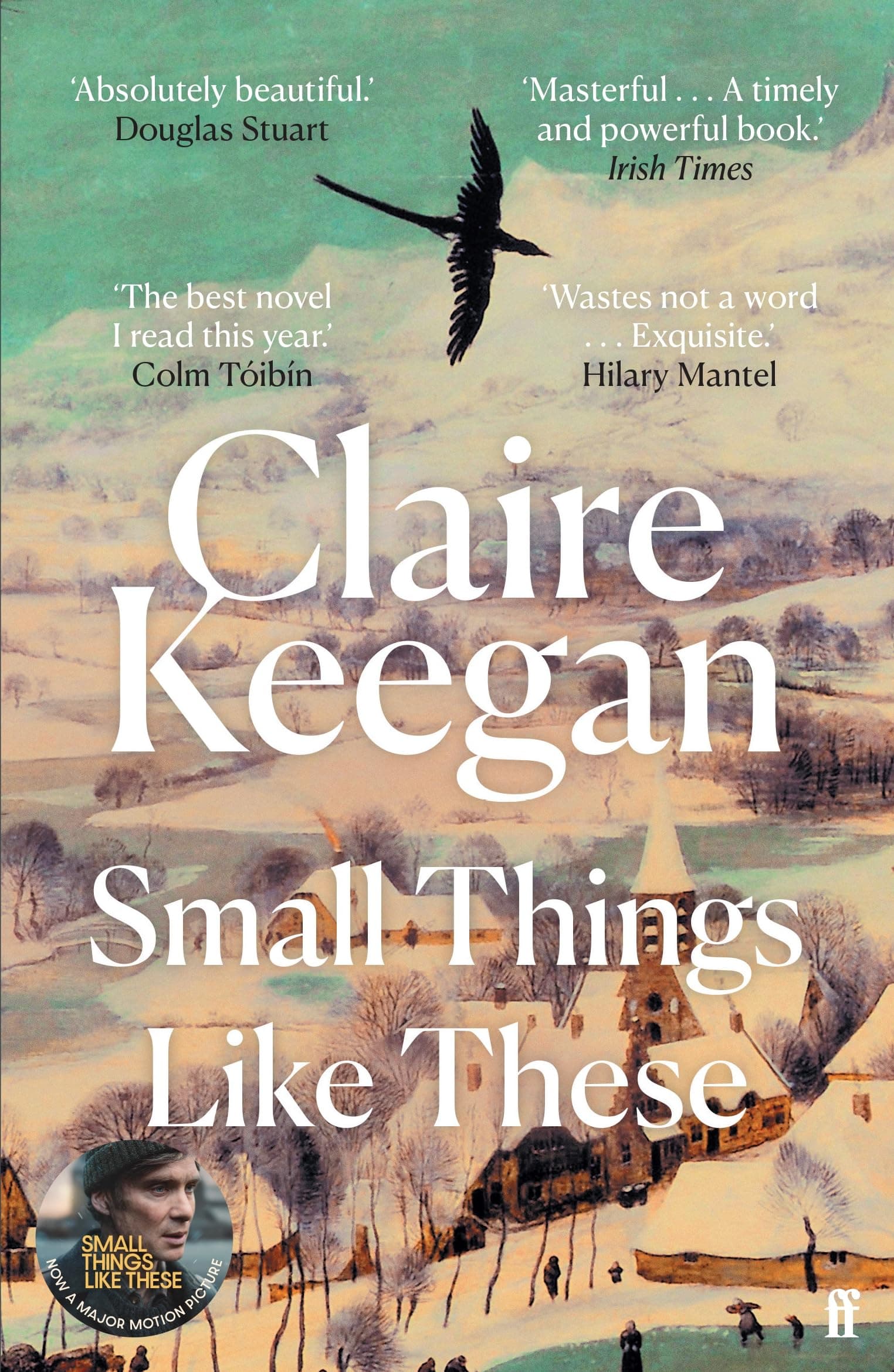
desertcart.com: Small things like these: 9780571368709: Keegan, Claire: Books Review: A true Christmas story - On the heels of the Philomena film, now comes “Small Things Like These” written by the incomparable Claire Keegan. A bit like her novella “Foster,” there are some implications of the story which are left unwritten and the reader fills in what his family will make of his taking this young girl home with him: “When he managed to get her out and saw what was before him—-a girl just about fit to stand with her hair roughly cut—the ordinary part of him wished he’d never come near the place.” And no wonder. Bill Furlong relies on the coal and wood trade for his livelihood; his wife is planning on some home improvements in the new year with what they have been able to set aside despite their own daughters and the economic conditions for a tradesperson in a small rural town in Ireland in the mid 80s—-when the Church still had its grasp and was the most important institution in the town. And why would he rescue a wee girl in the coal room in the cold and damp, why would he be so reminded of his mother and people who had been kind to him when he was a boy, and why in the world would he do the right thing when it would be controversial, cause tension at home with wife Eileen, and wonderment in the daughters he already has. This small book won the Orwell prize in Britain for political writing in 2022 and was short listed for the Booker Prize. It takes less than a hour to read but it lingers long in your imagination: what would you have done? Bill Furlong had moral courage at a time when it was easier to look away and just not pay attention to injustice and, even, cruelty. It’s a great, fast read, but especially at Christmastime. Review: A quietly powerful novella shedding light on the Magdalen Laundries - [Spoiler Alert] This novella, like The Women, which I read recently, taught me another slice of history in which women’s stories were sidelined and silenced. Although the story is essentially about the experiences of women, it is interestingly told though the eyes of a man: Mr Furlough. It is an interesting choice because he — unlike the others in his community, especially women — questions the treatment of women in the convent where others dismiss his views. Furlough is himself a child of an unwed teenager mother. But he is fortunate because his mother worked as a maid to the wealthy Mrs Wilson. Although he never knew who his father was, it is later revealed to him. Someone remarks how much he looks like Ned and asks if he is part of the Wilson family. He puts two and two together and realises that Ned must be his father and that’s why Mrs Wilson treated him so well—relatively, for an illegitimate child. Furlough realises that in other circumstances, his mother may have ended up in a convent just like Sarah, whom he rescues. He discovers Sarah initially when he is making a delivery of coal to the convent and she begs him to take her away or let her escape. Her tattered clothes, bruises and floor polishing work etches into his memory. The next time he sees her is when she is locked in a shed. She has “excrement” around her and the implication is that she has recently had a child. She reveals as much, begging to be able to feed her child whom she does not even know where he/she has gone. The Mother Superior insists that Furlough stay and it is a performance to essentially bribe his silence. The MS forces Sarah to give some implausible explanation for why she was in the shed (playing hide and seek) and makes a show of giving her food and allowing her to “be idle for the day”. The MS hands Ben an envelope suggesting that it is advanced payment for deliveries but Ben knows it is a bribe and that thought torments him as he leaves. His wife, Eileen, makes short shrift of Furlough’s concerns, reminding him that aren’t things very good for them; hasn’t he worked hard to make sure they are not in debt; and what matters about what happens at the convent, the important thing is that their five girls are doing well. Another neighbour more or less tells him not to be nosy—after all these convents are run by the Catholic Church. Furlough decides to rescue Sarah. He does not know if she will be back in the shed but she is and he decides to take her home. The novella leaves a cliffhanger — you do not know how Sarah is received at home, how Eileen and his daughters react. But this is all secondary to Furlough’s belief that he is doing the right thing. And I think the author has left it open so we can discuss and consider why Furlough did what he did, and perhaps ask what we would have done if we had been in his position. Furlough is more courageous than it seems many others are. He is grateful for the life he has had thanks to the Wilsons. When the MS remarks that it’s unfortunate he hasn’t got any boys to continue his name, he quietly says that he has his mother’s name, and hasn’t he turned out alright? This novella will stay with me. Already it has prompted me to read about the Magdalen Laundries in Ireland (see also the author’s note at the end).
| Best Sellers Rank | #16,166 in Books ( See Top 100 in Books ) |
| Customer Reviews | 4.4 4.4 out of 5 stars (26,563) |
| Dimensions | 5.08 x 0.35 x 7.8 inches |
| Edition | International Edition |
| ISBN-10 | 0571368700 |
| ISBN-13 | 978-0571368709 |
| Item Weight | 5.3 ounces |
| Language | English |
| Publication date | October 28, 2022 |
| Publisher | FABER AND FABER |
S**N
A true Christmas story
On the heels of the Philomena film, now comes “Small Things Like These” written by the incomparable Claire Keegan. A bit like her novella “Foster,” there are some implications of the story which are left unwritten and the reader fills in what his family will make of his taking this young girl home with him: “When he managed to get her out and saw what was before him—-a girl just about fit to stand with her hair roughly cut—the ordinary part of him wished he’d never come near the place.” And no wonder. Bill Furlong relies on the coal and wood trade for his livelihood; his wife is planning on some home improvements in the new year with what they have been able to set aside despite their own daughters and the economic conditions for a tradesperson in a small rural town in Ireland in the mid 80s—-when the Church still had its grasp and was the most important institution in the town. And why would he rescue a wee girl in the coal room in the cold and damp, why would he be so reminded of his mother and people who had been kind to him when he was a boy, and why in the world would he do the right thing when it would be controversial, cause tension at home with wife Eileen, and wonderment in the daughters he already has. This small book won the Orwell prize in Britain for political writing in 2022 and was short listed for the Booker Prize. It takes less than a hour to read but it lingers long in your imagination: what would you have done? Bill Furlong had moral courage at a time when it was easier to look away and just not pay attention to injustice and, even, cruelty. It’s a great, fast read, but especially at Christmastime.
A**R
A quietly powerful novella shedding light on the Magdalen Laundries
[Spoiler Alert] This novella, like The Women, which I read recently, taught me another slice of history in which women’s stories were sidelined and silenced. Although the story is essentially about the experiences of women, it is interestingly told though the eyes of a man: Mr Furlough. It is an interesting choice because he — unlike the others in his community, especially women — questions the treatment of women in the convent where others dismiss his views. Furlough is himself a child of an unwed teenager mother. But he is fortunate because his mother worked as a maid to the wealthy Mrs Wilson. Although he never knew who his father was, it is later revealed to him. Someone remarks how much he looks like Ned and asks if he is part of the Wilson family. He puts two and two together and realises that Ned must be his father and that’s why Mrs Wilson treated him so well—relatively, for an illegitimate child. Furlough realises that in other circumstances, his mother may have ended up in a convent just like Sarah, whom he rescues. He discovers Sarah initially when he is making a delivery of coal to the convent and she begs him to take her away or let her escape. Her tattered clothes, bruises and floor polishing work etches into his memory. The next time he sees her is when she is locked in a shed. She has “excrement” around her and the implication is that she has recently had a child. She reveals as much, begging to be able to feed her child whom she does not even know where he/she has gone. The Mother Superior insists that Furlough stay and it is a performance to essentially bribe his silence. The MS forces Sarah to give some implausible explanation for why she was in the shed (playing hide and seek) and makes a show of giving her food and allowing her to “be idle for the day”. The MS hands Ben an envelope suggesting that it is advanced payment for deliveries but Ben knows it is a bribe and that thought torments him as he leaves. His wife, Eileen, makes short shrift of Furlough’s concerns, reminding him that aren’t things very good for them; hasn’t he worked hard to make sure they are not in debt; and what matters about what happens at the convent, the important thing is that their five girls are doing well. Another neighbour more or less tells him not to be nosy—after all these convents are run by the Catholic Church. Furlough decides to rescue Sarah. He does not know if she will be back in the shed but she is and he decides to take her home. The novella leaves a cliffhanger — you do not know how Sarah is received at home, how Eileen and his daughters react. But this is all secondary to Furlough’s belief that he is doing the right thing. And I think the author has left it open so we can discuss and consider why Furlough did what he did, and perhaps ask what we would have done if we had been in his position. Furlough is more courageous than it seems many others are. He is grateful for the life he has had thanks to the Wilsons. When the MS remarks that it’s unfortunate he hasn’t got any boys to continue his name, he quietly says that he has his mother’s name, and hasn’t he turned out alright? This novella will stay with me. Already it has prompted me to read about the Magdalen Laundries in Ireland (see also the author’s note at the end).
J**N
An excellent example of how the short novel can carry a huge impact
At a mere 128 pages it is an excellent example of how the short novel can carry a huge impact. It is a gem, winning the Orwell Prize for Political Fiction, and shortlisted for the Rathbones Folio and Booker prizes. It takes place in 1985 in a town in Ireland, and concerns a man named Bill Furlong who is a coal merchant and devoted family man with daughters. It is a time of economic challenges but Bill does okay, though it feels a little precarious nonetheless. For reasons related to his childhood and his upbringing he is keenly aware of moral choices and how one person’s small act of generosity can be seen a form of heroism in the right circumstance, and before the book is finished he has the opportunity to put that into action for himself. The specificity of the prose is riveting, with nuance and depth of meaning that are layered throughout the polite conversations of the characters. And there is so much that is unsaid, hovering just outside the page, understated but powerful.
B**A
This little book was just devastating in it's slow and thoughtful simplicity. a quiet, ordinary (but is he?) man who thinks and ponders and asks himself questions the way most people don't or don't have the courage to act on. Completely unexpected The title mentions small things, small compromises, look the other way, don't talk, don't even see things. All this allows organised and systemic cruelty because it's just easier to look the other way. Bill, our protagonist, is different because he has the weight of his past on his shoulders and knows that but for the courage and love of one brave woman, his life would have been horribly different. indifference was never really a choice for him, and this was obvious from the many little things he did for a lot of needy people. The style and atmosphere were pure poetry. His descriptions of horses, Irish must, Christmas preparations, the mechanical nearly theatrical mass .. beautiful. One of the many stories of the Magdalene laundries, shocking, hopeful because the courage of that one man changes many lives. A jewel and the true Christmas book I needed.
C**O
Verybinterestingreading
V**A
What a graceful, small novel is this! It is also full of profundity, wisdom, ideas that are constantly at war with each other, and sparse, yet telling what it must in the most succinct manner. Small Things Like These is set in 1985 in a small Irish town, during Christmas time. It is the story of a man named Bill Furlong and his place in the world. A man who seems content with his life – his wife and five daughters, doing what he does (running a coal and timber business), and yet something is bothering him. His past doesn’t let go – his identity is being questioned by him at every step, and all he knows is that he is a man caught – between the ways of the world, and what he wants to do. Claire Keegan brings up so much in this small book. So many issues – religion, motherhood, parenthood, of what it’s like to have children and then to worry about them, of a small town and its inhabitants – the way they live, and survive, and hope for more. The tone of the book is simple – and covering each layer as we go along. The writing is sparse, says what it must – Keegan’s writing is both contemplative and a statement to how it is not only perhaps in a small town but also maybe universally. The concept of being human is brought out beautifully in this small novel. Of what makes us – our honest, true selves, with all our hypocrisy, our hesitation, and most importantly about wanting to fit in at large with the people around us, often thereby overlooking who we really are. Through Bill we are introduced to our own incapacities are humans, our own weaknesses, and our own shortcomings. Keegan made me see myself so closely – though the situation is far from similar, and yet seemed so personal on other levels. Small Things Like These is a novel that is essential reading. Like I said, it says so much and makes you think and feel so much about the way we live, and how we grow to be who we are.
A**R
This is a beautiful book, a very easy quick read..the Subject matter is very sad and based on true events.. It made me feel very grateful for my life and reminded me that sadness happens and can be very cruel..love this author
A**R
A poignant story about choosing what is right and kind even if it goes against society and religion. A social comment that is still as important and true as when it was written.
ترست بايلوت
منذ يوم واحد
منذ أسبوعين