We remain fully operational. Our teams are working around the clock to ensure your deliveries continue safely.

قم بتنزيل التطبيق


معلومات عنا
حقوق الطبع والنشر © 2024 Desertcart Holdings Limited
قم بتنزيل التطبيق
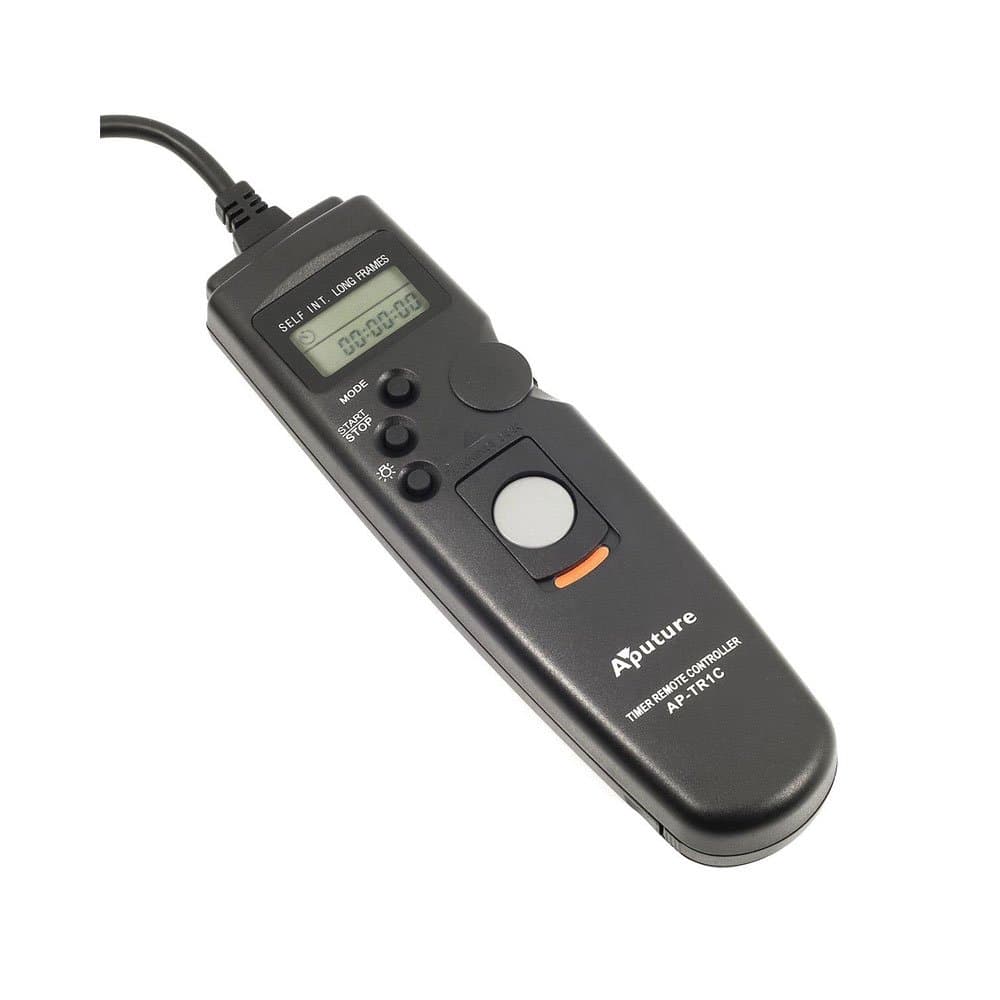
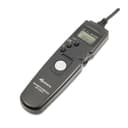

📸 Capture every moment, hands-free and hassle-free — your ultimate remote shutter sidekick!
The Aputure Remote Shutter Release Timer/Intervalometer 1C is a premium-grade, cost-effective remote shutter cable designed for Canon Rebels and select other camera brands. It offers precise interval shooting from 1 second up to 100 hours, supports up to 399 shots or infinite shooting, and includes autofocus capability. Powered by two AAA batteries with an estimated 1400 hours of use, it features a 14-inch cord for remote triggering and an illuminated LCD for easy use in low light. Ideal for astrophotography, time-lapse, macro, portrait, and wildlife photography, it replaces Canon's RS 60-E3 with a 24-month warranty, delivering professional results at a fraction of the cost.
| ASIN | B003Y35VJA |
| Customer Reviews | 3.9 3.9 out of 5 stars (412) |
| Date First Available | August 2, 2010 |
| Is Discontinued By Manufacturer | No |
| Item Weight | 5.6 ounces |
| Item model number | AP-TR1C |
| Manufacturer | Fotodiox Inc. |
| Product Dimensions | 1 x 1 x 1 inches |
R**G
Excellent Device at a Super Price!
My agency purchased two of these devices in order to do time-lapse photography and as a remote trigger for other purposes. The price for this item is extremely reasonable compared to brand name units, yet it does the same thing. After spending just a few minutes looking over the manual and getting familiar with the controls, I pulled both units out of the box, inserted the batteries and began doing tests. Everything worked perfectly right out of the chute. No problems what-so-ever at this point. These intervalometers are used with Canon Rebel Xti cameras. I've done several tests, all time-lapse shooting; the first was for about a half hour, the second and third were for several hours each, and the fourth test was for around 6 hours when we filled up the 8 GB card with 11,278 low-res images, triggered by the device at 2-second intervals. Each time the device worked flawlessly. Yes, it doesn't have an On/Off switch - neither does my watch. Put the battery in and run it until it's drained. Or pull out the battery if it's going to sit for a long time without use. This is no big deal. You will have to recharge/replace the batteries on your camera far more often than on the intervalometer. If you're concerned about battery life, keep a spare with you just in case. This is no different than any other important device that runs on battery power. The devices arrived very quickly. They were safe and secure in their boxes with no damage. I'm very, very happy with this purchase. The only possible negative comment I could make is that they are made of light-weight plastic. If handled too roughly, I suppose there's a possibility that the case or control buttons could break. But I'm a firm believer in treating equipment with respect. Even the most expensive devices can be broken if not handled with care. So I recommend that these intervalometers be kept in their customized, padded boxes when not in use. And when they are being used, I plan on strapping them down somehow to the tripod or camera so they aren't left dangling in the wind, stretching the cord or left open to get accidentally getting stepped on or pulled off. But with that being said, unless these units die in the near future, I highly recommend this intervalometer to any photographer and would certainly get more if needed.
P**F
Decent timer and and invervalometer
I've been using this for several months. It provides single-shot and multiple-shot capabilities, with duration and interval functions applicable to the main functions. It provides the capability to manage up to 99 exposures with a resolution as fine as one second, from 1 sec to 99h99m99s, with pauses in between. It's perfect for astrophotography where one may take 20+20 exposures at 180 seconds each, with a short pause for direct saving or an equal-length pause for in-camera dark frame processing. Pros * Accuracy: it gives the correct duration and number of exposures, and the correct duration and number of intervals * It is easy to use with ambient or supplemental lighting * Timing (hours, minutes, seconds) is easily set, even for high values, because each unit is treated separately (adjust each unit independently, up or down) * The connector fits correctly and snugly in my T2i's port * It is acceptably compact Cons * The on-screen symbols aren't especially intuitive, and thus the user has to use it often enough to commit them to memory * The manual is in serious need of a skilled technical writer. It is poorly translated and not especially well thought-out, though it is complete enough for a patient user to understand and follow * The buttons have no backlight (an annoyance for programming it in the dark) * The screen backlight (it does have one) uses what I found is surprisingly precious battery life (see next con) * The unit is always on. There is no off switch, unless you count opening the battery door as 'off' * The single greatest concern I have is the unit consumes batteries at an alarming rate. I have had a new, just-opened, undamaged, off-the-shelf brand name battery dated 2017 be spent in two weeks of "on" with six hours of actual programmed "use" for astrophotography. Note that the two-week figure refers to calendar time, since the unit has no power button. It is on constantly. When not signalling the camera, it should use battery at the rate of similar devices such as watches, which sit and don't do much 24/7 and which use batteries at the rate of perhaps one per year. A commenter points out that signalling power consumption should be higher than normal operating power, and I think the logic is sound; but should a CR2032 battery be consumed by two nights of use at ~4 hrs a night? I don't think so. Aputure juices their estimates to a ridiculous degree with their claim of three years of battery life span. I could have a defective unit, but that too speaks to a more insidious issue: poor QA. To avoid the problem, I had been popping the battery out when it will not be used for a while, but.... see below for my permanent fix. Excepting the battery issue I'm mostly pleased with this product. If I had known pre-purchase what I know now, I would have looked harder for an intervalometer that uses AAA batteries and has an on/off switch. Edit: Due to the high battery consumption and my distaste for buying button-cell batteries, I have completed a battery modification to permit this unit to run on 3 AAA batteries instead. I made a simulated CR2032 battery out of a disc of thick plastic, adhered (+) and (-) leads to it in positions compatible with the contacts inside the intervalometer, bored out a small hole through the battery door, then hooked up 3 AAA batteries to it with an IN4001 silicon diode (rectifier) in series to drop the voltage a bit. Now with three AAA - NiMH batteries, it runs quite reliably for weeks. The case for the batteries I used is a co-opted inexpensive LED flashlight, so it also offers an on/off tailswitch, additionally aiding the effort to preserve battery charge. I posted a product photo of the modified unit. Feel free to inquire in comments if you need further information on the mod.
H**K
After a year of demanding use, it's still working great. Money well spent.
I do a lot of time lapse photography and astrophotography (multiple long exposures taken over many hours). I purchased the Aputure Intervalometer over a year ago and have been using it quite often to shoot out in the desert at night with excellent results. I’ve read reviewers complain about battery life. If I’m driving some distance to get away from light pollution, setting up camp with plans to shoot all night, I put in a fresh battery to avoid the possibility of it running out in the middle of the shoot. I put fresh batteries in all my gear so that the shoot isn’t ruined or the trip wasted because of an inexpensive battery. So, I use it hard, shoot sometimes as many as 900 exposures in a single shoot, and can attest that I’ve never had a failed shoot because of a battery going dead. I’ve found that it took some time learn how to set up the Aputure Intervalometer for various types of shoot sequences (long exposure vs. short, low frame rates vs. faster) but once mastered, it is quick to setup and get going. It is rather versatile in that it gives you control over all parameters - exposure time, exposure frequency, time between exposures, etc… and allows you to combine the different parameters as needed. Overall, I’m very pleased with my Aputure Intervalometer. I waited until I used it in a number of different types of shoots before writing a review on it so I could be objective in my review as reviews of a unit just out of the box don’t really test versatility and durability of a product. It’s versatile and durable. I’ve dropped it, run it in hot and cold temperatures, and it’s still holding up. For the price I feel it was a great addition to my photography gear.
M**S
Functionality: All the functions on the product works with my Canon 600D. First thing I did was test all the options available on the intervalometer (love the name of these things) and all worked flawlessly. To learn how to use the 'Interval' setting, I did not need to use the manual as it was quite straightforward. However I did use the manual for the other settings. The manual itself isn't that clear at times, but honestly, it's a minor issue as you do learn your way around the device. Body: Plastic - to give you an idea, similar build quality to that of your lens cap. Some people may not prefer it, but I think it's the right balance and weight as it will inevitably be hanging off my camera whilst in use. The cable is a generous length, I think it's a metre long which is more than enough for myself. Battery: It uses a Lithium Cell CR2032 battery. Very common to find in shops/various online websites and quite cheap. The only issue I had with regards to, not so much the battery but the device itself is, you can't switch it off. So as long as the battery is in there, it will stay switched on. But you know what, it is again a minor issue as it is so easy to take the battery out and put back in - but some may find this to be an annoyance. Conclusion: Brilliant, does exactly what it says on the tin. Works perfectly with my Canon 600D and at a reasonable price compared to other intervalometers. The point about not being able to switch the device off didn't deter me from giving it 5 stars because for me, it's a factor which I can easily overlook. I can definitely suggest if you have a Canon 600D/550D (T3i/T2i), to buy it.
D**N
This product is simply what an amateur photograph needs to add to its photo setup, especially for timelapses. This intervalometer is simple to use, can fit on many cameras, what else can we expect from an item like this? There are several modes (shots at definite intervals, burst and single shots, and delayed shots) which can be combined altogether. Plus, it is not expensive at all when you consider what it will allow you to do. I would definitively recommend this product! Minor issue: i haven't read the manual but I haven't found the way to shut it down without removing the battery, but that's not a big deal! I still love it!
J**S
I have owned the CanonTC-80N3 which this is an identical copy of, since 2001 and for many years only used it as a remote shutter release cable, totally ignoring the "Timer" functions until recently when I became interested in experimenting with time lapse photography where these become essential tools rather than a camera accessory you only use occasionally. Canon put what I believe is called an N3 connector (where the cable connects) on the bodies of their Pro/Semi Pro range like the 50D, 7D and so on but have a much simpler pin connector on the 450D, 550D 'Rebel' range and I needed a similar release cable timer for one of these for time lapse photography. So finally to the product review ! The Aputure model is near as makes no difference identical to the Canon model that costs over £100, you can buy 4 of these for every one Canon so the price difference is significant. Does this mean that the quality suffers greatly ? Not as far as I can see but time will tell. The only obvious difference lies in the click-able wheel on the right hand side where you set the time intervals, on the Canon it is a wheel that turns constantly, on the Aputure model, it is a toggle type wheel that doesn't spin freely, both work so it is not an important detail. For me the real "killer feature" in terms of doing time lapse photography lay in the fact that the Aputure model can do up to 399 + infinity on the "shutter count" (how many pictures in a sequence) whereas the Canon version tops out at 99.
R**S
This product is simple and works great. However, I no longer use it since installing the Magic Lantern software into my Canon 60D, which has built-in intervalometer controls, but I can still use it if I want to use my camera in a photo booth. Read the manual, it will solve most of your questions. As for the battery. It's the same type of battery that the wireless remote uses. So you can easily share the same battery between the two accessories. The one thing that is missing from this device is a power-off button. There's no way to power it off other than removing the battery completely. I usually flip the battery upside-down while not using it. Delivery was fast.
S**T
It would be nice to have an on-off switch so I don't have to keep removing the battery but apart from that I like it and it works well.
ترست بايلوت
منذ شهر
منذ يومين