
قم بتنزيل التطبيق


معلومات عنا
حقوق الطبع والنشر © 2024 Desertcart Holdings Limited
قم بتنزيل التطبيق
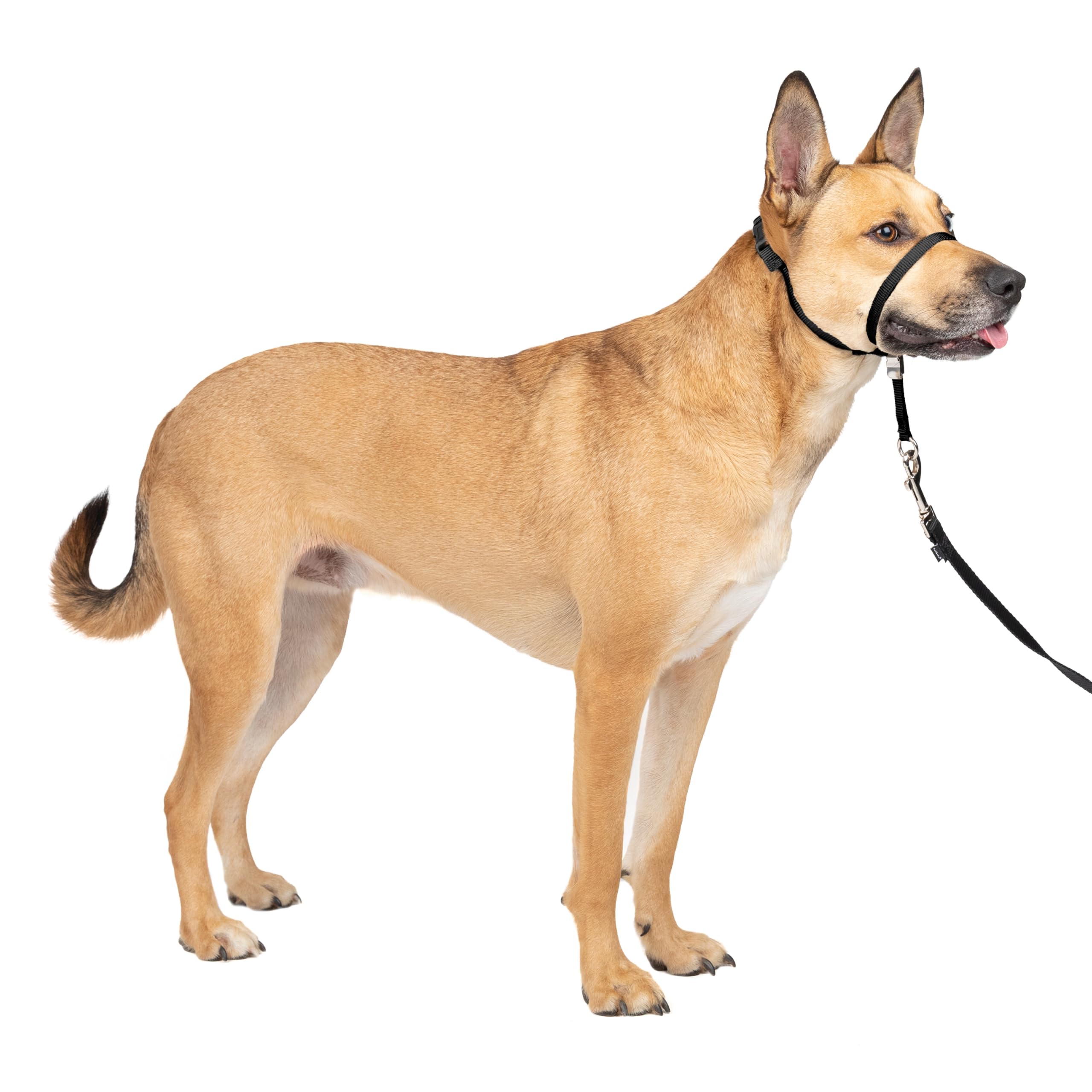
🦴 Take the lead on every walk — control meets comfort in style!
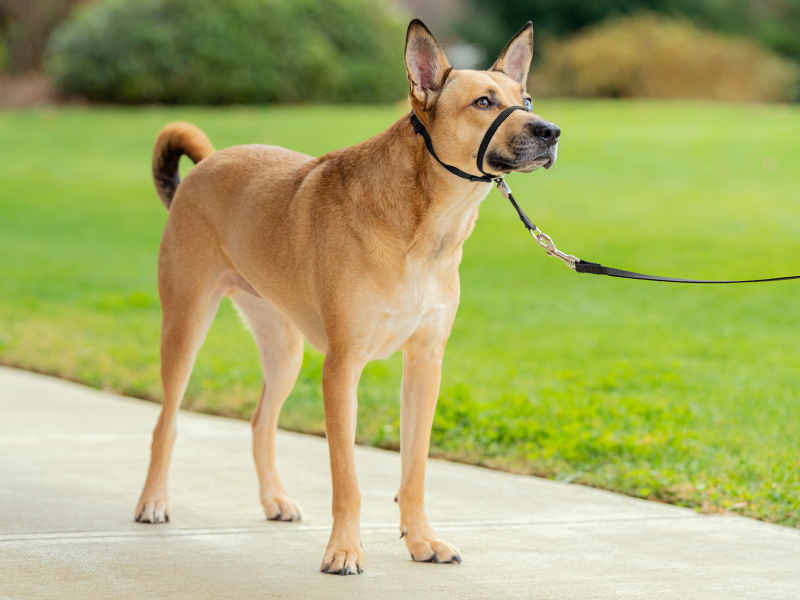
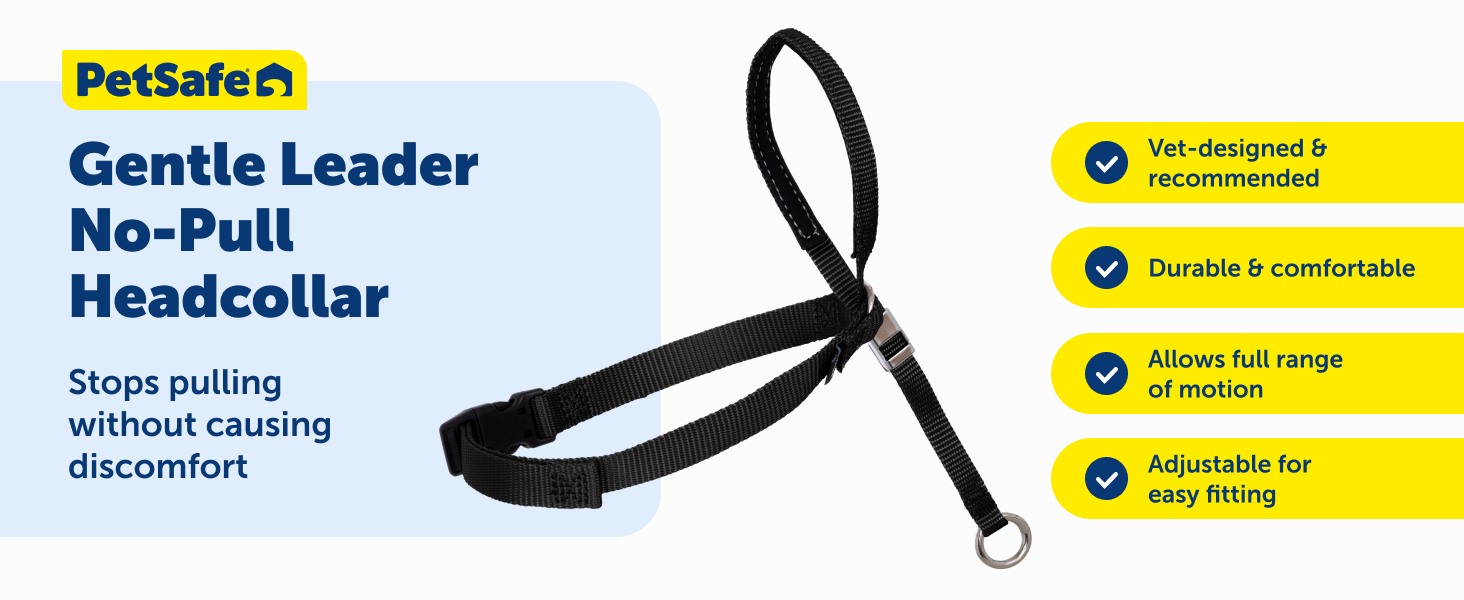
The PetSafe Gentle Leader Headcollar is a medium-sized, durable nylon no-pull dog collar designed to reduce pulling behavior by up to 90%. Featuring a padded neoprene nose loop and quick-snap adjustable straps, it offers a secure yet comfortable fit that allows dogs full freedom of movement while improving leash manners. Vet- and trainer-recommended for over 25 years, this headcollar is ideal for medium breeds and daily use, delivering safer, calmer walks and stronger bonds between dogs and their owners.




| ASIN | B00074L4RW |
| ASIN | B00074L4RW |
| Age Range Description | All Life Stages |
| Best Sellers Rank | #632 in Pet Supplies ( See Top 100 in Pet Supplies ) #1 in Headcollars |
| Brand Name | PetSafe |
| Breed Recommendation | Medium Breeds |
| Color | Black |
| Customer Reviews | 4.3 4.3 out of 5 stars (70,198) |
| Date First Available | October 2, 2001 |
| Date First Available | October 2, 2001 |
| Department | Pet Supplies |
| Department | Pet Supplies |
| Directions | Read all directions before use |
| Included Components | PetSafe Gentle Leader Head Collar |
| Is Discontinued By Manufacturer | No |
| Item Dimensions LxWxH | 8 x 1.25 x 0.1 inches |
| Item Package Dimensions L x W x H | 7.05 x 4.96 x 1.34 inches |
| Item Weight | 0.09 Pounds |
| Item model number | GL-Q-HC-M-BLK |
| Item model number | GL-Q-HC-M-BLK |
| Manufacturer | PetSafe Brands |
| Manufacturer | PetSafe Brands |
| Manufacturer recommended age | 1 month and up |
| Material | Neoprene, Nylon |
| Model Name | GL-Q-HC-M-BLK |
| Number of Items | 1 |
| Product Dimensions | 8 x 1.25 x 0.1 inches; 1.44 ounces |
| Size | Medium |
| Specific Uses for Product | Active, Behavior |
| Style | Headcollar |
| Target Audience Keyword | dogs |
| Warranty Description | 1 year manufacturer |
A**R
Gentle Leader causes dramatic and immediate positive changes, but has vulnerabilities
The Gentle Leader has dramatically changed for the better how our dog behaves on walks and runs. Our dog is an extremely strong and athletic 50 pound pointer-pit bull mix. With only a chest-attachment harness (or a back-attachment harness), he pulls constantly and lunges at whatever he wants (rabbits, cats, dogs, or whatever, whether close or far, real or imagined). With the Gentle Leader, these problems decrease by 90% or more. He still may try to lunge when he gets excited for his target, but it is easy to give him a moderate tug to control his behavior. There is no longer any risk he will pull one of us off our feet or take himself into danger. Walks and runs with him now are truly pleasant. It's made a huge difference in our relationship with him. There are some costs to get these benefits. First, we followed the manufacturer's directions on how to get the dog comfortable with the Gentle Leader. These directions worked for us, although he still doesn't like wearing it, even now after a month of multiple times a day use. Sometimes he tries to paw away it, and if we don't stop him quickly, he'll take it off. Fortunately, he's distracted enough during a walk or run that he rarely tries to take it off during those times. Also, a couple of times during a run the Gentle Leader came off (for some unknown reason, but not due to his pawing at it). All of these episodes highlight a vulnerability of the Gentle Leader: it's not a heavy duty standalone harness or collar. Any dog that needs a Gentle Leader likely has problems behaving well on walks or runs. We read prior reviews before buying the Gentle Leader and noticed that some customers had experienced it falling off or breaking while their dogs were wearing one. Therefore, what we have done from the beginning is to attach the leash to the Gentle Leader AND to a chest-attachment harness (we added some links of chain and a carabiner to give some extra slack to the connection with the harness). This way, if/when the Gentle Leader fails, we will still have a good way to hold on to our dog. We think the manufacturer designed the Gentle Leader appropriately so that it is lightweight and comfortable for the dog. But for most dogs that need the Gentle Leader, it's probably not enough, so other connections to the leash may be necessary as an insurance policy against a failing Gentle Leader. A dog with all of these connections can look a little like Hannibal Lecter from the "Silence of the Lambs" movie, but that's a small price to pay for ensuring the dog's safety and good behavior on walks and runs.
A**I
BEST INVESTMENT
11/10 on this gentle leader. If you have dogs that pull, I mean PULL you for anything you need this! Do the dogs hate it in the beginning, 100%, but they eventually get over it when they know it’s time for a walk. I will say it’s the most control you will have with your dog while it’s on. They can’t run or do reactive things because you have their head locked in with the collar. Quality wise and durability is fantastic, I’ve had ours for over a year and it still looks great. Because it’s so close to their mouth, you definitely gotta wash it so it doesn’t smell from all the drool but overall I highly recommend it. My dogs will not go out anywhere without it!!
B**A
It works great for our dog
Totally ripped off the below article from --> (http://drsophiayin.com/blog/entry/are-head-collars-on-dogs-dangerous-or-safe) ...but it says it all. It works great for our dog Attached to leashes are tools designed to help you control your dog by guiding its head, just as halters and lead ropes are used to help control horses. An animal tends to go where its head goes. So, if the dog (or horse) wants to pull on the leash and its head can’t move, it can’t pull you so well. If the dog (or horse) wants to head in one direction and you want to go in another, gently (but not daintily) guide its head in the direction you want to lead the animal. The nice thing about head collars is that with some dogs, owners can just slap a head collar on and the dog suddenly walks nicely on leash, including around distractions that the dog would have barked and lunged at in the past. But in some cases, dogs randomly paw at the funny gear hanging off their faces the way you’d paw at pesky flies buzzing around your head. In other cases, the dog walks nicely and on a loose lead but, when he sees a distraction, he starts to sprint several feet to the end of the leash or barks and lunges and flails to get at the dog, cat, or person in the distance while fighting to get its head loose. Now if this were a person, flailing on the end of a leash attached to an apparatus on his head, he’d surely have a neck injury. But anyone who has seen a dog that goes to town playing tug-o-war knows that a dog’s neck is built differently. Because of this neck strength, few cases of injury due to head collars have been proven or medically documented (I actually haven’t seen any). Not to say injury could not happen. However, veterinary documented injuries caused or exacerbated by choke chain corrections and electronic collars are easy to find. . Most likely if dogs are pulling on their head collar a lot or running to the end, they may need massage or chiropractic care just the way people who work or study at a desk all day need back adjustments periodically. In fact, I think I need a lower back adjustment right now. The Basics of Teaching Dogs to Understand Head Collar Guidance The fact of the matter is, that as a trainer, if you’re concerned about injury due to head collars or difficulty accepting the collar, it’s best to learn the skills needed to actually train the dog to love wearing the head collar and walk politely on a head collar, as well as to teach the owner how to correctly guide the dog in an anatomically natural way. The first step of training dogs to love the head collar is easy. Just pair the head collar with food and systematically train the dog to stick its head further and further through. In most cases where the food and the collar are handled correctly, the dog can learn to shove his nose through in just a minute or two. Practice over several sessions if you’re worried that your dog will especially dislike wearing something odd on his head. On a side note, this method for training dogs to love their head collar is virtually identical to training dogs to love wearing a muzzle. Once the dog is good at shoving his nose into the head collar, then put the head collar on. Keep the dog focused on you instead of the funny thing on his face. You can lure him with a treat to hurry and follow you a few steps at a time; if he’s doing well after you repeat this five to ten times, increase the number of steps he must take to get the treat. You can also use targeting instead of luring if he already knows how to touch a target with his nose and loves it. Once your dog’s walking nicely and no longer has the desire to paw the head collar, it’s time to teach him that the leash has a limit. Every time his front feet pass yours, meaning he’s just a second or two from getting far enough ahead to pull, stop dead in your tracks. That will make it clear you’ve stopped and even the slightest pull will mean a halt to his forward movement. Once he clearly steps back towards you and then stands with a loose leash (or better yet, sits), walk forward briskly on a loose leash. In other words, he learns the leash hanging in a lazy “U” means he gets to walk forward. If the leash starts to tighten, it means you’re stopping. By doing this consistently for as little as one 5-10 minute session, Fido can learn that the leash has a limit that’s predictable. Note: in order for Fido to learn this and continue walking nicely you have to be consistent about how you walk and hold the leash. If you sometimes let him walk ahead and pull a little such that the leash is hanging but like a wide smiley face, or if you stop when his feet get ahead of yours but instead of keeping your leash–holding hand down low at your side-- you let Fido pull your hand forward when he continues to walk, you’re sending mixed signals about what you want. Fido may never clearly get what you’re imagining in your head. Have someone watch you so that you can see if you’re always being clear. Now that Fido can walk with a head collar on in a non-distracting environment, you may be ready to guide him better when distractions appear. When you see something that normally catches his eye, react ahead of time so that he can’t run to the end of a his 6-foot lead. Hold his leash so it’s just one to two feet long but still handling loosely so that you can easily and quickly guide Fido in the direction you want to go. If you hold the leash that way, it will only tighten when you head in the new direction if Fido does not immediately follow. Then, so that Fido knows you have a direction in mind, you must clearly and quickly move in the different direction the same way you’d move if you and a friend were jogging and you had to grab her arm to guide her away from the hole she was about to fall in (To understanad the importance of movement, read Dealing with Difficult Dogs at the Vet: 5 Tips That Don't Involve Food or Training Time). Head Collars Are Most Effective and Safe if You Have the Necessary Skills Of course the choice to use a head collar is up to the individual; however, if you’re a dog trainer, it’s helpful to know why a head collar might be useful and how to use it more skillfully, beyond the basics described above. The number one reason I recommend head collars to some owners is that a head collar can level the playing field for owners who have mediocre timing and speed. Because the owners are able to guide the head, they can more easily get their dogs’ attention. The use of a head collar can greatly speed up the process of training dogs to focus on their owners and perform fun, polite behaviors instead of reacting to other dogs, people and stimuli. When used correctly, a head collar can even help control anxious dogs so that they can calm down enough to focus and take treats.
R**0
This works very well on my Akita, he no longer pulls anymore and walks well loose lead.
M**T
With our (now eight month old) cocker/retriever, we were struggling with pulling and lunging. Despite her intelligence and training, her exuberance meant every walk was a challenge. We tried almost every kind of collar, lead, harness and halter. Nothing worked: she's still pulled like a train and wriggled out of anything on her nose. Until we tried this one. A complete transformation! Our pup now trots along happily and obediently. It's a simple device without heavy, complex straps and buckles. Very easy to slip on (a persuasive treat helps but she waits patiently while it's fitted now). She can still eat, sniff etc without discomfort. Most importantly, the lightest of touches turns her head to me when needed, so the lead is loose and our dog walks safely and alongside us with ease. I use it with a 2m x 6mm rope lead which is light (the clip is below dog's jaw so a heavy lead would pull down). Now we use this halter every day and every walk is a pleasure for us and our dog. Cannot recommend enough!
A**R
A must buy... It's an absolute essential for a dog who pulls hard. My Golden retriever is a 40 kg muscular machine..once he decides to pull ..no one on earth can stop him... Read a lot about this product and finally decided to try it out as our last hope to enjoy leisurely walks with our pet.. It actually worked for our pet..taking him for walks is super easy now.. As far as the pets comfort is concerned..our pet does claw at it sometimes out of frustration ..when he feels that he s not able to pull us hard enough.Otherwise he s relaxed and able to bark, pant,take a walking stick in his mouth and hold his ball well.. On more than one occassion the collar has slipped off his muzzle..so I combine it with his regular collar.
R**K
Très efficace dès la première utilisation. Mode d'emploi très bien illustré. A recommander.
S**S
¡Esta correa es una maravilla! Mi perra dejó de jalar desde el primer paseo, ¡es increíble! Ella me había jalado durante 2 años y medio, desde que la adopté, y hace dos semanas incluso me tiró por accidente cuando la saqué a pasear. Ni gritos, ni ponerme estricta, ni un entrenador que le conseguí, ni otras correas me funcionaron. Pero ahora camina tranquila a nuestro lado, estoy tan contenta, muchas gracias a quien inventó este collar. Ahora mi hija y yo disfrutamos de los paseos con nuestra perra. Por supuesto, recomiendo el collar con los ojos cerrados. ¡Gracias! ¡Qué bueno que me enteré de la existencia de este producto!
ترست بايلوت
منذ أسبوعين
منذ 5 أيام