We remain fully operational. Our teams are working around the clock to ensure your deliveries continue safely.

قم بتنزيل التطبيق


معلومات عنا
حقوق الطبع والنشر © 2024 Desertcart Holdings Limited
قم بتنزيل التطبيق
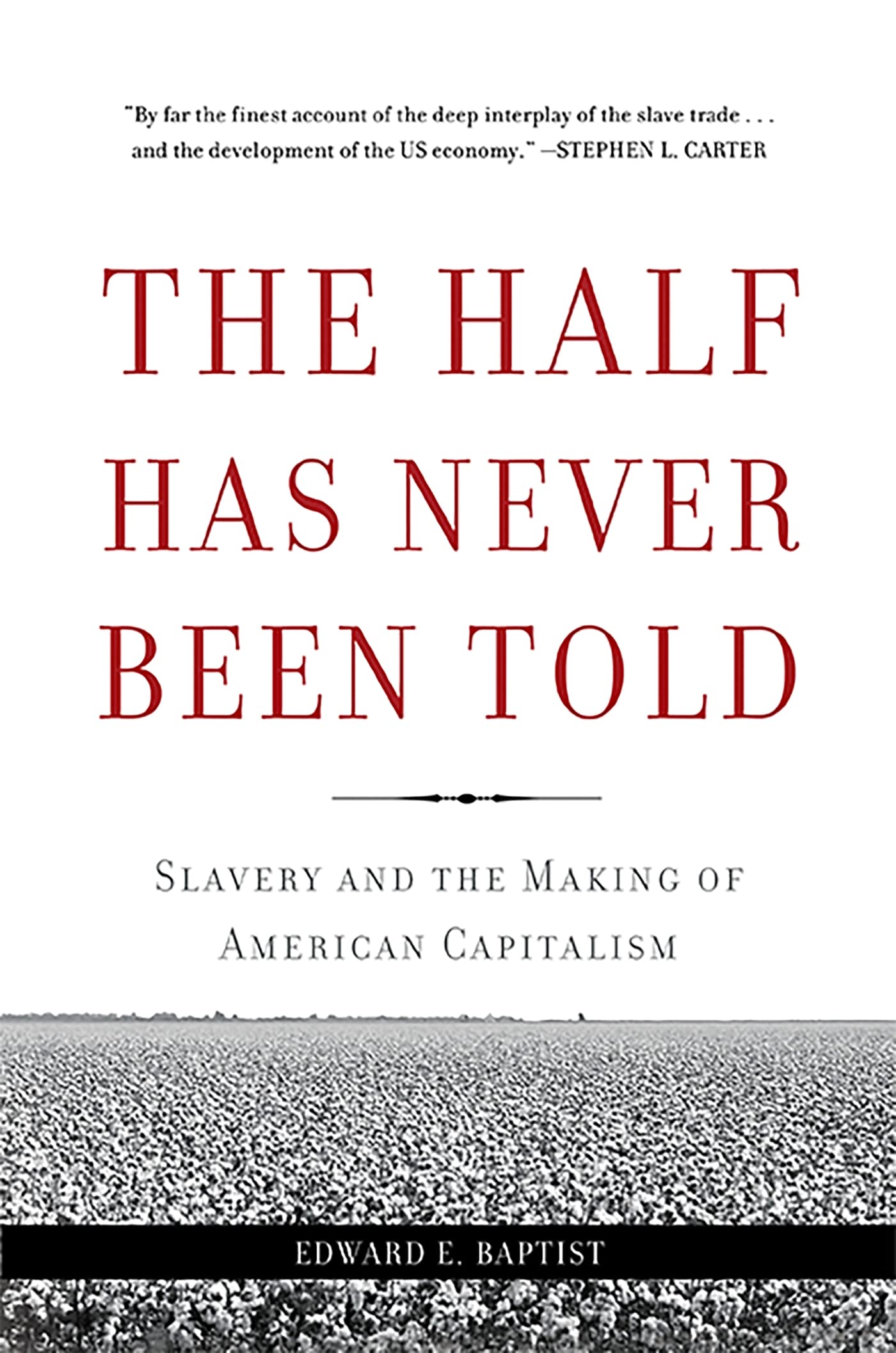
The Half Has Never Been Told: Slavery and the Making of American Capitalism [Baptist, Edward E] on desertcart.com. *FREE* shipping on qualifying offers. The Half Has Never Been Told: Slavery and the Making of American Capitalism Review: An important book - The basic framework of the book is the economics of slavery and how it was intertwined with and drove the American economy. That's an important story that I suspect is not well understood by the general public. Most of us just know what we learned in high school, which is tremendously limited (for virtually any historical topic, not just slavery). Such history is necessarily condensed and really understood only in a limited, abstract way. You have to read something more in-depth to truly understand, which is why, for example, works by David McCullough and Robert Caro are so eye-opening and interesting. This book is an excellent example of that tradition, comprehensive with both the total overview and individualized stories that make history come alive. It's also about more than the economics of slavery, unless very broadly defined. The mechanics - coffle, whipping-machine, etc. - and the politics and the geography and the psychology of slavery are also there. It certainly isn't the complete story of slavery and its aftermath. You'll want to supplement with other works. But this is a very important part of the story. I feel that I have a much better (although still incomplete) understanding of that world after reading this. And it's very well written so you won't feel you're wading through a required textbook. Highly recommended. Review: A book every child regardless of race should read in high school - Book is thoroughly researched and documented. A real quality work. Tells that slavery produced cotton, the commodity all the world needed and developed the United States economy at great cost to the slaves. No innovations were involved in what the slaves did just cruel method after cruel method to increase production. Over the period of time when cotton was picked production increased 300%. A lot of information about how slaves were treated. e.g. slaves walked as fast as they could while walking day after day in many cases from slave markets in Richmond, Va to clear forests for fields in Alabama and Mississippi. Families often broken up never to see each other again. A great book. Interesting that no major publisher published the book.also interesting that Richmond did not have it in its main library. Slavery is a secret kept by white supremicists that affects black people today. Black and white people have to realize its horrors.


| Best Sellers Rank | #35,246 in Books ( See Top 100 in Books ) #85 in Discrimination & Racism #101 in U.S. State & Local History #140 in African American Demographic Studies (Books) |
| Customer Reviews | 4.8 4.8 out of 5 stars (2,401) |
| Dimensions | 6 x 1.75 x 9.3 inches |
| Edition | Reprint |
| ISBN-10 | 0465049664 |
| ISBN-13 | 978-0465049660 |
| Item Weight | 1.5 pounds |
| Language | English |
| Print length | 560 pages |
| Publication date | October 25, 2016 |
| Publisher | Basic Books |
B**O
An important book
The basic framework of the book is the economics of slavery and how it was intertwined with and drove the American economy. That's an important story that I suspect is not well understood by the general public. Most of us just know what we learned in high school, which is tremendously limited (for virtually any historical topic, not just slavery). Such history is necessarily condensed and really understood only in a limited, abstract way. You have to read something more in-depth to truly understand, which is why, for example, works by David McCullough and Robert Caro are so eye-opening and interesting. This book is an excellent example of that tradition, comprehensive with both the total overview and individualized stories that make history come alive. It's also about more than the economics of slavery, unless very broadly defined. The mechanics - coffle, whipping-machine, etc. - and the politics and the geography and the psychology of slavery are also there. It certainly isn't the complete story of slavery and its aftermath. You'll want to supplement with other works. But this is a very important part of the story. I feel that I have a much better (although still incomplete) understanding of that world after reading this. And it's very well written so you won't feel you're wading through a required textbook. Highly recommended.
R**D
A book every child regardless of race should read in high school
Book is thoroughly researched and documented. A real quality work. Tells that slavery produced cotton, the commodity all the world needed and developed the United States economy at great cost to the slaves. No innovations were involved in what the slaves did just cruel method after cruel method to increase production. Over the period of time when cotton was picked production increased 300%. A lot of information about how slaves were treated. e.g. slaves walked as fast as they could while walking day after day in many cases from slave markets in Richmond, Va to clear forests for fields in Alabama and Mississippi. Families often broken up never to see each other again. A great book. Interesting that no major publisher published the book.also interesting that Richmond did not have it in its main library. Slavery is a secret kept by white supremicists that affects black people today. Black and white people have to realize its horrors.
P**N
Such an important book
What I've learned reading Edward E. Baptist's The Half Has Never Been Told: Between the Revolutionary War and the Civil War, white enslavers in the U.S. dramatically expanded and intensified slavery, selling and separating black families on a scale not seen since the Middle Passage, to move more than a million enslaved black people west and south into labor camps, and systematically torturing these people on a scale not seen, perhaps, ever in recorded history, to force them to work harder, faster, longer, and smarter. The purpose and result of this second slavery was cotton, massive amounts of cotton, which sold for unthinkable amounts of money, enabling the industrial revolution in the U.S. and Europe and making it possible for the fledgling U.S. to become a world power. In both the North and the South, almost every white person in the U.S. benefited economically from this expansion of slavery—from enslavers, to bankers, to factory workers, to housewives. Meanwhile, enslaved black people resisted in every way possible—from telling the truth to one another about what had been stolen from them, to running away, to uprising, to joining the Union Army in mass and winning the Civil War. If you're like me, you grew up hearing, as a politician recently tweeted, "Hard work and freedom made this country great." That's half true. Hard work stolen by whips and chains literally, calculably made this country "great." With thorough documentation, Baptist definitively shows how integral, central slavery is in U.S. history. Why is this important to know? Of course, we're not responsible for our great, great grandparents' wrongs. But our understanding (or misunderstanding) of those wrongs shapes how we carry out what IS our responsibility: what we do with the world they left us.
A**R
Just a remarkable work of history. Beautifully structured and written. Bold, heartbreaking, a genuinely moving book that captures the humanity of the enslaved while illustrating their vital importance to the development of American capitalism. Historical writing at its best.
A**2
In many ways this book does for the story of slavery what Dee Brown's "Bury my heart at Wounded Knee" attempted to do for Indians in 1970 - it recasts the whole of the story of slavery to see it through the experiences of those it affected. But where Brown's speculative approach was criticised, Baptist is forensic in his evidence. He draws the tales of ordinary men women and children from the pages of the scant records and produces a narrative of living, breathing human beings. Baptist fundamentally challenges the bastions of long held slavery orthodoxies and demonstrates how the issues which led slavery to such success not only built modern America but also drove the development of capitalism. Further he cautions, that such practices might still be seen in the world today. A powerful book and required reading for anyone interested in this topic.
C**E
Far from being a sideshow, a marginal phenomenon, slavery epitomizes American XIXth century capitalism. Enormous fortunes were built litterally on the back of black people transported against their will to the "Southwest" and made to toil eleven hours a day in the cotton fields. "Added value" was extracted with the whip. The "half" which is told here is in fact a main component of American history. Edward Baptist is a professional historian who builds his case on thousands of charts and original documents that make his main thesis absolutely convincing and a valuable contribution to the ongoing revival of studies devoted to slavery. A minor spoiler now: I wish the author had focussed on his point and refrained from telling individual stories, or more precisely, to woe the reader with the premices of individual stories that never fully materialize, probably for lack of documents.
K**R
This is a forensic debunking of previous attempts to limit the impact of slavery on the development of the American republic in the nineteenth century. The author comprehensively demonstrates that slavery was central not just to the development of Southern agrarian capitalism but also to Northern finance capitalism.
R**Y
My husband enjoyed reading this book.
ترست بايلوت
منذ أسبوعين
منذ أسبوعين