Some deliveries may take a little longer than usual due to regional shipping conditions.

قم بتنزيل التطبيق


معلومات عنا
حقوق الطبع والنشر © 2024 Desertcart Holdings Limited
قم بتنزيل التطبيق
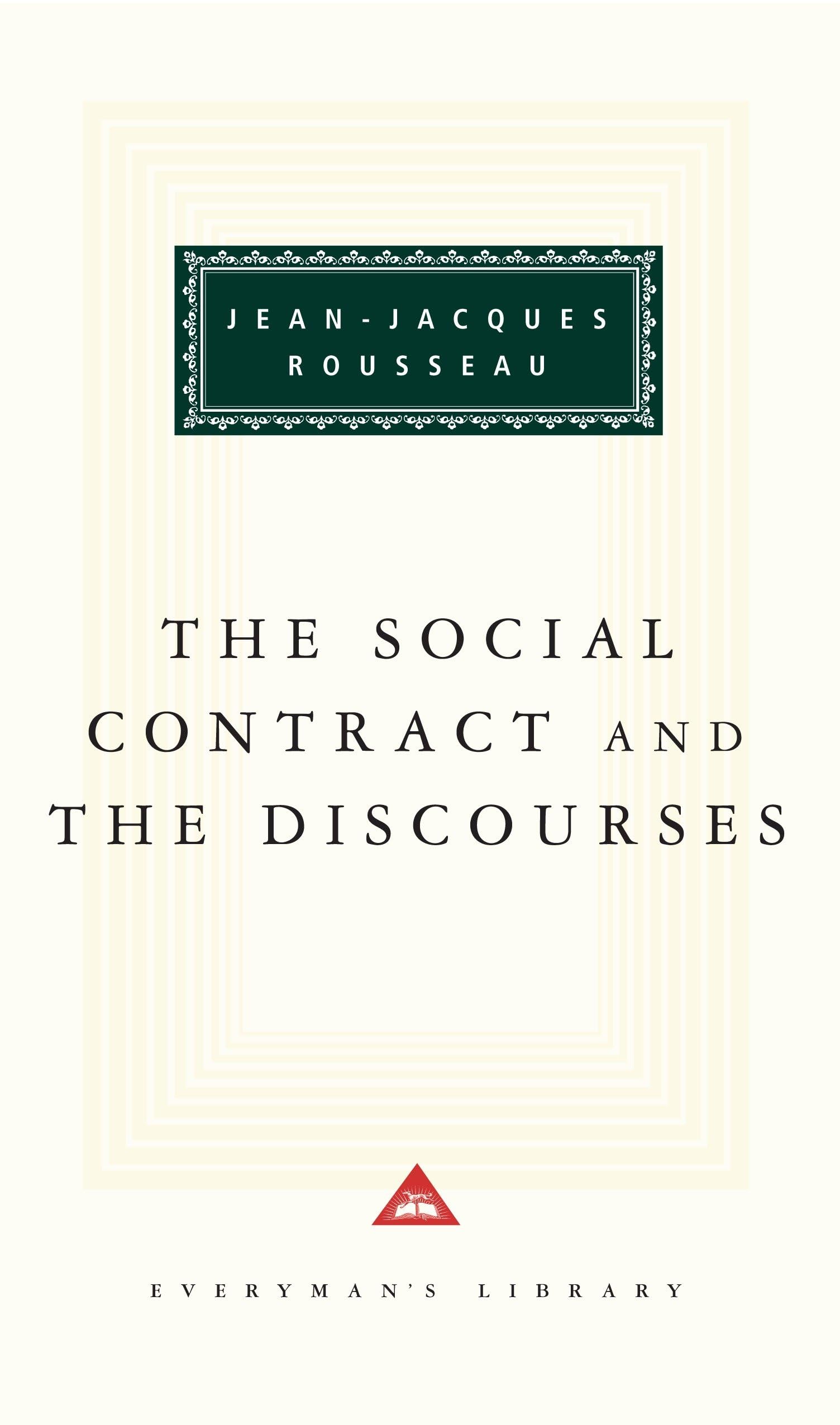
The Social Contract and The Discourses (Everyman's Library) [Rousseau, Jean-Jacques, Cole, G. D. H., Ryan, Alan] on desertcart.com. *FREE* shipping on qualifying offers. The Social Contract and The Discourses (Everyman's Library) Review: Worth the effort - Everyman's Library (cloth-bound) edition is a book worth having in your library. The G.D.H Cole translation is excellent and his preface in the appendix of the book is in itself considered a classic. The Everyman's edition, besides the Social Contract, includes his "Discourses on the Arts & Sciences", the "Origin of Inequality", "Political Economy" and the "General Society of the Human Race". I suggest a reading of the Discourses before tackling the Social Contract. It will give you a foundation in the authors' sophisticated and deeply intellectual thinking. Mr. Rousseau, among other things, was an odd fellow indeed and it would seem a difficult personality at best. One of his - for lack of a better term - "quirks," was his inability to maintain a friendship. In virtually every case he had a falling out with his friends over some issue. If ever there was a man that should have written an essay on irresponsibility it was Jean - Jacques Rousseau. He fathered 5 or six out of wedlock children and, I believe each with a different mother. As soon as each was born he immediately saw to it that the infant was delivered up to the nearest orphanage not wishing to have anything in his personal life to get in the way of his "freedom". Nonetheless Rousseau is worth the reading. His essay on inequality alone is well worth the price of admission. L.C. Robinson Review: Well-made - I'll let others review the material -- I just wanted to comment on the physical qualities of this hardcover. In a word: well-made. The copy I received was printed in Germany. Neat, tight binding. Integrated page-holder ribbon. Sturdy boards and nice cloth covering (dark green). The qualify is far beyond what you'd expect given the price.
| ASIN | 0679423028 |
| Best Sellers Rank | #189,817 in Books ( See Top 100 in Books ) #109 in Government Social Policy #538 in Political Philosophy (Books) |
| Customer Reviews | 4.8 4.8 out of 5 stars (32) |
| Dimensions | 5.26 x 1.18 x 8.29 inches |
| Edition | 2nd |
| ISBN-10 | 9780679423027 |
| ISBN-13 | 978-0679423027 |
| Item Weight | 1.3 pounds |
| Language | English |
| Print length | 472 pages |
| Publication date | October 26, 1993 |
| Publisher | Everyman's Library |
L**N
Worth the effort
Everyman's Library (cloth-bound) edition is a book worth having in your library. The G.D.H Cole translation is excellent and his preface in the appendix of the book is in itself considered a classic. The Everyman's edition, besides the Social Contract, includes his "Discourses on the Arts & Sciences", the "Origin of Inequality", "Political Economy" and the "General Society of the Human Race". I suggest a reading of the Discourses before tackling the Social Contract. It will give you a foundation in the authors' sophisticated and deeply intellectual thinking. Mr. Rousseau, among other things, was an odd fellow indeed and it would seem a difficult personality at best. One of his - for lack of a better term - "quirks," was his inability to maintain a friendship. In virtually every case he had a falling out with his friends over some issue. If ever there was a man that should have written an essay on irresponsibility it was Jean - Jacques Rousseau. He fathered 5 or six out of wedlock children and, I believe each with a different mother. As soon as each was born he immediately saw to it that the infant was delivered up to the nearest orphanage not wishing to have anything in his personal life to get in the way of his "freedom". Nonetheless Rousseau is worth the reading. His essay on inequality alone is well worth the price of admission. L.C. Robinson
R**R
Well-made
I'll let others review the material -- I just wanted to comment on the physical qualities of this hardcover. In a word: well-made. The copy I received was printed in Germany. Neat, tight binding. Integrated page-holder ribbon. Sturdy boards and nice cloth covering (dark green). The qualify is far beyond what you'd expect given the price.
R**Y
amazing book
I was looking for this book for quite a while and I was not disappointed when it arrived. I recommend this book for anyone interested in history and the truth behind Thomas Jefferson's socialistic agenda.
S**Y
Five Stars
AWESOME BOOK TO READ; OPNE OF MY ABSOLUTELY BEST PHILOSOPHER!
M**.
An Excellent Volume Containing All of Rousseau's Shorter Works
This is an excellent edition that collects Rousseau's shorter works in one volume and which includes the most influential pieces, "A Discourse on the Origin of Inequality" and "The Social Contract" admirably translated by G.D.H. Cole. "A Discourse on Inequality" appears to be Rousseau's critique of the emerging bourgeoisie who he contrasts with the concept of man as he was before the development of civil society. In the state of nature man lived in "peace and innocence" which are inevitably lost in man's emergence to civil society and subsequent exchange of natural equality for moral and political inequality. The law, social and political institutions bent on the protection of private property conspire to keep political inequality in place since, as Rousseau was to write in the "Social Contract", "laws are always of use to those who possess and harmful to those who have nothing." As man enters society, he "grows weak, timid and servile, his effeminate way of life totally enervates his strength and courage." He become anxious, petty and filled with what Rousseau calls "amour-propre" or vanity. Whereas the "savage lives within himself, social man lives constantly outside himself, and only knows how to live in the opinion of others." He is a character straight of one of Moliere's plays. In "The Social Contract" Rousseau attempts to reconcile man's loss of freedom and view of social society as the engine of political inequality through his concept of the "general will" which posits that political legitimacy rests on the will of the people. At times Rousseau's use of the "general will" appear to make him the spiritual godfather of totalitarianism especially when he writes that "whoever refuses to obey the general will shall be compelled to do so by the whole body. This means nothing less than that he will be forced to be free." Other comments such as "the general will is always upright...but not always enlightened...it must be shown the good road it is in search of, secured from the seductive influences of individual wills" appear directly out of a Maoist reeducation camp. Rousseau's concept of the "general will" obviously had a tremendous impact on the subsequent development of liberal democracies although another concept in "The Social Contract" that seems no less important is the importance that Rousseau places on the commonality of cultural and behavioral norms that bind a people together and that make liberal democracies possible. As Rousseau writes, "since force creates no right we must conclude that conventions form the basis of all legitimate authority among men." Elsewhere he writes that, "the legislator therefore being unable to appeal to either force or reason, must have recourse to an authority of a different order, capable of constraining without violence and persuading without convincing." Rousseau's intuition and intimation that liberal democracies will need to mold public opinion as a form of governance is almost providential and to me anticipates de Toucqueville's concept of the "tyranny of the majority." As Rousseau writes: "Along with these three kinds of law goes a fourth, most important of all...which replaces authority by the force of habit. I am speaking of morality , of custom, above all of public opinion: a power unknown to political thinkers, on which none the less success in everything else depends...manners and morals slower to arise, form in the end its immovable keystone." My favorite excerpt from "The Social Contract" is in the final chapter where he writes that "the dogmas of civil religion ought to be few, simple and exactly worded, without explanation or commentary. The existence of a mighty, intelligent and beneficent Divinity, possessed of foresight and providence..." Who can doubt that Thomas Jefferson had these words in mind when he penned, "We hold these truths to be self-evident, that all men are created equal, that they are endowed by their Creator with certain unalienable Rights, that among these are Life, Liberty and the pursuit of Happiness."
Z**S
Five Stars
great book!
ترست بايلوت
منذ 3 أسابيع
منذ أسبوعين