
قم بتنزيل التطبيق


معلومات عنا
حقوق الطبع والنشر © 2024 Desertcart Holdings Limited
قم بتنزيل التطبيق
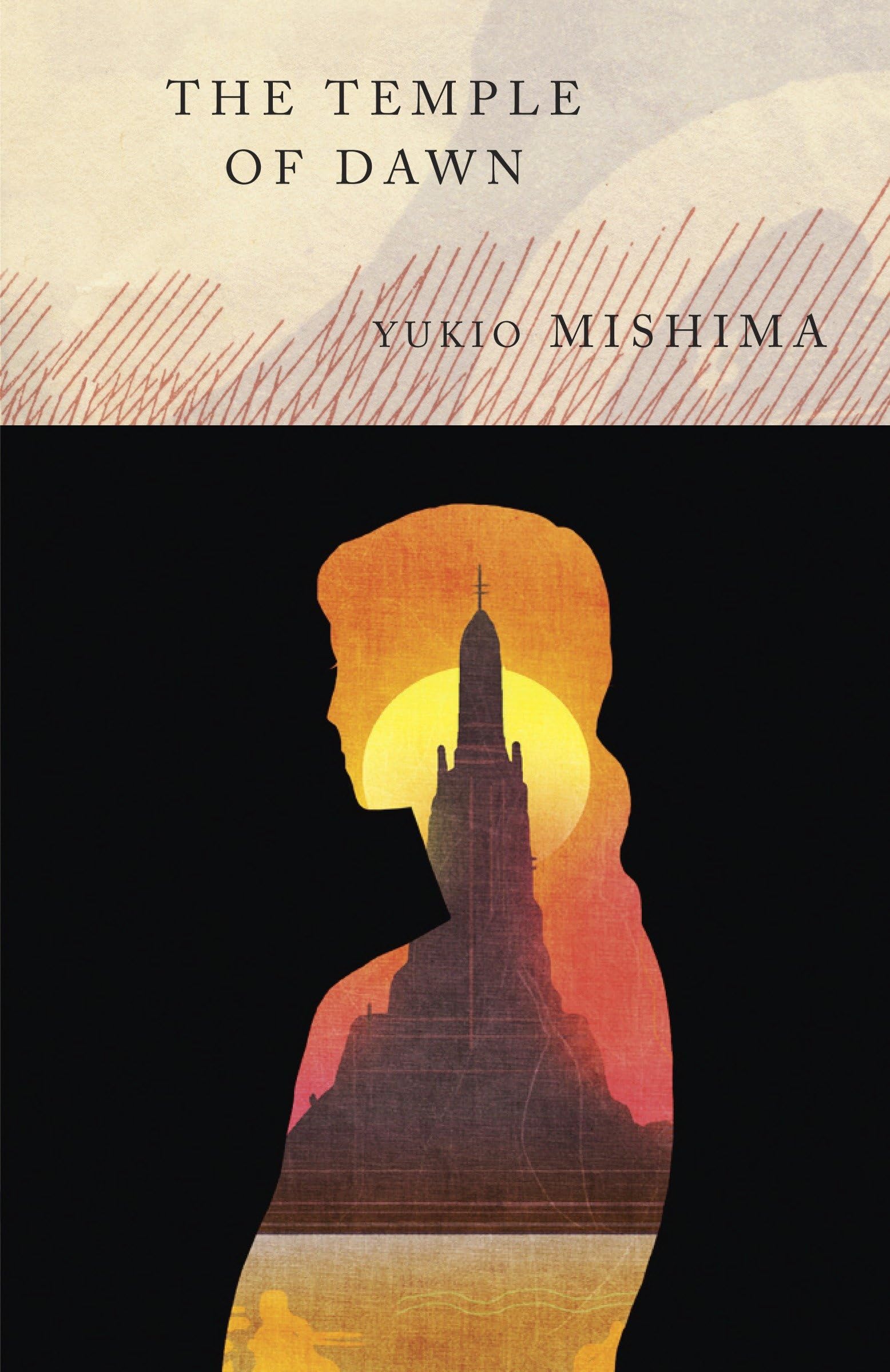
The Temple of Dawn [Yukio Mishima, E. Dale Saunders, Cecilia Segawa Seigle] on desertcart.com. *FREE* shipping on qualifying offers. The Temple of Dawn Review: Moving, shocking, thought-provoking, and superbly elegantly constructed, the height of the "Sea" so far - In THE TEMPLE OF DAWN, the third book of Yukio Mishima's "Sea of Fertility" tetralogy, we find Shikeguni Honda on business in Thailand. Six years after the death of Isao Iinuma, the former judge is now a successful lawyer, but his interest in practising law is shaken when he meets Ying Chan, a Thai princess who is the second reincarnation of Kiyoaki Matsugae. THE TEMPLE OF DAWN differs greatly from the first two books of the tetralogy. While SPRING SNOW and RUNAWAY HORSES focus mainly on their tragic young men done in by fatal youthful flaws, love and idealism respectively, Honda is the central figure of this volume. All events are filtered through his eyes, and what little we learn about Ying Chan comes from his desperate musings. In its chronology this third volume also differs, for while the first two volumes take place within a span of a couple of years, THE TEMPLE OF DAWN leaps from 1939 through the war years to 1952, and ends with a shocking revelation in 1967. Honda has changed a lot since we last met him. Right off the bat Mishima tells us that the death of Isao turned Honda from a idealistic man of reason to a nihilist, and nihilism is finally revealed as the big theme of the cycle. Honda continues to change as he grows older in this volume, and this process of growing old, of questioning earlier assumptions, and of searching for some answer to life's mysteries makes for a fascinating plot. Readers will be shocked by the behavior of the protagonist, his wife, and their social circle. This is a novel where every nearly every page punches the reader in the cut, and Mishima appears as much a master of apparently casual revelations as Gene Wolfe. He is also a master of the love story, for love affairs in this book, twisted though they be, come out as much more realistic than Kiyoaki's doomed affection for Satoko. But beyond the individual personages of the book and their foibles, Mishima wants the reader to consider universal principles of philosophy. Honda spends the war years in a haze, reading through the Buddhist canon and trying to figure it all out as his country is battered around him. While one can enjoy THE TEMPLE OF DAWN without too closely paying attention to ideas of samsara and the self, the novel richly rewards repeat reading. And finally, the book stands out for its amazing ending. I won't give it away, but I will say that Mishima brilliantly alludes to his earlier writings, reinforces his thoughts on "cosmic nihilism", and even pays a tribute to his mentor Yasunari Kawabata. All in all, this is the finest book of "The Sea of Fertility" that I have read so far, and I really can't recommend it enough. Pick up SPRING SNOW if you haven't yet, and other readers can continue on through this one without fear. Review: Magnificent - Rereading this volume 3 of Mishima’s masterpiece after 35 years in this fantastic translation of the highest literary quality feels like finally reading Mishima’s writing itself, not just its shadow in another language. One of the best books I have read the Sea of Fertility is comparable in scope only to Proust’s ‘Recherche.’

| Best Sellers Rank | #185,187 in Books ( See Top 100 in Books ) #4,724 in Classic Literature & Fiction #9,224 in Literary Fiction (Books) #11,576 in Historical Fiction (Books) |
| Book 3 of 4 | The Sea of Fertility |
| Customer Reviews | 4.5 4.5 out of 5 stars (335) |
| Dimensions | 5.17 x 0.71 x 8 inches |
| Edition | First Edition |
| ISBN-10 | 0679722424 |
| ISBN-13 | 978-0679722427 |
| Item Weight | 10.4 ounces |
| Language | English |
| Print length | 352 pages |
| Publication date | April 14, 1990 |
| Publisher | Vintage |
C**.
Moving, shocking, thought-provoking, and superbly elegantly constructed, the height of the "Sea" so far
In THE TEMPLE OF DAWN, the third book of Yukio Mishima's "Sea of Fertility" tetralogy, we find Shikeguni Honda on business in Thailand. Six years after the death of Isao Iinuma, the former judge is now a successful lawyer, but his interest in practising law is shaken when he meets Ying Chan, a Thai princess who is the second reincarnation of Kiyoaki Matsugae. THE TEMPLE OF DAWN differs greatly from the first two books of the tetralogy. While SPRING SNOW and RUNAWAY HORSES focus mainly on their tragic young men done in by fatal youthful flaws, love and idealism respectively, Honda is the central figure of this volume. All events are filtered through his eyes, and what little we learn about Ying Chan comes from his desperate musings. In its chronology this third volume also differs, for while the first two volumes take place within a span of a couple of years, THE TEMPLE OF DAWN leaps from 1939 through the war years to 1952, and ends with a shocking revelation in 1967. Honda has changed a lot since we last met him. Right off the bat Mishima tells us that the death of Isao turned Honda from a idealistic man of reason to a nihilist, and nihilism is finally revealed as the big theme of the cycle. Honda continues to change as he grows older in this volume, and this process of growing old, of questioning earlier assumptions, and of searching for some answer to life's mysteries makes for a fascinating plot. Readers will be shocked by the behavior of the protagonist, his wife, and their social circle. This is a novel where every nearly every page punches the reader in the cut, and Mishima appears as much a master of apparently casual revelations as Gene Wolfe. He is also a master of the love story, for love affairs in this book, twisted though they be, come out as much more realistic than Kiyoaki's doomed affection for Satoko. But beyond the individual personages of the book and their foibles, Mishima wants the reader to consider universal principles of philosophy. Honda spends the war years in a haze, reading through the Buddhist canon and trying to figure it all out as his country is battered around him. While one can enjoy THE TEMPLE OF DAWN without too closely paying attention to ideas of samsara and the self, the novel richly rewards repeat reading. And finally, the book stands out for its amazing ending. I won't give it away, but I will say that Mishima brilliantly alludes to his earlier writings, reinforces his thoughts on "cosmic nihilism", and even pays a tribute to his mentor Yasunari Kawabata. All in all, this is the finest book of "The Sea of Fertility" that I have read so far, and I really can't recommend it enough. Pick up SPRING SNOW if you haven't yet, and other readers can continue on through this one without fear.
A**A
Magnificent
Rereading this volume 3 of Mishima’s masterpiece after 35 years in this fantastic translation of the highest literary quality feels like finally reading Mishima’s writing itself, not just its shadow in another language. One of the best books I have read the Sea of Fertility is comparable in scope only to Proust’s ‘Recherche.’
M**E
"How alike were the voices of pleasure and death! When one is summoned, all work at once becomes unimportant."
In this third novel of the Sea of Fertility tetralogy by Yukio Mishima, main character Shigekuni Honda is forty-six years old. It is now 1940, and Honda has matured into a successful lawyer and judge in the years since 1912 - 1914, when he was first introduced as the schoolboy friend of Kiyoake Matsugae, the son of a samurai family. Kiyoake, however, died at a young age in Spring Snow, and his death has haunted Honda for the rest of his life. Runaway Horses, the second novel of the tetralogy, takes place during the economic crisis in Japan of 1932 - 1933. In that novel, Honda sees Isao Iinuma, the nineteen-year-old son of Kiyoaki's former tutor, as the physical reincarnation of Kiyoaki. The Temple of Dawn opens in 1940, immediately preceding World War II. Honda is still trying to develop his own beliefs about life, death, love, the transmigration of souls, and reincarnation. War is imminent now, as Japan, Germany, and Italy have signed a treaty against the Americans. On a business trip to Bangkok, where he also hopes to meet Prince Pattanadid and Prince Krisada, former school friends from his youth, he discovers that the Thai royal family has gone to Switzerland. Only a "mad princess," age seven, lives in the palace - a virtual prisoner - claiming publicly that "I'm not really a Siamese princess. I'm the reincarnation of a Japanese, and my real home is in Japan." Detailed discussions of Buddhism and its offshoots pervade the beginning of the novel and continue as Honda decides to travel to Calcutta, Benares, and the Ajanta caves in India, where he continues his exploration of reality, death, love, transmutation, and reincarnation. Part II, takes place twelve years later, in 1952, on Honda's fifty-seventh birthday and continues to 1967. Honda, now living in a house facing the magnificence of Mount Fuji, is retired, still pursuing his philosophical inquiries. The relationship of sex and death become more personal as Honda becomes infatuated with a seventeen-year-old teenager whom he now believes is the next incarnation of Kiyoaki and Isao. Ying Chan, also known as Princess Chantrapa II, is the "mad princess" he met formerly in Bangkok when she was only seven. Now seventeen, she is studying in Japan. Set as it is in the period before and after World War II, but completely skipping over the war itself, the novel has more detailed philosophical analysis than it does narrative action, and some readers of Spring Snow and Runaway Horses may weary of these detailed philosophical discussions. Mishima himself seems to be trying to work out his own ideals and reconcile himself to a different life in postwar Japan. A believer in the old samurai traditions, Mishima despaired of the growing western influence and he never forgave the emperor for denying his divinity when he signed the treaty ending the war. Just after Mishima finished the final novel in this "Sea of Fertility" tetralogy, the Decay of the Angel on November 25, 1970, he disemboweled himself in a gruesome ritual suicide--seppuku--committed in the presence of four members of his private army. He was then beheaded, in accordance with ritual.
A**B
Get Mishima.
Fantastic novel series, definitely try it.
C**R
Five Stars
Great series, this book wasn’t my favorite of the 4 but it still deserves 4.5
A**.
Amazing
Amazing
E**.
Review of Temple of Dawn
The story is of a middle-aged Japanese lawyer who goes to Bangkok on business and becomes obsessed with Ying Chan, a young Thai princess. The places he visited are well known to me -- Temple of the Dawn, or Wat arun, the palace at Bang Pa In and later Tokyo, Hakone near Mt. Fuji. I don't understand why the princess does not have a Thai name, There is no hint in the book that the authur, Mishima, will commit seppuku at age 45. Tis is a bit like the suicide of the author of Raintree County, WHICH HELPED MAKE HIS BOOK A BEST-SELLER. tHE OBSESSION OF AN OLDER MAN WITH A YOUNG WOMAN is reminiscent of Humbert's obsession with Lolita in Nabakov;s novel.
J**A
A lovely well maintained edition. In mint condition . I am happy to own and display on my shelf - Thanks !
S**D
Building on the theme of reincarnation, Mishima's third installment in "The Sea of Fertility" tetralogy, set during the early years of American occupation and post-war Japan (1941-1967), begins with Honda, who, while on a work trip to Thailand, is luckily granted an audience with a young Thai princess. Convinced that the princess is a reincarnation of his childhood friend Kiyoaki, Honda sets off on obsessive, philosophical quest to understand the true nature of transmigration of souls, a journey which takes him to sacred Hindu and Buddhist religious sites in India, where he devotes himself to studying myths, legends, and ritualistic ceremonies of Kings and warriors. However, in the post-war Japanese society, reeling under poverty and destruction, Honda becomes an unexpected beneficiary of sudden wealth, and we slowly see a subtle shift in his characterization. Whereas earlier he was shown as the man of reason, resolutely wary of vagaries of emotions and fleeting passions, we now see him grapple with uncertainty and meaninglessness of life. The man who, in his extreme youth chastised Kiyoaki for his hedonistic spirit, now becomes a rich voyeur whose obsession with beauty and sensuous pleasures of the flesh of the young Thai princess leads him to a despairing end. In “The Temple of Dawn”, Mishima uses Honda’s metamorphosis and suffering to highlight Japan’s decadence in the aftermath of American occupation and its longing to achieve unity and semblance in a deeply ruptured society.
S**.
Der Artikel wurde verschenkt. Das Geschenk kam gut an. Artikel war gut verpackt und kam in einwandfreiem Zustand an. Über den Inhalt kann ich nichts sagen.
M**G
Somewhat heavy going at times, elliptical in places, the writing on Hindu/Buddhist philosophy is interesting but becomes rather tedious. Yet at its best shows the poetic lyricism and deep thought so characteristic of Mishima's genius.
A**Y
This is almost a four star work. The writing is beautiful but the protagonist Honda shrivels inot himself as the four books pan out.
ترست بايلوت
منذ 3 أيام
منذ 3 أسابيع